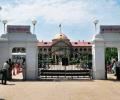
"Now after 20 years, the Madrasa Education Act has been declared unconstitutional. Obviously there has been some mistake somewhere. Our lawyers could not present their case properly before the court," he said.
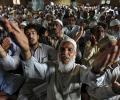
The All India Muslim Personal Law Board (AIMPLB) has announced its intention to challenge the Waqf (Amendment) Bill in court, labeling it a "black law" that threatens the community's rights. The AIMPLB, a major organization representing Muslims in India, asserts that the Bill, if passed, would lead to the seizure of Muslim properties and undermine the autonomy of Waqf Boards. The organization plans to launch nationwide protests against the Bill, echoing the farmers' agitation, and has urged all citizens to resist the legislation. The Bill has been met with criticism from various quarters, including opposition parties, who claim that the Centre is rushing it through Parliament without adequately addressing concerns raised by the Joint Parliamentary Committee (JPC).
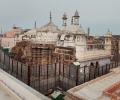
In a major victory for the Hindu side, a Varanasi court on Wednesday allowed Hindu devotees to offer prayers inside the 'Vyas ka Tekhana' area inside the Gyanvapi mosque complex.

In an apparent attempt to garner support of Muslims ahead of Lok Sabha polls, Bharatiya Janata Party President and party nominee from Lucknow seat Rajnath Singh met prominent clerics of the community in Lucknow.

A 30-member Archaeological Survey of India team halted a survey here of the Gyanvapi mosque -- just hours after beginning the exercise Monday morning -- following a Supreme Court order.

More Muslim organisations on Wednesday slammed former UP Shia Waqf Board chairman Waseem Rizvi, while his family members appeared to shun him for his PIL in the Supreme Court seeking the removal of some Quranic verses.

All India Muslim Personal Law Board on Sunday decided to launch a nationwide campaign against making 'Surya Namaskar' and Yoga compulsory in schools.

People came out of homes in large numbers, offered namaz at mosques, greeted each other with hugs and exchanged food and gifts across the length and breadth of India to celebrate Eid-ul-Adha on Sunday.

Here are some of the reactions to the Supreme Court verdict on Ayodhya.
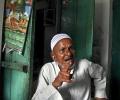
Born in Ayodhya, Ansari was the first to file the suit on the matter in the court of civil judge of Faizabad in 1949.

Major mosques and idghas, which see tens of thousands of people offering namaz on Eid and then embracing each other, remained mostly empty perhaps for the first time on the festival as the government has prohibited all kinds of religious gatherings to prevent the spread of the coronavirus.

Taking a strong stand against the call by its ally Shiv Sena for the scrapping of Muslims' voting rights, the government today said such suggestions were not acceptable to it and that these "should not be discussed even hypothetically".
 © 2026 Rediff.com - Investor Information - Advertise with us - Disclaimer - Privacy Policy - Sitemap - Feedback - About us - Terms of use - Grievances