
While companies have not launched too many products in rural areas of late, easy financing has helped push up demand.

Indians face COVID-19 with record debt, stalled income.

So far in September, the S&P BSE Small-cap index has gained nearly 3 per cent as compared to a modest 0.2 per cent dip in the S&P BSE Sensex.

Combined net profit of BSE500 companies at $ 63 bn is 2.3% of GDP; global average is 5%.
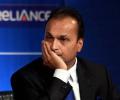
While RCom owes Indian banks close to Rs 45,000 crore, Ambani has lost close to $408 million of personal wealth year-to-date until Tuesday.

With markets expected to remain volatile, promoters and lenders exposed to the industrials and materials space can face brunt of the price erosion of the pledged shares.
The current valuation is 38 per cent higher than the 10-year average of 22x and over 50 per cent higher than the 20-year average of around 20x.

Together, the top 10 business groups reported a pre-tax loss of Rs 19,342 crore during the January-March 2020 quarter, as against a profit before tax of around Rs 48,500 crore in the year-ago period and Rs 39,600 crore during the December quarter. While Vedanta was the worst hit. others included Aditya Birla, Bharti, Adani, Mahindra, and Tata.

The liquidity crisis at Dewan Housing Finance Corporation Limited (DHFL) has dented the fortunes of ace investor Rakesh Jhunjhunwala, who increased his stake in the troubled company in the March 2019 quarter (Q4FY19).
The combined interest payment for India's top listed companies, excluding financial and oil and gas firms, was up 15.2 per cent year-on-year during the six months ended March 2019, outpacing the change in net sales and operating profit.

The Indian rupee is down nearly 2 per cent against the US dollar since the beginning of January 2019. Experts attribute the Indian rupee's relatively poor performance to a sharper-than-expected fall in economic growth in India.

The country's top FMCG stocks, such as Hindustan Unilever, ITC, Nestl, Britannia, Godrej Consumer Products, and Dabur, among others, are currently trading at around 41x their trailing 12-month earnings, down from their peak P/E multiple of around 48x at the end of December 2018.

The surge in IT, auto and FMCG stocks were led by investors seeking safety against market volatility.

The buyback price is at around 28 per cent premium to the current market price of Rs 67 on the Bombay Stock Exchange

These firms owe Rs 13 trillion to lenders and account for 55% of all non-financial corporate debt.
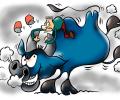
Going ahead, experts say, the fundraising trend in the primary market will depend on how the secondary market performs against the backdrop of the outcome of general elections and global cues.

Equity investors should thank cash-rich biggies such as TCS, ITC, HUL, Nestl, and Bajaj Auto for this.

Since last month, the realty (down 23%), auto (down 16%) and finance (down 14%) indices have underperformed the market by falling over 13%, as against 8% decline in the benchmark indices
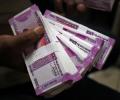
While Mcleod Russel, ADF Foods, Indiabulls Real Estate, DCM Shriram and BSE have announced buyback through open market route, the remaining 23 companies plan to buy back their shares via tender offers

While a little more than 140 penny stocks have doubled in value, 555 have given negative returns in the past year. Of these, 84 shed more than half their value.

The underperformance comes amid liquidity concerns in the non-banking finance companies space and Essel Group default news.

The government is expected to dole out some populist policies, especially for the rural / farm sector while presenting the interim budget, given that the country is heading towards general elections over the next few months.

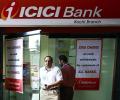
Index heavyweights continue to be top losers with ICICI bank.

There will be pressure on the fiscal situation, especially at a time when the monsoon can also disappoint. More populist expenditure is on cards if the mandate is a hung Parliament or a coalition government.

The risk-reward ratio could turn adverse for foreign investors if corporate earnings disappoint by wide margins, or if crude oil prices spike in the international market, putting pressure on the rupee-dollar exchange rate.

41 companies take back shares worth Rs 27,783 crore in FY17

Analysts attribute this fall to the recent moderation in energy (mainly crude oil) and commodity prices, lowering of input costs for companies in sectors such as FMCG, consumer durables, and automobiles, reports Krishna Kant.

Mukesh Ambani remains the country's wealthiest promoter as his stake in Reliance is now worth Rs 3.25 trillion!
Time opportune, with market buoyancy and entry of new entities

Shares of Motilal Oswal Financial Services, Edelweiss Financial Services and IIFL Holdings have all doubled in the past one year against the Sensex's 23 per cent gain.

The list of companies skipping dividends in FY19 includes some of the country's largest firms and industry leaders such Tata Motors, Avenue Supermart, Future Retail and Vodafone Idea, among others.

The BSE Midcap index has declined 5.7% thus far in May 2018. In comparison, the S&P BSE Small-cap index has lost 5.6%

Analysts attribute this outperformance to the government's proactive economic reform measures

The Karnataka election is being seen as the semi-final to the 2019 general elections and appears to be heading towards a close fight

Most analysts as well as company executives say the rally in commodity prices is ill-timed coming just when firms were recovering from disruptions such as demonetisation & introduction of GST

Second-tier NBFC stocks are trading at 24.4x their trailing earnings, which is nearly twice their 15-year average of 13.9x

A weaker rupee could aid corporate earnings through its positive impact on export intensive sectors such as information technology services, pharmaceuticals and commodity producers such as metal and mining, and oil and gas companies.

During the current financial year, 25 companies have raised Rs 28,220 crore through IPOs

India's cash-rich promoters are not the same as the wealthiest. For example, Mukesh Ambani is the richest Indian based on his stake in Reliance Industries, followed by Premji, the Adani family of the Adani group, and Radhakishan Damani of Avenue Supermarts.
So far in 2017, the Nifty has gone up by 22.4 per cent.
 © 2026 Rediff.com - Investor Information - Advertise with us - Disclaimer - Privacy Policy - Sitemap - Feedback - About us - Terms of use - Grievances