
Highlights of the Economic Survey 2025-26

Rising automobile exports are reflective of the increasing acceptance of India-manufactured vehicles across global markets, according to Economic Survey 2025-26.
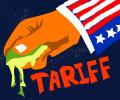
India must focus on building enduring national capabilities and economic sovereignty in the face of shrinking space for rules-based trading, anti-immigrant stance, weaponization of energy sources and growing use of export controls in critical sectors, the Economic Survey said on Thursday.

According to the Economic Survey 2026, the appropriate stance for 2026 is therefore one of strategic sobriety rather than defensive pessimism.

The country's primary capital markets delivered a robust performance in FY26, emerging as a global leader in initial public offerings (IPOs) despite an uncertain environment, the Economic Survey said on Thursday.

The Economic Survey on Thursday projected the GDP growth in the range of 6.8 to 7.2 per cent in 2026-27, a tad lower than 7.4 per cent estimated in the current fiscal.

The value of the rupee, which has slipped to the 92 per dollar mark, does not accurately reflect India's stellar economic fundamentals, the Economic Survey said on Thursday.

Benchmark stock indices Sensex and Nifty closed higher on Thursday, helped by a rally in blue-chip Larsen & Toubro and the Economic Survey projecting the GDP growth of 6.8-7.2 per cent for the next fiscal.

This year's Economic Survey and the Union Budget were more closely followed for more reasons than one.

Karnataka Chief Minister announces a ban on social media for children under 16 and increased measures to prevent drug abuse in schools, colleges, and universities, alongside investments in education infrastructure and mental health support.

Two of the three strikes are related to the gig economy, a centrepiece of the new labour Codes.

Karnataka and Andhra Pradesh announce ban social media for teens, sparking debate about its effectiveness, impact on education, and implications for advertisers targeting young audiences.

The Congress party has strongly criticized the Union Budget, calling it 'lacklustre' and 'disappointing,' claiming it fails to address the needs of farmers, unemployed youth, and other key sectors.

India's economy experienced a growth of 7.8 per cent during the October-December quarter of 2025-26, according to the new series of national accounts with 2022-23 as the base year.

The deal shifts the US posture towards India from hostile to neutral, and that matters for growth, points out T T Ram Mohan.

'When young doctors see limited protection, unpredictable careers and an absence of institutional support, they hesitate.'

'Look at what kind of sites the child is visiting, what kind of games they are playing and then tell them about the pitfalls.' 'After the child sleeps, parents can check the history of sites visited and block sites that could be dangerous or inappropriate.'

Finance Minister Nirmala Sitharaman will present the general budget in Parliament on February 1. The Budget session of Parliament begins on January 28 with President Droupadi Murmu addressing both houses.

The Budget reflects a clear focus on strengthening India's long-term prospects by leaning on nation-building sectors such as infrastructure, manufacturing, and technology while maintaining fiscal responsibility.

From the Sensex firms, Tata Steel tanked the most by 4.57 per cent. ICICI Bank, Power Grid, HCL Tech, Tech Mahindra, Infosys and Kotak Mahindra Bank were also among the laggards. Mahindra & Mahindra, State Bank of India, ITC and Bharat Electronics were among the gainers.
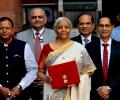
The Budget session of Parliament will be held from January 28 to April 2, featuring the President's address, the Economic Survey, and the presentation of the general Budget.

Finance Minister Nirmala Sitharaman on Friday presented the Economic Survey 2024-25 in the Lok Sabha. The Economic Survey is an annual document presented by the government ahead of the Union Budget to review the state of the economy.

The idea of back-loading the target of fiscal consolidation is perhaps guided by the government's desire to be prepared for any adverse developments in the coming year, points out A K Bhattacharya.

Through policy interventions, Indian cities need to be reimagined as a network of inter-connected assets and services which serve to strengthen the social contract between citizens and their cities by improving their quality of life, the Economic Survey has flagged.

India's high cost of capital due to relatively shallow corporate bond markets, limited institutional investor depth, sovereign risk premia, and regulatory restrictions on capital flows, is a constraint on private investment and long-run growth, the Economic Survey, authored by Chief Economic Advisor (CEA) V Anantha Nageswaran, said.

'This Budget has a one-year agenda, which you can call the sprint, and the marathon is towards Viksit Bharat.'
The Union Budget for 2026-27, presented by Finance Minister (FM) Nirmala Sitharaman on Sunday, which was a first, had an excellent domestic macro backdrop. According to the first advance estimates, gross domestic product (GDP) in constant prices is projected to grow 7.4 per cent in the current financial year, against 6.5 per cent in 2024-25.

New Delhi will substantially reduce tariffs on industrial and agricultural goods while continuing to protect sensitive sectors. Tariffs on some agricultural products that are not traditionally considered sensitive will be brought down to zero, while in the case of relatively sensitive items, duties will be reduced in a graded manner and quotas will be imposed.
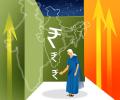
Indian economy to grow at 6.3-6.8 pc in FY26, against 6.4 pc in FY25

The Survey is authored by Chief Economic Advisor V Anantha Nageswaran and his team.

'Previously, contributing only 25 per cent of material costs, states now face burdens of 40 per cent to 100 per cent of total costs, ensuring poorer states will curb project approvals, directly stifling work demand.'

The Indian economy recorded a six-quarter high growth of 8.2 per cent in July-September, as factories churned out more products in anticipation of a consumption boost from the GST rate cut, according to government data.

The NSO previously tried to collect household income data in its ninth (1955), 15th (1959), 19th (1964), and 24th (1969) rounds (July 1969-June 1970), but these efforts were not completed, partly due to non-responsiveness by respondents.

Amidst strained ties with China, the pre-budget Economic Survey on Monday made a strong case for seeking foreign direct investments (FDI) from Beijing to boost local manufacturing and tap the export market. As the US and Europe are shifting their immediate sourcing away from China, it is more effective to have Chinese companies invest in India and then export the products to these markets rather than importing from the neighbouring country, the Survey said.

Fitch Ratings on Wednesday raised India's GDP growth forecast to 6.9 per cent for current fiscal year, from 6.5 per cent earlier, citing strong June quarter growth and domestic consumption-led demand.
India's economic growth is expected to be lower at 6.3 per cent this fiscal compared to the RBI's projection of 6.5 per cent, a SBI Research Report said on Thursday. The report pegged the first quarter GDP estimate at around 6.8-7 per cent, mainly due to muted private capex.

Finance Minister Nirmala Sitharaman on Monday tabled the Economic Survey 2021-22 along with Statistical Appendix in the Lok Sabha on the first day of the Budget session of Parliament. Later, the Lok Sabha was adjourned till tomorrow. The Economic Survey will now be tabled in the Upper House. The Budget Session of the parliament commenced on January 31 with President Ram Nath Kovind's address. The first part of the Budget session of Parliament will be held from January 31 to February 11 and the second part of the Budget session will take place from March 14 to April 8.

The Asian Development Bank (ADB) on Wednesday lowered India's growth forecast for FY26 to 6.5 per cent from 6.7 per cent on account of trade uncertainty and higher US tariffs that are expected to impact exports and investment. Despite the downward revision from the April 2025 Asian Development Outlook (ADO), India remains one of the fastest-growing major economies in the world.

More than half of all new project announcements in the June 2025 quarter came from the manufacturing sector. Manufacturing projects worth around Rs 2.3 trillion were announced in the three-month period, accounting for 54 per cent of total new projects, according to data from the Centre for Monitoring Indian Economy (CMIE).

The decision is expected to provide a push for their development in healthcare, cultural identity, education, financial matters, skill development and women empowerment among others, the Chief Minister's Office said in a statement.
 © 2026 Rediff.com - Investor Information - Advertise with us - Disclaimer - Privacy Policy - Sitemap - Feedback - About us - Terms of use - Grievances