
Over the past few days, deaths due to heat stroke have been reported from different parts of the country including Uttar Pradesh, Bihar and Odisha.

Nine cases have been detected from Maharashtra, eight from Karnataka, six from Kerala, four from Tamil Nadu and two from Telangana, they added.

As many as 21 cases of COVID-19 sub-variant JN.1 have been detected across the country till now, NITI Aayog member (Health) Dr V K Paul said on Wednesday but asserted that there was no need to panic.

Amid a spike in Covid-19 cases, the Centre on Monday reviewed with states and Union territories the preparedness for pandemic management and the progress of vaccination.

Twenty-two cases of COVID-19 sub-variant JN.1 have been detected in the country till Thursday, with 21 cases being reported from Goa and another from Kerala, official sources said.

Sources said three cases of Omicron subvariant BF.7, apparently the strain driving China's current surge of COVID cases, have been detected in India so far.

The health minister said the Centre has taken timely measures ahead of the summer season to address heatwave-related illnesses.
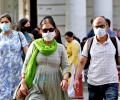
Mandaviya reviewed the pandemic situation, status of vaccination drive and the global scenario of new variants of Covid.

The article claimed that the "ICMR tailored its findings to fit Prime Minister Narendra Modi's optimistic narrative despite a looming crisis".
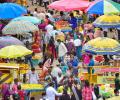
said globally, a third wave of COVID-19 is being seen and called on people to make efforts to ensure that it does not happen in India.

The teams will visit the districts reporting high number of COVID cases and support the state's efforts towards strengthening containment, surveillance, testing, infection prevention and control measures, and efficient clinical management of positive cases.
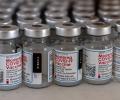
But it is not clear when the jabs will arrive in the country as a consensus on the indemnity clause is yet to be reached, sources said.

Addressing a press briefing, Union Health Secretary Rajesh Bhushan said vaccine effectiveness will be seen only after 14 days.
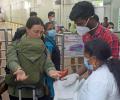
A 22-year-old man, who recently returned to Kerala from the UAE, allegedly died due to monkeypox on Saturday.
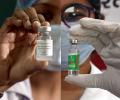
"First dose (of Covishield) and then, after 12 weeks, the second dose. There is absolutely no change. Covaxin also has a two-dose schedule. First dose and then second dose after 4-6 weeks. This schedule is being followed to take our vaccination schedule forward and no confusion must be created on this," he said.
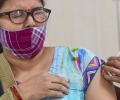
'Vaccination of all remaining unvaccinated at-risk people and consideration of a booster dose for those 40 years of age and over, first targeting the most high-risk / high-exposure may be considered,' the Indian SARS-CoV-2 Genomics Sequencing Consortium (INSACOG) said in its weekly bulletin dated November 29.
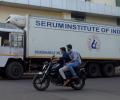
The development comes after Prakash Kumar Singh, the Director, Government and Regulatory Affairs at SII, informed the Union health ministry that the firm would be able to supply 20.29 crore doses of Covishied in the month of September.
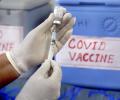
The trial is being conducted in three phases by segregating children into categories according to their age. The first trial was started in the age group of 12 to 18 years followed by the age group of 6 to 12. Trials for children between the ages of and 2-6 years are currently undergoing trials.

Cabinet Secretary Rajiv Gauba chaired a high-level meet with representatives of states/UTs to also review and discussed the COVID-19 management and response strategy through video conference.
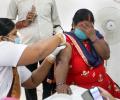
Not enough data has been generated locally to decide on the need for a booster dose of COVID-19 vaccine for those fully inoculated, say experts amid the possibility of a third wave of the viral disease hitting the country between September and October.
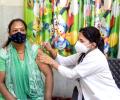
The government on Friday said there is no need to panic on the need for an immediate change in the dosage interval of Covishield vaccine, underlining that reducing the time gap requires proper scientific study in the Indian scenario.
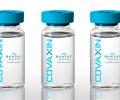
Bharat Biotech recruited 13,000 participants for the Phase-3 clinical trial of Covaxin. This is one of the largest efficacy trials held in the country.
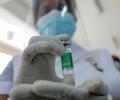
Responding to a question on the Rajasthan government's claim that there is a shortage in COVID-19 vaccine stock, Union Health Secretary Rajesh Bhushan said the central government regularly monitors the availability of vaccine supply in all states and UTs and their consumption on a daily basis.

'We have to ensure the European situation does not occur in India and we don't see a spread like theirs.'

NITI Aayog Member (Health) Dr V K Paul said the pandemic situation in the country worsened with a sharp rise in cases and a large part of the population is still susceptible to the virus.
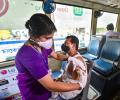
No decision on granting indemnity to any foreign or Indian Covid vaccine-manufactures has been taken yet, the government said Friday, underlining these decisions are to be taken 'in the interest of nation and people'.

Asked what India did not do and China did right in restricting the number of cases, Paul said the principles that China adopted were exactly the same that India had adopted in terms of containment, social distancing and other non pharmacological measures.
There is no change in treatment guidelines due to this mutation and the vaccines that are being developed, particularly those in the country, will not be impacted, NITI Aayog member (health) Dr V K Paul said.

Union Health Secretary said that priority groups have been decided who are vulnerable to mortality.
India's drug regulator Drugs Controller General of India has granted permission to Mumbai-based pharmaceutical company Cipla to import Moderna's COVID-19 vaccine for restricted emergency use in the country, official sources said on Tuesday.
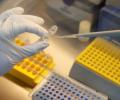
Dr V K Paul, Member (Health) Niti Aayog, who also chairs the national expert group on COVID-19 vaccine administration, said the government attaches 'great importance to this offer of partnership from a very special friend to this nation'.
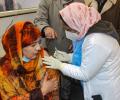
The second dose of anti-coronavirus vaccine will be administered to healthcare workers from February 13, the Centre said on Thursday, highlighting that 45 per cent of them have been inoculated so far.

As the country battles the second wave of COVID-19, the government Thursday said the virus may emerge again and so preparations have to be made at the national level in collaboration with states, infrastructure needs to be ramped up while curbs and appropriate behaviour must be followed.

As India grappled with a raging second wave of the coronavirus pandemic, the government on Monday stressed on observing COVID-19 appropriate behaviours.

The official expressed hope on the success of the five vaccines that are under different phases of trial in the country.
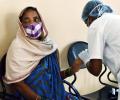
A total of 40,845 cases of black fungus or mucormycosis have been reported in the country so far, of which 31,344 are rhinocerebral in nature, and the death toll from the infections stands at 3,129, Union Health Minister Harsh Vardhan said.
These kinds of assumptions to be used for a nation of India's size and "to put us in poor light is not desirable"
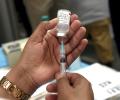
The first 100 beneficiaries of such foreign vaccines shall be assessed for seven days for safety outcomes before it is rolled out for further immunisation programme within the country, the Union health ministry said.

While there is a continuous increasing trend in COVID-19 cases and deaths globally, particularly in America and Europe and the situation in the world is becoming worrisome, in contrast the scene in India is satisfying as the cases and deaths are declining, Dr V K Paul, member (health) at NITI Aayog, told a press conference.
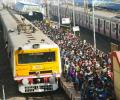
The Centre said the upsurge of COVID-19 cases is happening in cities and the Omicron variant is the predominant circulating strain.
 © 2026 Rediff.com - Advertise with us - Disclaimer - Privacy Policy - Sitemap - Feedback - About us - Terms of use - Grievances