
Inflation trajectory does not match the slump in demand, prolonged pause on rates likely.

Analysts say strengthening bank's capital will boost earnings, bank needs chief with long stint to run show

Most markets have seen significant erosion in investors' wealth this year

Analysts worry about possible loan waiver.

The Hinduja Group, Mukesh Ambani, Murugappa, and the Adani groups were the other gainers in the Modi regime, while Naveen Jindal and Sun Pharma groups saw the most erosion in their m-cap in the last five years, reports Krishna Kant.

Centre took Rs 1,002 bn from here in 2017-18, sharply up from Rs 904 bn a year before and Rs 123.6 bn in FY14
So far, India has attracted over $20 billion in the debt segment, thanks to the rate differential.

With a loan book of $268 billion, India's retail banking is now ahead of Russia, Malaysia and Mexico but behind China, Brazil and Thailand

Asset quality stress has ballooned recently, as growth slowed and interest rates continued to rise.

Crude oil prices have more than doubled, pushing up India's import bill and raising fears of a higher current account and fiscal deficit. This will impact corporate earnings.

HUL, ITC, Nestle, Colgate, Dabur, Britannia, Asian Paints, P&G are trading at nearly 48 times. The previous record high was 53 times at the end of March 1994.

New series points to a sharp recovery since FY14.

Most NBFCs will have to slow down their loan growth. Some of the most leveraged will have to sell a part of their assets (or loan book) to banks to raise incremental capital. Others may have to knock on the door of their deep-pocketed parents.

As inflation rate is near the upper limit of the comfort zone, experts rule out rate cuts anytime soon

The turmoil on the Street and a continued fall of the rupee may affect growth stocks, pushing equity investors back to the relative safety of defensive counters, or forcing them to flee markets, or both.

Oil and gas sectot may not put up good numbers in Q4.

The decline is attributed to lower salary growth and a rise in households' financial liabilities.

While gold returned 12 per cent annual gain in 10 years, Nifty didn't exceed 9 per cent.

Softening rural consumption and the likelihood of weak corporate earnings in the March quarter saw investors dump stocks.
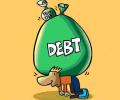
In the past three years, personal loans have grown at twice the rate of growth in personal disposable income, leading to a steady rise in household indebtedness. At the end of March this year, Indians owed Rs 25.2 lakh crore to banks and listed non-banking finance companies (NBFCs), up 65 per cent in the past three years.

The fallen bellwether of the technology sector has a strategy to reclaim its lost position.

FIIs accumulated India's top-listed companies at an average valuation of around 16 times.

Market hopes govt will hike capital expenditure.
Experts say it will now be tough for the Modi government to catch up with the UPA's economic record owing to the shock induced by the currency demonetisation.

Indian Hotels, Tata Steel, Tata Teleservices, Tata Motors, Tata Power need some immediate attention of the Tata Group chairman

Its rich valuation with a PE of 62 times raises downside risk for investors

Combined debt-equity ratio of top companies declines but interest expenses outgrow profits.

For top IT services firms, revenue growth in FY15 was the slowest since the Lehman crisis

Government-owned companies are more generous in rewarding their shareholders with dividends.

During the dot-com bubble, it had touched a high of 1.9.
An action on the rate front is unlikely to figure in Rajan's plan for the moment.

Brokerages expect revenue growth at a 7-quarter high but profitability may disappoint.

The combined share of customs and excise duties, service tax, and value-added tax in India's gross domestic product reached an all-time high of 10.5%.

The benchmark Sensex companies' underlying earnings per share are down 3 per cent (on a cumulative basis) since January 2015, against 25 per cent rise in the index value during the period

Total net debt-equity ratio improves for third consecutive year, while investment in new projects hits a 10-year low, says Krishna Kant.

12 out of 21 public sector banks reported declines in their loan books in the last financial year against seven such banks in 2015-16 and none in 2013-14.

Analysts refuse to read too much into the early birds numbers.

Combined net profit estimated to grow 14.6% year-on-year, against a 5.7% decline in the Dec 2015 quarter

Indian market has been plagued by negative sentiment and triggers

The number of infrastructure projects cleared by a monitoring group set up in the Cabinet Secretariat had increased consistently in the past year.
