
The stock of the country's largest passenger vehicle maker, Maruti Suzuki India (MSIL), has been hitting successive all-time highs over the past three trading sessions. The rally in the scrip has helped it notch over a 21 per cent gain since the start of February, outperforming the National Stock Exchange Nifty Auto Index. The gains for the leader of small passenger cars have been more recent, as the company still trails the Nifty Auto over one- and two-year periods.

Foreign portfolio investors (FPIs) pumped in Rs 1.7 trillion into domestic stocks in 2023, one of the highest net inflows ever witnessed during a calendar year, of which 25 per cent went into the direct buying of stocks. Data provided by depository NSDL revealed that Rs 44,950 crore of the total FPI flows last year went into primary issuances. A large portion of the FPI investments through the stock exchange route went into block deals, thereby reducing the actual investments made via direct buying of stocks. Last year saw selldowns or block deals worth Rs 2 trillion.

Post your health-related questions for rediffGURU Rebecca Pinto.

Hindustan Unilever's Q3FY24 performance was lacklustre, with both sales and operating profit barely moving from the year-ago period due to price cuts and higher advertising costs. Besides weak demand, the FMCG (fast-moving consumer goods) major is facing increased competitive pressures, particularly from regional players, which, coupled with a slow recovery in rural markets, could put revenues under pressure going forward. Margins are expected to remain range-bound as benefits from falling raw material costs are expected to be neutralised by rising promotional budgets.


Eleven companies have launched their initial public offerings (IPOs) in December 2023, making this month the second-best December for public offerings since 1996. Collectively, they are raising Rs 8,182.7 crore this month. In December 2021, 11 companies raised Rs 9,534 crore. However, excluding December 2021, this month marks the best December for IPOs since 1996.

In the current calendar year, small and medium enterprises (SMEs) have witnessed an impressive surge in initial public offerings (IPOs), surpassing the 2018 record. Over 150 SME IPOs have been introduced to the market, breaking the previous record of 141 set in 2018. According to data from PRIME Database, a primary market tracking firm, 147 companies successfully concluded their debut share sales by the end of October, raising a cumulative Rs 3,727 crore.

'Markets could face uncertainty in the short to medium term.' 'It would be prudent to invest in alternative asset classes, especially debt, for about a year.' 'Bank fixed deposits are offering rates as high as 9 per cent per annum and these can be used as a great hedging tool until equity markets stabilise.'

Abbott India outperformed the Indian pharmaceutical market (IPM) with a year-on-year (YoY) growth of 23 per cent in February. The domestic market grew at a robust 20 per cent on a low base, primarily led by volume growth and price hikes. Abbott continued to outperform the sector in the anti-diabetic space with a growth of 20 per cent and key brands such as Thyronorm (hypothyroidism), biliary agent Udiliv, insulin Ryzodeg posted robust growth.

Capital goods companies in their Q2FY24 results are expected to report another steady quarter of earnings growth as order inflows and execution remain healthy, according to analysts. An upward revision in order inflow targets and a margin improvement due to lower raw material costs are also anticipated. "We expect the execution of all capital goods companies and most EPC (engineering, procurement, and construction) companies to remain healthy Y-o-Y (year-on-year), led by strong order book accretion in the past 5-6 quarters," wrote analysts at Kotak Securities in a note, estimating revenue growth of 32 per cent for India's largest company in the capital goods space -- Larsen & Toubro.

Only when we are part of the same family, which will happen down the line, then, of course, we will give them (PMC depositors) all the assurance and the comfort.'
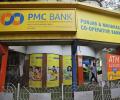
The Reserve Bank on Friday extended the regulatory restrictions on Punjab and Maharashtra Cooperative (PMC) Bank by another six months till December 2021 to enable the completion of its takeover by Centrum Financial Services. Paving the way for takeover of the crisis-ridden bank, the RBI had earlier in the month granted in-principle approval to Centrum Financial Services to set up a small finance bank (SFB). "Taking into account the time required for completion of various activities involved in the process...the validity of the ...Directive dated September 23, 2019, as modified from time to time, has been extended for a further period from July 1, 2021 to December 31, 2021, subject to review," the RBI said in a notification.

The fees charged by investment banks to manage initial public offerings (IPOs) have increased to an average 3.23 per cent of the issue size this calendar year, the highest since 2020. The average fee is up 8 per cent compared to last year, when it stood at 2.99 per cent. The investment banking fees have increased as the average IPO size has shrunk this year.
As many as 31 mainboard IPOs raised a cumulative Rs 26,272 crore in this period, according to Prime Database. During the April-September 2007 bull run, 48 IPOs totalling Rs 21,243 crore were launched. The number of deals in H1FY24 was 2.2 times that of the same period of the last fiscal year, but the amount raised was 26 per cent lower.
Water projects firm Vishnu Prakash R Punglia, the 20th company to launch its IPO in the current year, saw its shares closing at a 47 per cent gain over its issue price on Tuesday. Such a huge one-day pop is considered rare; however, it has become the norm this year. The average listing-day gain for these 20 IPOs in 2023 is 34 per cent, and their average gain to date stands at 46 per cent.

There is no near-term respite for the country's largest fast-moving consumer goods maker, Hindustan Unilever (HUL), which is facing multiple challenges on the growth front. With demand showing no signs of improvement, especially in the rural segment, the October-December quarter (Q3) of 2023-24 (FY24) is likely to be similar to the previous quarter, with volume growth in the low single digits. The stock, which is down 7 per cent over the past year compared to the 11 per cent jump for the S&P BSE Sensex, could underperform the benchmark in the near term as well.
'The money is readily available to the depositors.'

Unseasonal rains watered down the performance of consumer durables companies as temperatures cooled, impacting the sales of refrigerators and air conditioners (ACs) in the 2023-24 (FY24) April-June quarter. Centrum says in its report on the sector that the trade channel indicates a 25-30 per cent year-on-year (YoY) decline in sales of refrigerators and ACs in April and May due to restricted buying. "While some green shoots in demand were visible in June, overall growth for the quarter is likely to remain at a negative 10-12 per cent," observes the brokerage.

Even as cement companies continue to announce ambitious expansion plans, analysts turn cautious over the sector as incremental supply is expected to coincide with a weak demand growth period, and other headwinds of higher fuel costs, weak monsoons and general elections. In August, JSW Cement said it will take its current 19 million tonnes (MT) capacity to 60 MT in the next five years. The country's top producers have massive expansion plans underway - UltraTech Cement targeting 200 MT, Adani Cement aiming for 140 MT and Dalmia Cement planning for 110-130 MT.

The initial public offering (IPO) market has seen some momentum of late with robust responses to recent issues. However, only some have been able to ride the wave. So far in 2023, 23 companies have let their approval granted by the markets regulator - the Securities and Exchange Board of India (Sebi) - lapse.

'Banking is a business of trust.'

Companies, which missed out on listing earlier, are giving it another shot but with significantly-reduced issue sizes. In the recent past, companies such as TVS Supply Chain Solutions, Suraj Estate Developers, and ESAF Small Finance Bank have re-filed their draft red herring prospectuses (DRHPs) with the Securities and Exchange Board of India (Sebi). This came after they slashed their issue sizes by 20-60 per cent.

After a sharp outperformance in the mid-and small-cap segments in the first half of calendar year 2023 (H1-CY23), analysts are now turning cautious on these two market segments and suggest investors stay selective and look for valuation comfort and earnings visibility before investing. The S&P BSE Midcap index has surged 13.7 per cent in H1-CY23, and the S&P BSE Small-cap index gained 12.7 per cent during this period, data shows. The S&P BSE Sensex, in comparison, has moved up 6.4 per cent.

Auto sales in April have started showing the impact of lockdowns that has put the brakes on the recovery of the sector, a report said on Tuesday. With more states announcing lockdowns and some more OEMs expecting to go for maintenance shutdowns, as many as 50 per cent of the dealers are likely to be impacted by the move, it added. However, the full-year prospects remain positive if the COVID wave recedes in the April quarter and the vaccination drive goes as planned, brokerage firm Centrum said in the report.
ITC has been one of the best performing large-cap stock at the bourses thus far in calendar year 2022 (CY22), rallying nearly 52 per cent during this period and outperforming the sector benchmark - the S&P BSE FMCG index - by a wide margin that moved up around 17 per cent during this period. However, the counter has lost over 5 per cent from its recent high of Rs 346.25 hit on September 23, 2022 and has underperformed the S&P BSE Sensex, which has lost nearly 2 per cent since then. So, is the rally in the stock coming to an end, and is this a good time to book profit?

Notwithstanding lower growth rates recorded in the first quarter (Q1) of 2023-24 (FY24), which spanned from April to June, footwear stocks have seen some gains in the past two trading sessions. Bata India saw an increase of approximately 5 per cent, driven by positive expectations surrounding a potential tie-up in the sports/athleisure segment. This development is viewed favourably due to the segment's higher growth rates.

Despite markets turning volatile, share sale activity at India Inc has surged to its highest level in five months. So far in March, promoters, strategic investors and other large shareholders have been able to offload shares worth more than Rs 33,000 crore-the most since November-defying uncertain market conditions. Both the Sensex and the Nifty are on course to post their fourth straight monthly loss amid headwinds, such as interest rate tightening by the US Federal Reserve and the global banking crisis.
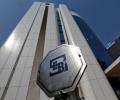
The Securities and Exchange Board of India's (Sebi's) proposal to re-introduce "hard underwriting" is seen as step to boost India's moribund initial public offering (IPO) markets. The regulator has proposed that in case an IPO fails to garner full subscription, the investment banker or a third-party can buy the unsubscribed shares. This practice was common during fixed-price issues prior to 1999. However, under the new book building regime, underwriting is allowed only to the extent of shortfall due to technical rejection of bids - this is referred to as "soft underwriting" and is rarely invoked.

With a new chief executive officer (CEO) at the helm, the country's largest two-wheeler maker Hero MotoCorp is now looking to cut flab and move towards a leaner organisation. It has launched a voluntary retirement scheme (VRS) for its staff as it aims to make the organisation 'agile and future-ready'. Recently, the company's erstwhile chief financial officer (CFO) Niranjan Gupta was elevated as CEO.
The filing of offer documents with the capital markets regulator - Securities and Exchange Board of India - has more than halved this financial year (2022-23, or FY23) as the outlook for new share sales has worsened, following correction in the secondary market. So far in FY23, 66 companies filed their draft red herring prospectus (DRHP), as opposed to 144 in the preceding financial year (2021-22, or FY22).

The fundraising through rights issues in the first 10 months of 2022 is the lowest since 2016 during a similar period.

'There is a lot of interest from potential clients who have remained away from the markets in past years.' 'They are evaluating whether this is a good time to enter, especially since there are very few alternatives to earn meaningful returns.'

There will be different ways of returning the money, depending on the profile of the depositors and the amount, predicts Tamal Bandyopadhyay.
IPO market hopes to come out of slump in festive season, reports Sundar Sethuraman.
The restrictions on Punjab and Maharashtra Cooperative (PMC) Bank has been extended for another three months till the end of March next year. Reserve Bank of India (RBI) has extended the restrictions as further action on the draft scheme for the takeover of the crisis-hit bank by the Delhi-based Unity Small Finance Bank (USFB) is in process. The central bank had prepared a draft scheme of amalgamation and the same was placed in the public domain on November 22 as part of seeking suggestions and objections, if any, from members, depositors and other creditors of PMC Bank and USFB.

Crisis-hit Punjab and Maharashtra Cooperative (PMC) Bank's takeover by the Unity Small Finance Bank (USFBL) came into effect on Tuesday, with the government notifying the scheme of amalgamation. PMC Bank branches will operate as USFBL branches from Tuesday onwards, the Reserve Bank of India (RBI) said in a statement on Tuesday. The takeover comes into force little over two years after the RBI superseded the board of the PMC Bank after financial irregularities came to light.

Investors have become poorer by a massive Rs 19,50,288.05 crore as equity market sell-offs continued for the fifth day in a row on Monday. The BSE Sensex plunged 1,545.67 points or 2.62 per cent to settle at 57,491.51 on Monday, while, the NSE Nifty slumped 468.05 points or 2.66 per cent to settle at 17,149.10. This is the steepest single-day drop for the indices in about two months. Over the last five sessions, the 30-share Sensex has tumbled 3,817.4 points or 6.22 per cent.

Experts expect a net loss of Rs 26.7 billion for IndiGo and Rs 10.1 billion for SpiceJet in Q1FY21 driven by low traffic volume, low fleet utilisation and poor coverage of fixed costs.

If the deal goes through this will be second deal for Ebix in seven months, having bought Centrum group's forex and travel business Centrum Direct for a reported Rs 1,2000 crore valuation last August.

Inching closer to resolving the Punjab and Maharashtra Cooperative (PMC) Bank issue, the Reserve Bank on Monday came out with a draft scheme for takeover of the crisis-hit bank by the Delhi-based Unity Small Finance Bank (USFB). The draft scheme of amalgamation envisages takeover of the assets and liabilities of PMC Bank, including deposits, by USFB, thus giving a greater degree of protection for the depositors, the RBI said. In September 2019, the RBI had superseded the board of PMC Bank and placed it under regulatory restrictions, including cap on withdrawals by its customers, after detection of certain financial irregularities, hiding and misreporting of loans given to real estate developer HDIL.
 © 2026 Rediff.com - Investor Information - Advertise with us - Disclaimer - Privacy Policy - Sitemap - Feedback - About us - Terms of use - Grievances