
In recent past, midcap stocks have performed well, say experts.

The World Bank's latest review of its purchasing power parity (PPP) baseline will reignite the poverty debate.

The manufacturing sector during the fourth quarter recorded a growth rate of 9.3 per cent while the farm sector grew at 2.3 per cent.

Lower revenue collection puts upward pressure on government borrowing, ensuring that it deviates from the glided path of debt reduction

From linking innovation with supply of inputs to providing contract farming, the private sector can help agriculture move to the next stage of development.

The final agriculture GDP numbers for 2016-17 are expected to be revised up, as rabi production is looking really good.

It is too late in the government's term for it to pull its usual trick of blaming the last guys.

Against a turbulent and uncertain background, Budget 2017-18 hewed a steady, forward-looking course, says Shankar Acharya, former chief economic adviser to the government.
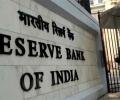
Headed by Urjit Patel, MPC for the fourth straight time kept the repo rate unchanged, at which it lends to the banks, at 6.25 per cent. The reverse repo, at which RBI borrows, will be 6 per cent.

Agriculture, which accounts for 14% of GDP grew at 3.2% in the quarter

'We are looking at the Budget with the hope that it will address all issues even at the cost of exceeding the fiscal deficit target.'

It is not a good idea to take the line that since demonetisation happened in the third quarter, everything that happened then was a consequence of that, says Chief Statistician TCA Anant.

Manufacturing sector grows at 3.5%; agriculture sector at 3.8%

There is lack of scientific basis in computing the poverty line, says govt.

India grew at 7.6% in 2015-16 and at 7.2% in 2014-15.

The greatest disconnect lies in the estimates of industrial growth.

In 2015, the Reserve Bank of India cut interest rates by 125 basis points to 6.75 per cent.

'Everyone confuses GDP to be a measure of output, when it is actually a measure of income.'

This was even as the country's economy grew by 7.3%.

Questions on the efficacy of the government's drive towards filing of more returns by individuals and on whether raising tax exemption levels has led to reduced compliance in filing of returns by those who go out of the tax net, says A K Bhattacharya.

The non-oil, non-finance sector of the economy is under severe stress.

India said its economy grew 7.3 percent in the October-December quarter.
.jpg)
During April-February, the index of industrial production, a measure of factory activity, declined 0.1 per cent compared with a 0.9 per cent growth in the corresponding period of 2012-13.

Markets extended losses to end 1.5% down on Tuesday, amid weak global cues, after investors turned cautious ahead of key economic data and booked profits in rate sensitive shares while the further fall in the rupee continued to weigh on investor sent.

What is required from government is intellectual framework.

The new national income numbers produced by the Central Statistics Office (CSO) have elicited two kinds of reaction.

The Budget decides to take the lead in revving up infrastructure.

Technically, the Indian economy is on road to recovery.
.jpg)
Net profit grew 25.4% in Q4 but revenue growth, lower at 8.5%, suggests lack of volume expansion.

It is pegged at 6.8-8% by various economists, as compared to 6.7%.

The new IIP numbers should spread cheer among those who were part of the Manmohan Singh-led United Progressive Alliance, earlier accused of having presided over a steady deterioration in industrial performance, particularly in the last two years of its tenure, says A K Bhattacharya.

The estimates of national income and growth do not pass the 'smell test'.
The new numbers did not apparently pass consistency checks with production, inputs, or movements in the National Stock Exchange.

Few readers will remember the socialist utopia of Indira Gandhi when food queues were the norm even for the middle class and tankers supplied water at odd hours of the night twice a week. Is that what you are trying to return us to, dear Congress, asks Jaideep Prabhu

Chief economic advisor Arvind Subramanian discusses the Budget, goods and services tax, Centre-state relationship and larger issues facing the economy
