
The direct tax collections are likely to fall short of the revised Budget target by Rs 650 billion and, in fact, were Rs 150 billion lower than the original estimate for the fiscal

Tuesday's bridge collapse once again puts the spotlight on the city's urban infrastructure and a dire need for its development.

The government has budgeted for total expenditure of Rs 34.83 lakh crore or 6.8 per cent of GDP. While the net tax revenue rose from Rs 5,75,697 crore in October 2020 to Rs 10,53,135 crore till October 2021, a growth of 82.93 per cent annualized, total expenditure rose only by 9.95 per cent, led by infra spending to Rs 18,26,725 crore from Rs 16,61,454 crore during the same period, the RBI said in the financial stability report.
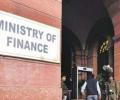
The finance ministry on Wednesday reimposed expenditure curbs on ministries and government departments for July-September quarter. There will be no spending restrictions on the ministries of health, rural development, agriculture, MSME (micro, small and medium enterprises) and railways as part of a two-pronged strategy. "The existing guidelines for expenditure control have been reviewed. "Keeping in view the evolving situation arising out of Covid-19 and anticipated cash position of the government, it is felt essential to regulate Quarterly Expenditure Plan (QEP)/Monthly Expenditure Plan (MEP) of specific ministries/departments for July-September, 2021," the Department of Economic Affairs in the finance ministry said in a notification.

The outlay for defence sector almost remained unchanged compared to what was allocated in the interim budget on February 1.

Could turn out below last year's budget estimate, with some improvement in revenue and spending

'Market feels this Budget will promote all-round growth and that is what is giving it confidence.'

Finance Minister Nirmala Sitharaman presents her fourth Budget in Lok Sabha on Tuesday.

'The numbers are null and void now. Look, we can give out projections now, but we know that a week later those numbers will also be irrelevant. So we need to wait,' a top government official said.

Like 2017-18, govt will seek comments from the public at large, including Facebook and Twitter

The Centre's fiscal deficit for the first two months (April-May) of the current fiscal has increased to Rs 90,758 crore, which is 27.3 per cent of the Interim Budget estimate, according to the Controller General of Accounts data released on Tuesday. The Budget estimate for the fiscal deficit in the year 2009-10 is Rs 3,32,835 crore.
The Budget estimate for the fiscal deficit in the year 2009-10 is Rs 3,32,835 crore (Rs 3,328.35 billion). Last year 2008-09, the first two months of the fiscal had accounted for 54.9 per cent of the year's Budget estimate.

'We would advise investors to invest in a disciplined way in equities for the long term.'

The government, it would seem, is reserving its firepower to spend on big-ticket items that will be announced in the Budget, reports Subhomoy Bhattacharjee.

Observing that there is liquidity overhand of Rs 13 lakh crore in the system, RBI Governor Shaktikanta Das said on Friday that the exceptional measures undertaken during pandemic will be dealt in sync with macroeconomic developments to preserve financial stability. Since the onset of the pandemic, the Reserve Bank has maintained ample surplus liquidity to support a speedy and durable economic recovery, he said while announcing the outcome of the Monetary Policy Committee (MPC) meeting. The level of surplus liquidity in the banking system increased further during September 2021, with absorption under fixed rate reverse repo, variable rate reverse repo (VRRR) of 14 days and fine-tuning operations under the liquidity adjustment facility (LAF) averaging Rs 9 lakh crore per day as against Rs 7 lakh crore during June to August 2021, he said.

In the Union Budget presented in Parliament by Finance Minister Nirmala Sitharaman, a total of Rs 1,52,369 crore has been set aside for capital expenditure that includes purchasing new weapons, aircraft, warships and other military hardware.

The Union Government's fiscal deficit remained above the annual target for second month in row at the end of August, mainly on account of the impact of lockdown on revenue collections. According to the data released by the Controller General of Accounts (CGA), fiscal deficit during April-August was at 109.3 per cent of the annual target estimated in the Budget.

The fiscal situation is an improvement over the previous year.

'Increased allocations for MNREGA could have provided the much needed push to rural demand and consumption at a time when recovery continues to remain uneven.'

A 5 per cent increase in fees for various licences has been proposed without tweaking the existing tax structure. The BMC's total budget estimates for the next financial year are 8.95 per cent more than the last fiscal.

The government has utilised 'escape clause' under the FRBM Act which provides it leeway for relaxation of fiscal deficit roadmap during time of stress.

Prime Minister Narendra Modi's announcement of providing free inoculation to all adults will entail total spending of anywhere between Rs 45,000 crore and Rs 50,000 crore. This is higher than Rs 35,000 crore that the government had budgeted.

Collection will have to rise by 30 per cent in the remaining period of the financial year to achieve the Budget estimate.
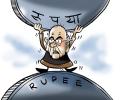
Fiscal deficit in first half of FY19 has already reached 95.3 per cent of full-year budget estimates.

It was 55.3 per cent for the same period last year, and data shows the fiscal deficit for April-May was kept in reasonable check in spite of heavy frontloading of expenditure.
There appears to be a growing perception among the political class that faster growth will not create jobs fast enough and, therefore, welfare spending needs to be drastically increased, says T T Ram Mohan.
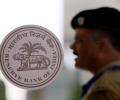
The Reserve Bank on Friday approved the transfer of Rs 99,122 crore as surplus to the central government for the accounting period of nine months ended March 31.

If the government cuts wasteful expenditure as it is trying now, the deficit would at most fall to 8 per cent, not less than that.

The finance ministry on Wednesday said the government will borrow Rs 4.34 lakh crore in the second half of the current fiscal to meet its expenditure requirement amid COVID-19 crisis afflicting the country's economy.

Macroeconomic management is usually a lot more comfortable with lower fiscal deficits. The sooner we get there, the better for the economy, says former Chief Economic Adviser to the Government of India Shankar Acharya.

Sitharaman does away with loans from National Small Savings Fund to Food Corporation of India.

Budget for 2022-2023 has returned to its agenda for protectionism in the name of creating a self-reliant India, points out A K Bhattacharya.

Nirmala Sitharaman is proving to be a better finance minister than her initial rookie status might have led people to expect, observes T N Ninan.
Even with the possible expenditure roll-overs and off-budget financing, the fiscal deficit target will not be met. The FRBM Act, after its amendment in 2018, allows a fiscal deficit slippage of not more than 0.5 per cent for any given year, provided there are justifications. These justifications include war, national security, severe collapse in the agriculture sector, a major natural calamity, big structural economic reforms, or the decline in real output growth of a quarter by at least 3 percentage points below its average of the previous four quarters.

Finance Minister Nirmala Sitharaman on Tuesday said the upcoming Budget for 2021-22 will sustain the momentum of public spending on infrastructure and have a "vibrancy" to ensure the economic revival continues. She also said the pace of divestment, which has been hit by the COVID-19 pandemic, will pick up in the coming months. "We shall definitely sustain the momentum of public spending in infrastructure. Because that is the one way we assure that the multipliers will work and the economy's revival will be sustainable.... "I am conscious that the forthcoming Budget will have a vibrancy that is so required for the economy's revival, sustainable revival," she said at the Assocham Foundation Week. The Budget for the 2021-22 fiscal is expected to be tabled in Parliament on February 1.

Even as Chinese troops continue squatting on territory that we claim as our own -- this was the lowest allocation for defence in percentage terms since the 1950s, reveals Ajai Shukla.
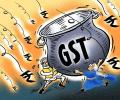
'We have already given Rs 1.59 trillion to states.' 'So, there is no question of giving them more.'

The government had pegged the fiscal deficit for 2020-21 at Rs 7.96 lakh crore or 3.5 per cent of the GDP in the budget presented by Finance Minister Nirmala Sitharaman in February.
The major beneficiaries have been the ministries of roads and highways, railways and power

'While there has been an impact on economic activity, it is not as profound as the lockdown last year.'
 © 2026 Rediff.com - Advertise with us - Disclaimer - Privacy Policy - Sitemap - Feedback - About us - Terms of use - Grievances