
Foreign investors sold $2.8 bn stocks in the past quarter alone. FIIs trimmed their holding in the BSE 500 companies by nearly two percentage points to 17.8 per cent, bringing it back to June 2005 levels, according to a Citigroup report. FIIs pulled out shares worth $2.8 billion over the past quarter.
According to a study by the brokerage division of global financial services major Citigroup, promoter holding went up to 58 per cent in the BSE-500 companies in the second quarter this fiscal from 54 per cent in the previous three-month period. In contrast, FIIs, mutual funds, banks, insurance companies and retail investors cut down their holdings.

Net sales growth for the quarter ended December (Q3FY20) was 4.5 per cent on a year-on-year (YoY) basis for companies that have declared their results so far, compared to an 8.4 per cent rise in the first half of the financial year. This indicates that there could be a further rise in days' sales of inventory.
The year 2007 has been yet another blockbuster year for the stock markets. The Sensex posted annual returns of 46.6 per cent as on December 28 this year, following gains of 46.7 per cent in 2006.
Utility vehicles manufacturer Mahindra & Mahindra will replace Hero Honda in the country's benchmark index Sensex from July 9.
The combined stake of foreign institutional investors in the top 500 Indian companies has dropped to a two-year low of 18.18 per cent as on June 30, 2008 from a high of 19.86 per cent in the corresponding period a year ago.
The primary investment objective of the scheme is to generate consistent long-term returns by investing predominantly in equity & equity related instruments of "companies that are focusing on Rural India".

The weakness in the rupee and broader markets has led to evaporation in the market cap.
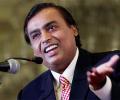
In Friday's market rally post the corporate tax cut, the country's top business promoters recouped more than two-thirds of the losses that they suffered in the post-Budget sell-off in equity markets.

These firms owe Rs 13 trillion to lenders and account for 55% of all non-financial corporate debt.
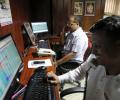
For the first time in a decade, the BSE Midcap and Smallcap indices outperformed the benchmark index for a consecutive year

During the dot-com bubble, it had touched a high of 1.9.

Richest 10 account for 41% of promoter wealth, up from 33% in December 2018, says Krishna Kant.

A total of 183 stocks rallied 10 per cent, of which 32 stocks saw price appreciation of 20 per cent each.

BSE Midcap and BSE Smallcap indices settled the day 0.7% and 0.9% higher

The cumulative m-cap of the companies listed on the BSE soared to a new peak of Rs 82,02,907 crore at 1200 hours.
This is because the action outside of the indices over the past month has been rather strong

The rally in most of these stocks is partly attributed to impressive financial performance.

Promoters' holding in private sector BSE 500 companies declined to 43.4% in Sept

Of these 26, Bajaj Finance, Associated Alcohols and Breweries, Garware Technologies, Filatex India, Tasty Bite Eatables, Aarti Industries and GMM Pfaudler saw an over 10-fold surge in price since 2014.
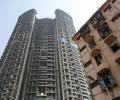
Listed realty developers saddled with unsold properties worth Rs 1 trillion

Rise in investor sentiment, return of risk appetite aid shares across the board

Once tipped to emerge as the biggest exporter, the pharmaceutical industry is yet to acquire the scale of those in software services, says Krishna Kant.

Bids for the issue, which opens on January 23 and closes on January 25, can be made for a minimum of 18 shares and in multiples of 18 thereafter.

Going by the current pace, IT firms are likely to exceed the manufacturing sector in salary payouts over the next five years.

Corporates' forex borrowings have grown at a CAGR of 15.6% since 2008.
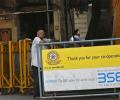
Broader markets outperformed benchmark indices with BSE Midcap and BSE Smallcap up 0.5% and 0.6%.

Number of stocks trading above 50 times and 100 times earnings are at record highs. When this happened in 2015 and 2016, the Sensex fell 22.6 per cent in a little over a year's time after peaking in January 2015, while it fell by 11.3 per cent in two months from its peak in September 2016.

'The people let off by the NBFCs have little bargaining power and willingly settle for a 20% to 25% cut in their existing salaries when hunting for new jobs.'

India's cash-rich promoters are not the same as the wealthiest. For example, Mukesh Ambani is the richest Indian based on his stake in Reliance Industries, followed by Premji, the Adani family of the Adani group, and Radhakishan Damani of Avenue Supermarts.

Analysts attribute this outperformance to the government's proactive economic reform measures

The benchmark indices have rallied 28 per cent this year, while the broader market has outperformed
 © 2026 Rediff.com - Advertise with us - Disclaimer - Privacy Policy - Sitemap - Feedback - About us - Terms of use - Grievances