
'The US should make clear to Pakistan that, whether or not the attack originated in Pakistan, now would be an opportune time to move ahead with the prosecutions of the LeT members involved in the 2008 attacks.'
With Pakistan saying that there was no delay on its part in prosecuting people behind the 26/11 Mumbai attacks, India on Wednesday said Islamabad should not try to score "petty points" on the issue and help in bringing the perpetrators to book.

The plan hinged on two critical assumptions: India would not be able to replenish supplies quickly to launch a counter-attack. India could not respond in enough strength to dislodge the Pakistanis. Both assumptions would be proved wrong due to the ferocity of the Indian response, reveals former RAW officer Tilak Devasher in his new book, Pakistan At The Helm.

"The morale of the Army has gone up. Army wants to teach lesson to our enemy. They are just waiting for permission from the government... We gave them permission two-three times," Parrikar said during BJP's campaign meeting in Vasco on Sunday.

"Our government has invariably made efforts to initiate the process of meaningful dialogue and adoption of peaceful means to resolve the issues but unfortunately the expansionist designs of India have remained the main hurdle in this regard," Abbasi said.
Some five months before the 26/11 Mumbai terrorist attack, India had warned the United States about increasing "white faces" in terrorist camps along the Pakistan-Afghanistan border and the attempt by jihadi groups to acquire fissile material to "fabricate a crude bomb beyond a dirty bomb".
In an apparent reference to Swami Aseemanand's confession to a special court in New Delhi, a statement issued by the Foreign Office said the Indian diplomat's "attention was drawn to the recent reports in the media on the investigations into the Samjhauta Express blasts of February 2007".

Tightening the noose around Lashkar-e-Tayiba, the United States on Wednesday designated the Pakistan-based terror group's student wing Al-Muhammadia Students a terrorist organisation and slapped sanctions against its two top leaders.
As Pakistan took exception to Home Secretary G K Pillai's recent remarks on Inter Services Intelligence's role in Mumbai attacks, India on Friday said that there is no acrimony between the two sides on the issue.
Undeterred by last week's attack, India on Saturday declared that it will continue its developmental activities in Afghanistan without scaling down presence even as it suspended operations of its medical mission in Kabul hit by injuries to most of its members.

Jamaat-ud-Dawah chief Hafiz Muhammad Saeed, blamed by India for masterminding the 2008 Mumbai carnage, on Tuesday night said New Delhi has never presented any evidence to back up its assertions that his group was involved in several terrorist attacks.
A senior police official in Delhi, who is part of the anti-terror team, says there needs to be proactive operations and intelligence will be a crucial aspect. "We need to be constantly informed and upgraded about the new threats so that we can prepare ourselves accordingly," he said.
Asserting that Pakistan will be held responsible if there is a Mumbai-type attack, India on Monday termed "very irresponsible" the statement by Prime Minister Yousuf Raza Gilani that his country cannot guarantee that such an incident will not recur.
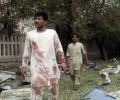
India on Tuesday announced a package of nearly $150,000 for providing relief to victims and reconstructing a mosque damaged in a devastating suicide attack on its consulate last week.
In the wake of the sentencing of Ajmal Kasab, the lone terrorist caught alive during the 26/11 terror attacks, India on Thursday pressed for the extradition of his co-conspirators based in Pakistan, so that they could be brought to justice in New Delhi.External Affairs Minister S M Krishna said the trial and sentence awarded to Kasab sends a message to Pakistan that justice will be meted out to anyone waging war against this country.
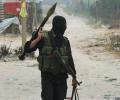
The Islamic State is preparing to attack India to provoke an Armageddon-like confrontation with the United States, according to an internal recruitment document of the feared group which also seeks to unite the Pakistani and Afghan Taliban into a single army of terror.
With intelligence inputs suggesting that terrorists were planning to attack India's nuclear installations, Army chief General Deepak Kapoor on Wednesday said Indian weapons were 'fully secure' and that there was no doubt about their safety. "As far as Indian nuclear weapons are concerned, I can assure you that whatever weapons we have, they are fully secure and there is no doubt about their safety," he told reporters.
Naval officer-in-charge (West Bengal) Commodore Chandra Sekhar Azad has said that in the wake 26/11 Mumbai attack, India has taken several measures to strengthen coastal security across the country.

He said that as the home minister of the country, he wanted to make it clear that India is committed to taking along everybody and moving ahead on the path of development.
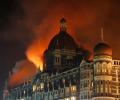
David Coleman Headley, the Pakistani-American Lashkar-e-Tayiba operative is being deposed before a Mumbai court on Monday through video conference.
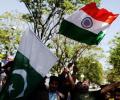
'The talks held in Bangkok, virtually on Indian terms, is an event where Pakistan seems to have blinked first.'
Prime Minister Manmohan Singh on Saturday spoke to Afghan President Hamid Karzai and discussed the situation arising out of Thursday's attack on Indian Embassy in Kabul.

Hinting at Pakistani link to the Kabul embassy attack, India on Saturday said Afghanistan faces threat from terrorists and their "patrons residing across the border" and that the blast was handiwork of those who want to undermine Indo-Afghan friendship.

His view will be shaped by his perception of US world interests and India's economic performance relative to China.
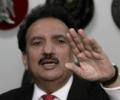
Pakistan Interior Minister Rehman Malik has said that India must share information it has regarding any future terror strike being planned against it, adding that New Delhi will have to bear the consequences if it refuses to do so.Malik said India must share information regarding any terrorist strike being planned against it in order to take tangible action against those plotting the attack.
Unhappy with the behaviour of Pakistan over terrorism, particularly the Mumbai attacks, India is not too keen to have a foreign ministerial meeting with Pakistan, even though both Union Foreign Minister S M Krishna and his Pakistani counterpart Shah Mahmood Qureshi are in Port of Spain in to attend an international summit.

Even as the NIA backtracked on its chief Sharad Kumar's statement, on its part Islamabad, touted his remarks to claim 'vindication' of its long standing position in this regard.
Former Pakistani ambassador to Afghanistan and former chief secretary of the North West Frontier Province, Rustam Shah Mohmand, tells Aditi Phadnis that the United States is part of the problem in Afghanistan.
Mumbai Police Commissioner D Sivanandan has said unlike Israel, which immediately reacts to any terror attacks, India lacked the killer instinct against those who carry out such attacks."Since thousands of years, we have been passively witnessing all terror attacks. We never went to fight with anybody. That's what our main problem is and we lack the killer instinct," he said."We cannot go and wage a war against Pakistan, China or anybody else," he said.

Harmanpreet Singh struck twice as India edged past hosts Malaysia 2-1 in their fourth league match of the 5th Sultan of Johor Cup, Junior Hockey tournament in Johor Bahru on Thursday.

Pakistan will open their innings in Sunday's World Cup match against India with Younis Khan in an attempt to accommodate leg-spinner Yasir Shah, and also include talented youngsters Umar Akmal and Sohaib Maqsood in the final eleven.

Pakistan is probably the most dangerous country for the world as it is ripe with the threats of terrorism, a failing economy and the fastest growing nuclear arsenal, a retired CIA official has said.

A day after the National Investigation Agency filed a chargesheet against Jaish-e-Mohammed chief Masood Azhar in the Pathankot attack, India took on Pakistan at the United Nations and called on the hostile neighbour to leave behind its ways of terrorism, with the warning saying that, "what you sow will bear fruit".
India on Friday handed over to Pakistan the replies to the 30 questions, about the terror attack on Mumbai in November last year, posed by that country. External Affairs Minister Pranab Mukherjee handed over India' reply to Pakistan High Commissioner Sahid Malik. Earlier, Home Minister P Chidambaram had handed over the document along with evidence to Mukherjee. He had added that each and every question posed by Islamabad had been answered adequately.
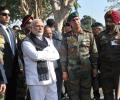
Prime Minister Narendra Modi on Saturday visited the strategic Pathankot Air Force base for a first-hand assessment of the situation in the aftermath of the terror attack last Saturday.

A summary of sports events and sports persons, who made news on Wednesday
Agitated over confusing signals emanating from Pakistan with regard to Mumbai attacks, India on Friday slammed it for not responding through proper channel and felt that Islamabad was doing it deliberately to hide the truth about involvement of state actors in the carnage.

'India have a good bunch of fast bowlers.' 'Umesh is doing really well and so are Shami, Bhuvneshwar Kumar and Ishant.'
Chidambaram took a dig at Gujarat Chief Minister Narendra Modi. Queried on the similarities Gujarat Chief Minister Narendra Modi's remarks on involvement of "internal elements" in Mumbai attacks and comments by Pakistani leadership, he said, "You should ask Narendra Modi whether he and Pakistan are in contact with each other." According to Chidambaram Modi's comments were uncalled for.
The chief of the National Security Guards had recently warned that India could be struck by terrorists using biological weapons and with the help of women affiliates of the Al-Qaeda.
 © 2026 Rediff.com - Investor Information - Advertise with us - Disclaimer - Privacy Policy - Sitemap - Feedback - About us - Terms of use - Grievances