
There is a need to incentivise R&D investments, offer corporate tax concessions and establish an effective intellectual property rights regime in order to push the growth of domestic pharmaceutical industry, as per the industry bodies. Outlining the sector's wish list for the upcoming Union Budget, Organisation of Pharmaceutical Producers of India (OPPI) Director General Anil Matai urged the government to explore methods to incentivise R&D investments, such as deductions on R&D expenses, research-linked incentives for MNCs, and corporate tax concessions.

'It is not just the US and European opportunity, but it is a huge global opportunity.'

India has covered enough population with vaccine and infection, but protein vaccines should remain available on payment basis for elderly and those with comorbidities.

In recent months, several pharma multinational corporations (MNCs) are increasingly turning to Indian companies to expand market reach in the country's pharmaceuticals sector. Sanofi's partnerships with Dr Reddy's, Cipla, and Emcure, AstraZeneca and Mankind Pharma - teaming up for asthma medication distribution - are a few instances of this trend. This strategy allows MNCs to leverage established Indian networks and reach a wider audience. Indian companies also benefit from global brands and expertise, say analysts.
Global pharma firm AstraZeneca on Tuesday said it had filed a lawsuit in the United States District Court of New Jersey
Close on the heels of introducing drugs for treatment of cancer and cardiovascular diseases, Anglo-Swedish pharmaceutical major AstraZeneca on Tuesday said it would launch one more medicine this year and two next year in India.
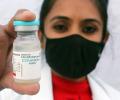
Serious AESI, which included stroke and Guillain-Barre syndrome, were reported in one per cent of individuals, the study, which looked at long-term safety of the BBV152 vaccine in adolescents and adults, claimed.
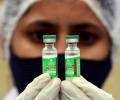
Dr Malhotra, who has demanded a full safety review into the use of AstraZeneca's Covid vaccine, told PTI Covishield "should never have been rolled out in the country in the first place".

A number of Indian medical experts on Monday supported calls from an eminent British Indian cardiologist for a full safety review into the use of Oxford/AstraZeneca's Covid-19 vaccine, administered in India as Covishield, over feared serious side effects such as heart attack and stroke.

Following up first doses of the AstraZeneca or Pfizer vaccines with second doses of the Moderna or Novavax jabs generates robust immune response against COVID-19, according to a study published in The Lancet journal.
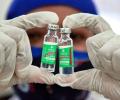
SII would be scaling up its AstraZeneca-Oxford vaccine manufacturing capacity to 200 million doses a month from 100 million a month now, reports Sohini Das.
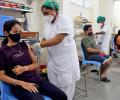
'Our study shows a greater risk reduction for people who received an mRNA vaccine after having received a first dose of a vector-based, as compared to people having received the vector-based vaccine for both doses,' Nordstrom said.

"I've just received my first Oxford/AstraZeneca vaccine dose. Thank you to all of the incredible scientists, NHS staff and volunteers who helped make this happen," he tweeted. "Getting the jab is the best thing we can do to get back to the lives we miss so much. Let's get the jab done," he added in his tweet.
If the vaccine is recommended for use as a booster against Omicron, it may significantly boost the demand for Covishield in India.
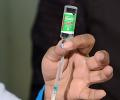
The researchers from King's College London in the United Kingdom also found that most systemic side effects -- meaning side effects excluding where the injection took place -- peaked within the first 24 hours following vaccination and usually lasted 1-2 days.

There is confusion over the United Kingdom government's vaccine recognition process for Indian travellers as even though Oxford/AstraZeneca Covishield, the India-manufactured Oxford/AstraZeneca COVID-19 vaccine, is on an updated international travel advisory, India is not yet on a list of 17 approved countries.
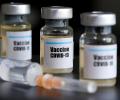
AstraZeneca Plc and the University of Oxford are facing questions about their Covid-19 vaccine and whether regulators would quickly authorise its emergency use after the pharma company acknowledged an error in the vaccine dosage received by some participants and other irregularities and omissions, according to the New York Times.
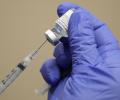
According to the study, 'mixed' schedules of these vaccines induced high concentrations of antibodies against the SARS-CoV2 spike IgG protein when doses were administered four weeks apart.

"I realise that a lot of Indians who have taken Covishield are facing issues with travel to the EU, I assure everyone, I have taken this up at the highest levels and hope to resolve this matter soon, both with regulators and at a diplomatic level with countries," Poonawalla said in a tweet.
Earlier this week, AstraZeneca said it had paused the trials because of 'an unexplained illness' in a participant in the study.

The comments came after AstraZeneca and Oxford University acknowledged a manufacturing error that is raising questions about preliminary results of their experimental COVID-19 vaccine.

Adar Poonawalla says it took a five-minute chat with his father Cyrus before making the decision to manufacture Covishield. The bet paid off, and handsomely. Serum Institute now has the capacity to make 4 billion doses of Covishield annually.
'Once DCGI will give us the permission to restart the trials in India, we will resume the trials,' Serum Institute of India (SII) said in a statement.
The move comes even as India's drug regulator has extended Covishield's shelf life from six to nine months from its manufacturing date.

The expert committee sought more information from Serum Institute regarding the Oxford-AstraZeneca vaccine.
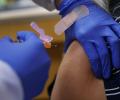
The global trials were halted after a study participant suffered a 'potentially unexplained illness, reports Sohini Das.

The nature of the adverse reaction and when the development took place were not initially clear, although the participant is expected to recover, said an individual familiar with the matter.
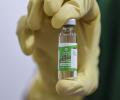
The Oxford/AstraZeneca vaccine is also being produced as part of a tie-up by the Serum Institute of India.
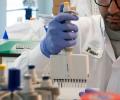
The DCGI also directed Serum Institute of India to increase the safety monitoring of the subjects already vaccinated as part of the trial, and submit the plan and report.

Apart from making efforts to meet the requirements of India, the company is also trying its best to balance the needs of the rest of the world, he added.

In the next two weeks, the United States will detail plans to equitably distribute about 80 million (8 crore) COVID-19 vaccine doses globally without 'political requirements' of those receiving them, Secretary of State Antony Blinken has said.
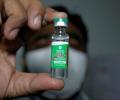
"The vaccination schedule is considered complete 28 days after the administration of a dose for Janssen vaccine and 7 days after administration of a second dose for other vaccines (Pfizer / Comirnaty, Moderna, AstraZeneca/Vaxzevria/Covishield)," the statement added.

Poonawalla said booster vaccines have no demand as there is general lethargy among people and also because they are fed up with the pandemic.

What the UK is getting out of the Serum Institute is what India is losing. And the responsibility of the Indian State ought to have been to dictate where Serum Institute's vaccine doses should go, argues Ambassador M K Bhadrakumar.
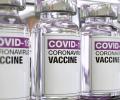
However, in two different dose regimens, the vaccine's efficacy was 90 per cent in one and 62 per cent in the other.
50 lakh doses of 'Covishield' vaccine earmarked by the Serum Institute for export to the United Kingdom have now been made available for the inoculation of 18-44 age group in 21 states/UTs in India, amid a surge in COVID-19 cases, official sources said.

The UK government is under increasing pressure on Monday to review its COVID-19 vaccine protocol in place for travellers from India, after its updated rules effective from next month failed to recognise Indian vaccines under an expanded list of countries.
 © 2026 Rediff.com - Investor Information - Advertise with us - Disclaimer - Privacy Policy - Sitemap - Feedback - About us - Terms of use - Grievances