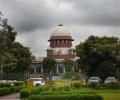
The Supreme Court of India has overturned an order by the National Green Tribunal (NGT) that halted construction activities at Auroville in Chennai. The court emphasized the need for a "golden balance" between the right to development and the right to a clean environment, upholding the principle of sustainable development. The decision comes as a victory for the Auroville Foundation, which had challenged the NGT order, and highlights the ongoing debate about balancing environmental concerns with economic growth in India.

Reacting to the apex court verdict which upheld the death sentence awarded to Mohammed Ajmal Amir Kasab in the 26/11 Mumbai terror attack case, senior advocate Raju Ramachandran, who defended him in the apex court as amicus curiae, said he "bows down" to the ruling.
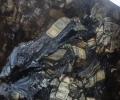
The Supreme Court has dismissed a Public Interest Litigation (PIL) seeking the registration of an FIR over the alleged discovery of burnt wads of cash at the official residence of Delhi High Court judge Yashwant Varma. The court said an in-house inquiry was underway and there would be several options open to the Chief Justice of India after the probe's conclusion.
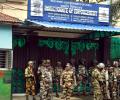
The Supreme Court has announced it will decide in April whether to reconsider its 2022 verdict upholding the Enforcement Directorate's powers to arrest and attach property under the Prevention of Money Laundering Act (PMLA). The court is hearing a batch of pleas seeking a review of the July 2022 verdict, which upheld the ED's powers of arrest and attachment of property involved in money laundering, search and seizure under the PMLA. The verdict came on a batch of over 200 petitions filed by individuals and other entities questioning various provisions of the PMLA.

The Supreme Court of India has expressed concern over the erosion of the family institution, stating that people in India, while valuing the concept of 'vasudhaiva kutumbakam' (the world is one family), are failing to maintain unity even within their immediate families. This observation came in a case involving a dispute between a mother and her eldest son over property and family relations.
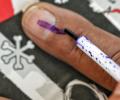
As votes for the Delhi assembly polls were counted on Saturday, latest data of the Election Commission showed that NOTA option got 0.57 per cent vote share as compared to 0.55 pet cent of the Bahujan Samaj Party and 0.01 per cent of Communist Party of India-Marxist.
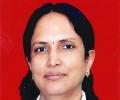
The Bombay High Court has ruled that Pushpa Ganediwala, the former HC judge who had faced criticism for a series of controversial judgments in POCSO Act cases, is entitled to receive pension on par with a high court judge. Ganediwala was demoted as district sessions judge at the end of her additional judgeship in 2022 following an uproar over some judgments passed by her on the interpretation of what constitutes a sexual assault under the Protection of Children from Sexual Offences (POCSO) Act. She had filed a petition challenging a communication issued by the HC registrar declaring that she was not eligible for pension of a HC judge. The court quashed the communication and directed the registry to fix her pension with 6% interest from February 2022.
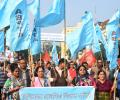
The Supreme Court of India has invalidated the appointment of 25,753 teachers and other staff in West Bengal's state-run and state-aided schools, deeming the selection process "vitiated and tainted." The court ordered the state government to conduct a fresh selection process within three months. The decision comes after a Calcutta High Court verdict in April 2024, which also annulled the appointments. The apex court, while upholding the high court's order, made some modifications, including exempting disabled employees from returning their salaries. The case stemmed from alleged irregularities in the 2016 recruitment process by the West Bengal School Service Commission (SSC), involving OMR sheet tampering and rank-jumping. The Supreme Court had previously termed it a "systemic fraud." Former West Bengal education minister Partha Chatterjee and Trinamool Congress MLAs Manik Bhattacharya and Jiban Krishna Saha are among the accused being investigated in the recruitment scam.
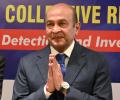
The Allahabad High Court Bar Association has begun an indefinite strike to protest the proposed transfer of Delhi HC judge Yashwant Varma, who is under investigation after a large amount of cash was found at his residence. The Oudh Bar Association (OBA) of the Lucknow bench of the High Court has also condemned the transfer, calling for impeachment proceedings against Justice Varma. Both bar associations are concerned about the impact on public faith in the judiciary and have called for a reconsideration of the transfer decision.
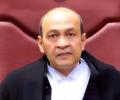
A plea in the Supreme Court of India seeks a direction to Delhi Police to lodge an FIR over the alleged discovery of semi-burnt stash of cash from the official residence of Delhi High Court judge Yashwant Varma. The plea challenges a 1991 judgement that prohibits criminal proceedings against judges without prior consent from the Chief Justice of India, arguing it violates the principle of equality before the law. It also seeks to declare the collegium's 3-member committee investigating the incident as having no jurisdiction and calls for action against corruption within the judiciary.
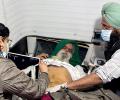
Farmer leader Jagjit Singh Dallewal, who was on an indefinite hunger strike in support of various demands, has broken his fast after the Punjab government intervened and dispersed protesting farmers at Khanauri and Shambhu borders. The Supreme Court lauded Dallewal's efforts and acknowledged the government's action, while also asking for a status report on the situation. Contempt proceedings against the Punjab chief secretary and Director General of Police for not complying with the court's order of providing medical aid to Dallewal were dropped.
The Supreme Court has sought a report from the Uttar Pradesh Police regarding allegations that Ashish Mishra, son of Union Minister Ajay Mishra, influenced witnesses in the Lakhimpur Kheri violence case. The court directed the Lakhimpur Kheri superintendent of police to file the report after a complaint was made by advocate Prashant Bhushan, representing the complainants. Bhushan claimed to have an audio recording of an attempt to influence witnesses and alleged that Mishra attended a public meeting in violation of his bail conditions. Mishra, through his lawyer, denied the allegations and stated that he was being targeted unnecessarily. The court has also asked for the authenticity of the material presented to be verified.
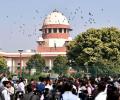
The Supreme Court on Monday said the trial of the Manipur ethnic violence cases, probed by the Central Bureau of Investigation, would be conducted in Guwahati, Assam, where it was transferred to earlier.

Instant 'triple talaq', also known as 'talaq-e-biddat', is an instant divorce whereby a Muslim man can legally divorce his wife by pronouncing 'talaq' three times in one go.
Justice Shekhar Kumar Yadav, an Allahabad High Court judge, is set to appear before the Supreme Court Collegium to explain his controversial statements made at a Vishva Hindu Parishad (VHP) function. The Supreme Court has sought a report from the Allahabad High Court after news reports surfaced regarding Justice Yadav's remarks, which were widely condemned as "hate speech". The judge's statements, made at a VHP event, sparked outrage from various quarters, including opposition leaders and lawyers. The Bar Association of India has also condemned the judge's remarks and called for an apology.
The Supreme Court of India has ruled that family members of an accused in domestic violence cases cannot be implicated without specific charges. The court emphasized the need for sensitivity in handling such cases, noting that emotions run high in matrimonial disputes and there may be a tendency to indiscriminately implicate family members. The court stressed that criminalizing domestic disputes without specific allegations and credible evidence could have disastrous consequences for the institution of family.
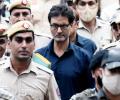
Even Ajmal Kasab was given a fair trial in our country, the Supreme Court on Thursday remarked and indicated it may set up a courtroom inside Tihar Jail for the trial of J-K separatist leader Yasin Malik in a kidnapping case.
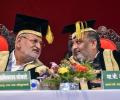
A court in Maharashtra has stayed the conviction of state minister Manikrao Kokate in a 1995 cheating and forgery case, citing the potential for "huge public money" to be spent on a re-election if he were to be disqualified. The court argued that voters had reposed faith in Kokate and elected him as their legislator, and that he would face an "irreversible situation" if disqualified. Kokate, a member of the ruling Nationalist Congress Party, was convicted in February and sentenced to two years in prison for submitting fake documents to obtain government housing. The court noted that Kokate has raised several arguable points in his appeal against the conviction and that a decision on the appeal will take time.

A five-member Constitutional Bench of the Supreme Court led by Chief Justice Cholendra Shumsher Rana issued the verdict stating that President Bhandari's decision to dissolve the lower house upon a recommendation of Prime Minister K P Sharma Oli was an unconstitutional act, delivering a major blow to the veteran Communist leader who was preparing for snap polls.
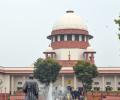
In a significant development, the Supreme Court on Tuesday asked the Election Commission of India to provide details of cases in which it had either removed or reduced the period of disqualification from electoral rolls of leaders post their conviction in criminal cases.
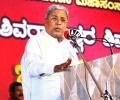
Siddaramaiah, his wife, brother-in-law B M Mallikarjun Swamy, Devaraju -- from whom Swamy had purchased a land and gifted it to Parvathi -- and others have been named in the FIR registered by the Lokayukta police establishment, located in Mysuru on September 27, following the order of the Special Court that exclusively deals with criminal cases related to former and elected MPs/MLAs.
Those arrested have been identified as Vipin Jain and Pomil Jain, former directors of Bhole Baba Dairy, Apoorva Chawda from Vaishnavi Dairy and Raju Rajasekharan from AR Dairy, they said.

The judge, however, ruled that there was a clear prima facie case under Section 354 of IPC for 'assault or criminal force to woman with intent to outrage her modesty".
Legal experts have lauded Chief Justice of India Sanjiv Khanna's decision to make public crucial documents related to a controversy surrounding the alleged discovery of cash from Delhi High Court judge Yashwant Varma's residence. They also welcomed the formation of an in-house committee to further investigate the matter. While some expressed concerns about the incident's impact on the judiciary's image, others emphasized the need for transparency and a fair inquiry. The Supreme Court released the inquiry report by Delhi High Court Chief Justice D K Upadhyaya, which included photos and videos of the alleged cash discovery. Justice Varma has denied the allegations, calling them a "conspiracy to frame and malign him."

The Central Bureau of Investigation (CBI) has sent a judicial request to the United States seeking information from private investigator Michael Hershman, who has claimed to possess crucial details about the Rs 64-crore Bofors bribery scandal of the 1980s. Hershman, the head of the Fairfax Group, had previously expressed his willingness to share information with Indian agencies, alleging that the investigation into the scam was derailed by the then Congress government. The CBI's request comes after previous attempts to obtain information from US authorities yielded no results. This move highlights the continued efforts to uncover the truth behind the decades-old scandal, which has had a significant impact on Indian politics.
The Chief Justice of India (CJI) Sanjiv Khanna has ordered an in-house inquiry into allegations against a Delhi High Court judge, Justice Yashwant Varma, after reports of burnt cash being found at his residence. The inquiry will be conducted by a three-member committee headed by Justice Sheel Nagu, Chief Justice of the Punjab and Haryana High Court. The allegations stem from a report by the Delhi High Court Chief Justice Devendra Kumar Upadhyaya, who stated that four to five semi-burnt sacks of Indian currency notes were found at Justice Varma's residence following a fire. Justice Varma has strongly denied the allegations, calling them a conspiracy to frame him.
The Supreme Court has said police cannot serve notices to accused persons through WhatsApp or other electronic modes under the Criminal Procedure Code or Bhartiya Nagrik Suraksha Sanhita, 2023.

The Information and Broadcasting Ministry is examining the existing statutory provisions and the need for a new legal framework to regulate 'harmful' content amid complaints of 'obscenity and violence' being shown on digital platforms.
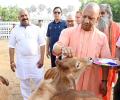
Uttar Pradesh Chief Minister Yogi Adityanath, known for his hardline Hindutva views and 'bulldozer justice' approach, has spoken out about his policies toward Muslims, the Waqf board, and his vision for India. He asserts that Muslims will receive a fair share of development in Uttar Pradesh, but not special concessions. He also criticizes the Waqf board for its alleged appropriation of government properties and calls for its reform. Adityanath defends his 'bulldozer justice' policy, claiming it is necessary for infrastructure development and removal of encroachments. He also discusses his vision for India, emphasizing the importance of Hindi as a national language and the need for unity across different linguistic groups.

The Supreme Court of India has refused to interfere with a Madras High Court order quashing notices issued by the Tamil Nadu Pollution Control Board (TNPCB) against Isha Foundation, founded by Jaggi Vasudev. The notices were issued for alleged violation of environmental norms in the construction of a yoga and meditation center in Coimbatore. The court, however, emphasized that its order should not be seen as a precedent for regularizing illegal constructions and that Isha Foundation must comply with all environmental norms. The foundation had argued that its facilities fall under the education category, which exempts them from needing environmental clearance.
The Supreme Court of India has ordered the burial of a pastor whose body has been lying in a mortuary since January 7th, after a dispute arose regarding the location of his burial. The court issued a split verdict, with one judge ruling for burial on the family's private land and the other for a designated place away from the village. The decision was made due to the prolonged delay in the burial and the potential for unrest. The court ordered the state government to provide security to prevent any further incidents.

The Supreme Court has granted bail to alleged middleman Christian Michel James in the purported Rs 3,600-crore AgustaWestland case. James had been in custody for six years while the investigation was ongoing. The alleged scam relates to the purchase of 12 VVIP helicopters from AgustaWestland. James, a British national, was extradited from Dubai in December 2018.
'If we stay silent now, we betray the very foundation of justice in this country.'

The Supreme Court of India has emphasized the importance of individual liberty, setting aside a Himachal Pradesh High Court order that cancelled bail for an accused in an attempt-to-murder case. The Supreme Court found no material to support the cancellation, stating that courts should be cautious about interfering with an individual's freedom.
A three-member panel led by the Chief Justice of India (CJI) Sanjiv Khanna has been formed to probe the discovery of "four to five semi-burnt sacks" of Indian currency notes found after a fire at the residence of Delhi High Court judge Yashwant Varma. The incident, which occurred on March 14, has triggered an in-house inquiry, with the findings determining the judge's fate. The panel, consisting of Chief Justices Sheel Nagu (Punjab and Haryana), G S Sandhawalia (Himachal Pradesh), and Karnataka High Court judge Anu Sivaraman, will conduct a "deeper probe" into the allegations. Justice Varma has denied any knowledge of the cash being stored in the storeroom. The inquiry follows the Delhi High Court Chief Justice Devendra Kumar Upadhyaya's report that recommended a deeper investigation. The top court's 2014 guidelines for in-house procedures for probing allegations against judges will be followed during the inquiry. The panel's findings could lead to either the removal of the judge, if the misconduct is deemed serious, or a reprimand. The inquiry will also determine if the fire was indeed a short-circuit as initially reported.
Justice Vishwanathan said he was in "the Common Cause (the NGO which had filed the PIL in coal scam cases). This case was of the ED (Enforcement Directorate), but still...".
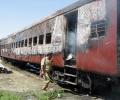
The Supreme Court on Thursday said it will hear on January 15 the appeals filed by the Gujarat government and several other convicts in the 2002 Godhra train burning case.
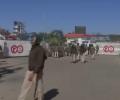
The first round of trial incineration of 10 tonnes of waste connected to the 1984 Bhopal Gas Tragedy has begun in Pithampur, Madhya Pradesh, amid tight security. The Supreme Court refused to intervene in the MP High Court's order directing the transfer and disposal of waste at a private company-operated plant in Pithampur. The trial incineration is being conducted in the presence of scientists from the central and state pollution control boards. Protesters have expressed apprehensions about harm to the human population and environment due to the disposal of this waste, but the state government has rejected these concerns, saying that solid arrangements are in place for safe disposal.

The Supreme Court of India will hear a petition challenging a district court's order to survey a Mughal-era mosque in Sambhal, Uttar Pradesh. The petition alleges that the hasty survey has led to communal tensions and violence, resulting in deaths and injuries. The petitioners argue that the survey was ordered without proper notice or hearing, and they seek a stay on the proceedings and a directive to prevent such surveys from being ordered as a matter of course in cases involving disputes over places of worship.

The bench gave liberty to Mukerjea to approach the trial court
 © 2026 Rediff.com - Investor Information - Advertise with us - Disclaimer - Privacy Policy - Sitemap - Feedback - About us - Terms of use - Grievances