
When everyone has footage and no one can verify it, the loudest voice wins, notes Prem Panicker who begins a daily blog on the War in the Middle East.

Modi might be tempted to hit the brakes on spending. But an austerity drive could be self-defeating in a weak economy.
The author suggests eight reforms that all parties competing in this year's general elections should embrace.
A hurried reform agenda will be either too squeamish or too ambitious and impractical.
Microsoft is lucky to dodge Nokia's tax bill in India. On Dec. 12, the Delhi High Court allowed the Finnish group to transfer its Chennai factory to the U.S. software giant as part of its planned $7.4 billion sale of its mobile handset business.
A few shares foreigners love have lifted markets, leaving investors open to a reversal of hot money as well as political risk.
NRIs will abandon rupee-denominated accounts, causing a deposit crunch and worsening the current account deficit.

Companies that loaded up on debt when India was being hailed as the world's second-fastest-growing economy are now deleveraging to clean up their balance sheets.

Even when large businesses said they were flying blind in mid-2020, the markets rallied and an incredible business boom followed. This is not to say that the markets will continue to rally and there is nothing to worry about, observes Debashis Basu.

FM has agreed to dump an ill-conceived plan to slap a retrospective 20% levy on overseas asset managers

If Modi rethinks on pro-biz policies, investors will suffer.
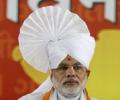
The judiciary has sent a strong message against crony capitalism.

Investors have another reason to wrinkle their noses at emerging economies - fading labour productivity.

About 4 GW of new nuclear power capacity is under construction in India

The proposed four per cent inflation target is onerous, considering India is currently battling near-double-digit increases in prices.

RBI governor Raghuram Rajan is likely to cut rates in next monetary policy.

India's banks are propping up too many weak producers.

Indian states are preparing for a Rs 1.9 lakh crore (Rs 1.9 trillion) tax windfall this fiscal year.

Curbing the federal deficit is the government's absolute priority on February 28.

Global disinflation has finally caught up with India's high-cost economy.

Narendra Modi's pay-off from relaxing labour laws would be huge.
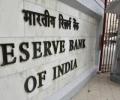
The idea is to boost household savings and turn more of them into growth capital. If the plan succeeds, sustained eight per cent-plus rates of gross domestic product growth should be within reach in a few years.

CBDT circular issued last month had raised multiple taxation concerns.

Raghuram Rajan is correct -- the RBI's monetary response to inflation in the past has been too weak.

Investors are sceptical that the economy could have picked up so much steam.
'At a time when the entire India-US relationship needs to be defined by President Trump and Prime Minister Modi, a fresh look at the liability issue has become urgent,' says Ambassador T P Sreenivasan, former Governor for India at the IAEA.

It's crucial for Modi to make India an easier place to do business.

Governor Rajan can be more unambiguously pro-growth.

India has undermined its own credibility.

The upcoming Budget gives Finance Minister Arun Jaitley a chance to let states boost spending.

It was the rejection of the Congress' welfarist economics by voters that led to the party's drubbing, says Andy Mukherjee.

The biggest lesson China can teach India is that when it comes to sustaining a love affair with investors, nothing works better than an undervalued currency and its by-product: a current-account surplus.
 © 2026 Rediff.com - Advertise with us - Disclaimer - Privacy Policy - Sitemap - Feedback - About us - Terms of use - Grievances