
From the 30-Sensex firms, Maruti, Power Grid, Tata Motors Passenger Vehicles, HDFC Bank, Asian Paints and Tata Steel were among the biggest laggards. However, Titan, HCL Tech, Tech Mahindra, Infosys and Tata Consultancy Services were among the gainers.

India and the European Union are set to announce on January 27 the conclusion of negotiations and finalisation of a free trade agreement, which is aimed at boosting economic ties between the two regions amid disruptions in global trade due to US tariffs, an official said.

India has stated it will wait for the outcome of the elections in Bangladesh and the resulting mandate before addressing any existing issues. The country also affirmed its support for free, fair, inclusive, and credible elections in Bangladesh.
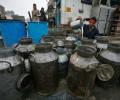
India has fully protected its sensitive sectors like dairy, rice, wheat, pulses, tea, genetically modified (GM) goods, and coffee by not granting any import duty concessions to the European Union (EU) under the bilateral free trade agreement, according to the Commerce Ministry.

The rupee witnessed a volatile trading session and settled for the day on a slightly lower note, down 1 paisa at 90.66 against the US dollar on Monday, as traders assessed the details of the India-US interim trade framework.

The United States did not accept India's request for consultations under an agreement of the World Trade Organisation (WTO) concerning American tariffs on steel, aluminium, and related derivative products, Parliament was informed on Tuesday.

Israeli Prime Minister Benjamin Netanyahu says the foundation of India-US relationship is "very solid" and both sides should find common ground to resolve the tariff issue. He also highlighted the strong defense cooperation between India and Israel.
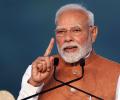
Prime Minister Narendra Modi on Friday said India will never compromise the interests of its farmers, fishermen and dairy farmers, asserting that he would be ready to pay any price.

Investors should tilt their portfolios towards domestic-facing defensive sectors, which should help provide stability and shield them from geopolitical and tariff risks.

From the 30-Sensex firms, HDFC Bank, Infosys, HCL Tech, Bajaj Finance, Tata Consultancy Services and Reliance Industries were among the biggest laggards. In contrast, Bharat Electronics, Hindustan Unilever, Tata Steel and UltraTech Cement were among the gainers.

In an event-heavy week ahead, stock markets are expected to track Q3 corporate earnings from several blue-chip firms, including TCS and Infosys, while inflation data and global trends would also dictate investors' sentiment, analysts said.

The quarterly manufacturing index by the industry body Federation of Indian Chambers of Commerce & Industry (Ficci) rose to an all-time high in the third quarter of financial year 2025-26 (Q3FY26), with 91 per cent of respondents reporting either higher or same production levels, against 87 per cent in the previous quarter.

Stock markets closed higher on Friday after the Reserve Bank of India kept its benchmark interest rate unchanged as expected and proposed allowing banks to lend to Real Estate Investment Trusts (REITs) with certain prudential safeguards to deepen the financing pool for the real estate sector.

New Zealand Prime Minister Christopher Luxon on Monday said the negotiations for a free trade agreement with India have been concluded.

Senior officials from India and the US engaged in virtual talks to discuss bilateral ties, focusing on trade, investment, critical minerals, and energy security, including civil nuclear cooperation.
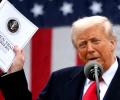
While growth in India is largely domestic and hence the overall GDP effect may not be more than 0.15-0.2%, but overall trade will be impacted due to every country going back to the drawing board, points out Madan Sabnavis.


Sitharaman continues with the tradition she set in 2019, carrying the budget speech in a 'bahi-khata', which she used after dropping the briefcase tradition.

Will rising tensions between US-Israel and Iran threaten crude oil supply through the Strait of Hormuz, putting India's fuel prices, imports, and economic stability at risk?

'The trade deficit in some sectors is huge and that is an area of opportunity to localise.'

Gold extended its record-breaking run to breach the Rs 1.5 lakh per 10-gram mark in futures trade on Tuesday, while silver surged to a lifetime high of Rs 3.27 lakh per kg as investors rushed to safe-haven assets amid mounting global tensions. On the Multi Commodity Exchange (MCX), gold futures for February delivery climbed Rs 6,861, or 4.7 per cent, to record Rs 1,52,500 per 10 grams after settling at Rs 1,45,639 per 10 grams in the previous session.
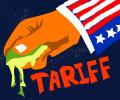
A trade deal makes sense only if it is fair and reciprocal. If the cost is strategic dependence or loss of policy space, waiting is the wiser option, asserts Ajay Srivastava.

'...but I would not like to put a timeline to it'

Stock market is gearing up for an eventful week ahead where key triggers such as quarterly earnings from corporates, the US Fed interest rate decision and the upcoming Union Budget for 2026-27 would grab the limelight, analysts said.

Simplifying GST rates, removing exemptions, easing disputes, and speeding up refunds can boost investment in India and offer the best reply to Trump's tariffs, observes V S Krishnan, former member, Central Board of Indirect Taxes and Customs.
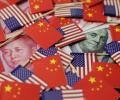
China on Friday said it is assessing whether to start trade talks with the US on tariff reductions following recent approaches by Washington, a move that would possibly ease the tit-for-tit tariff war between the world's two largest economies. "China is making assessments as the United States has recently reached out to convey messages to China through relevant parties many times, expressing hope to engage in talks with Beijing over tariff issues," the Chinese Commerce Ministry said in a statement in Beijing.

From the Sensex firms, Tata Steel tanked the most by 4.57 per cent. ICICI Bank, Power Grid, HCL Tech, Tech Mahindra, Infosys and Kotak Mahindra Bank were also among the laggards. Mahindra & Mahindra, State Bank of India, ITC and Bharat Electronics were among the gainers.

India will take all necessary steps to safeguard and promote national interest, Commerce and Industry Minister Piyush Goyal said on Thursday, a day after US President Donald Trump announced 25 per cent tariffs plus penalty on domestic exports to America from August 1.

The rupee appreciated 13 paise to close at 90.34 against the US dollar on Thursday, on trade deal optimism and overnight decline in commodity prices, even as the upside remained capped as investors look for more clarity on the India-US trade deal.
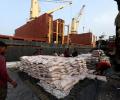
Apex exporters body FIEO on Tuesday expressed serious concerns over high US tariffs on Indian goods and said that textiles and apparel manufacturers in Tirupur, Noida, and Surat have halted production amid worsening cost competitiveness due to these steep duties. The US duties on Indian goods will increase to 50 per cent from August 27.

Finance Minister Nirmala Sitharaman's biggest challenge will be to find a new growth driver, particularly against the backdrop of a global economy ravaged by heightened uncertainty and fragmentation, financial markets on a precipice, and global commodity prices on a continued uptrend.

US President Donald Trump has said that India should not be "dumping" rice into the United States market and he will "take care" of it, while stressing that tariffs will solve the "problem" easily.

Speculation about rising competition from global majors has led to shares of major Indian automobile manufacturers such as Mahindra & Mahindra (M&M), Maruti Suzuki India, and Tata Motors taking a hit on the BSE.

Technology Innovation: Sword or Plough looks at key moments in recent history, noting how key technological changes at pivotal moments had unimaginable consequences, both positive and negative. It makes for enjoyable and insightful reading.
From the 30-Sensex firms, Tata Consultancy Services, Asian Paints, Maruti, Sun Pharma, Hindustan Unilever, ICICI Bank, Kotak Mahindra Bank, Tech Mahindra, HDFC Bank and Larsen & Toubro were among the biggest laggards. On the other hand, Tata Steel, NTPC, Axis Bank and UltraTech Cement were among the gainers.

India has joined the US-led 'Pax Silica' alliance, aimed at building a resilient supply chain for critical minerals and artificial intelligence, marking a significant step in strengthening bilateral ties and fostering economic security.

The Indian rupee, swaying through multiple headwinds, tiding over global trade disruptions and massive foreign fund outlfows, is unlikely to arrest its descent until tariff impact overhangs, notwithstanding robust domestic macroeconomic tailwinds. The Reserve Bank of India (RBI), which sees the rupee's depreciation as a silver bullet to offset the tariff shock, expects the currency to find its stable course once India reaches a trade deal with its largest trading partner, the US.

US Ambassador to India Sergio Gor presented his credentials to President Droupadi Murmu. The ceremony took place at the Rashtrapati Bhavan. Gor's appointment was confirmed last year, and he previously served as the White House personnel director. He emphasized the importance of India-US relations and ongoing efforts to finalize a trade deal.

The Budget reflects a clear focus on strengthening India's long-term prospects by leaning on nation-building sectors such as infrastructure, manufacturing, and technology while maintaining fiscal responsibility.

With the worst in terms of pricing pressures behind Tata Steel, its outlook is expected to improve. Europe has seen hot rolled coil prices rise this January after the European Union's (EU's) carbon border adjustment mechanism (CBAM) kicked in and further price improvements may be on the cards once import quotas come into play in June.
