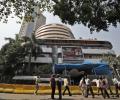
The NSE Nifty slid 40.75 points, or 0.39 per cent, to 10,490.75 after scaling a new peak of 10,552.40.

Sentiment got a leg-up after the Lok Sabha on Thursday gave its approval for Rs 80,000 crore recapitalisation bonds for strengthening public sector banks, traders said.

The 50-share NSE Nifty also cracked the 10,600-level by falling 259 points, or 2.39 per cent, to close at 10,599.25 after hitting a low of 10,547.25.

ONGC was the top gainer in the Sensex pack, rallying around 6 per cent, followed by NTPC, Tata Steel, ICICI Bank, ITC, Titan and Bajaj Auto. On the other hand, Axis Bank, M&M, Tech Mahindra, Asian Paints and Bajaj Finserv were among the laggards.

Sentiment in the market will also be guided by other major market movers like trend in the rupee, Brent crude and foreign capital flows.
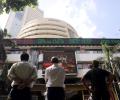
Domestic equity benchmarks ended marginally higher on Thursday, with the Nifty settling at a fresh record, amid mixed cues from global markets.
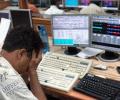
'We are expecting lower levels in the week beginning March 1.'

Kotak Bank was the top loser in the Sensex pack, falling around 3 per cent, followed by Axis Bank, Sun Pharma, HDFC Bank, Bajaj Finance and Asian Paints. On the other hand, ONGC, PowerGrid and IndusInd Bank were the gainers.

IndusInd Bank was the top laggard in the Sensex pack, sinking over 12 per cent, followed by Bajaj Finance, ICICI Bank, Axis Bank, M&M, Tata Steel, ONGC and Maruti. On the other hand, Bharti Airtel, Hero MotoCorp and Nestle India were the gainers. NSE Nifty plummeted 280.40 points, or 3.03 per cent, to 8,981.45.
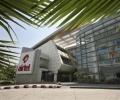
Telecom operator Bharti Airtel on Friday said it has signed an agreement to buy Vodafone's 4.7 per cent stake in Indus Towers on the condition that the proceeds will be used for investment in Vodafone Idea and clearing its dues towards the mobile tower company. Debt-ridden Vodafone Idea (VIL) has been unable to pay dues to Indus Towers and both VIL and promoter Vodafone have proposed a payment plan to clear the outstanding amount by July 15. In the meantime, VIL has committed to pay certain minimum amount each month to Indus Towers.

Shares of RIL surged 4.42 per cent to its all-time closing high of Rs 1,082.20 on BSE.

IndusInd Bank was the top gainer in the Sensex pack, rallying up to 46 per cent. Other winners were Bharti Airtel, L&T, Bajaj Finance, Kotak Mahindra, Bajaj Auto, HUL and HDFC -- rising up to 10 per cent. On the other hand, Maruti Suzuki, Tech Mahindra, Sun Pharma and Reliance Industries closed with losses. NSE Nifty finished 323.60 points, or 3.89 per cent, up at 8,641.45.
Tech Mahindra was the top laggard in the Sensex pack, cracking over 5 per cent, followed by Infosys, HDFC, IndusInd Bank, Reliance Industries and NTPC. On the other hand, Hero MotoCorp, L&T, Maruti, UltraTech Cement and Sun Pharma led the gainers' chart.
India's stock exchanges have decided to jointly introduce the T+1 settlement cycle in phases from February 25, beginning with the bottom 100 stocks by market capitalisation. From March 2022, on the last Friday (or the immediate next trading day) of every month, the next 500 stocks from the bottom will be subject to T+1 settlement. The phase-wise implementation is expected to give all market participants, including foreign portfolio investors (FPIs), ample time to shift to the shorter cycle. The settlement cycle represents the time period within which the stock exchanges have to settle security transactions.

Dr Reddy's was the top gainer in the Sensex pack, rising over 3 per cent, followed by PowerGrid, TCS, HCL Tech, Infosys and Reliance Industries. On the other hand, L&T, IndusInd Bank, Bajaj Finserv and Bharti Airtel were among the laggards.

Unabated buying by domestic institutional investors and wholesale price inflation falling to 2.60 per cent in September, helped both the key indices to scale new highs.

The National Company Law Tribunal (NCLT) has approved the resolution plan of Twin Star Technologies -- a promoter entity of the Vedanta Resources group -- for the Videocon group. But it has pointed out that the successful resolution applicant is "paying almost nothing" as the amount offered is only 4.15 per cent of total outstanding claim. It noted the hair cut for all the creditors is 95.85 per cent and suggested to both committee of creditors (CoC) and the successful applicant an increase in the payout.

IndusInd Bank was the top gainer in the Sensex pack, surging around 5 per cent, followed by Bharti Airtel, ICICI Bank, Axis Bank, PowerGrid, Tata Steel and HDFC Bank.
ONGC was the top loser in the Sensex pack, shedding 4 per cent, followed by Bharti Airtel, SBI, IndusInd Bank, NTPC, Sun Pharma and ITC. On the other hand, Bajaj Finance, Bajaj Auto, Reliance, Bajaj Finserv and Asian Paints were among the gainers.
'Investors should plan and make investments strictly on the basis of their risk profile.' 'They should not bite more than they can chew.'

M&M was the top gainer in the Sensex pack, surging 3.37 per cent, followed by Sun Pharma 2.53 per cent, Asian Paints 1.88 per cent, ITC 1.66 per cent, HDFC Bank 1.58 per cent and Tech Mahindra 1.51 per cent.

Ravi Singhal, vice chairman, GCL Securities Private Limited, explains why there is no need to worry as stock market indices gain higher levels.
Among other gainers, Sun Pharma rallied 5.73 per cent, IndusInd Bank 5.50 per cent and Yes Bank jumped 2.65 per cent.
The broader 50-issue NSE Nifty too slipped from its record high, shedding 10.30 points or 0.09 per cent to end at 11,346.20.

ITC emerged as the top gainer by rising 3.03 per cent.
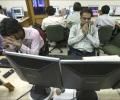
Sentiment turned weak after data released after market hours on Monday showed that the country's trade deficit, or difference between imports and exports, reached USD 14.88 billion in December, up about 41 per cent year-on-year, as crude oil and gold import bill inflated.

An appreciating rupee, sustained buying by domestic institutional investors, fresh foreign capital inflows and encouraging start to the earnings season contributed to the uptrend
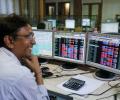
Reliance Industries rose by 1.16 per cent while ITC and ICICI Bank zoomed up to 2 per cent, lifting the indices to all time high levels.

The 30-share Sensex, after opening on a strong footing, continued its upward march to hit an all-time high of 35,827.70. The NSE Nifty also hit a record intra-day high of 10,975.10, before finishing at 10,966.20, up 71.50 points.

After trading with gains for most of the day, selling pressure in software manufacturer Infosys, cigarette to hotel conglomerate ITC and private lender ICICI Bank pulled the benchmarks lower.
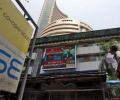
In the Sensex pack, Vedanta took the biggest hit (5.55 per cent), followed by Tata Motors, SBI, Yes Bank, Bharti Airtel and Infosys, which lost up to 4.50 per cent.

RIL plunged around 4% after scaling its life-time high of Rs 1,978.50 as investors rushed to book profits after the company's AGM. Bharti Airtel, ONGC, IndusInd Bank, Bajaj Finance and SBI were also among the laggards. On the other hand, shares of Infosys rallied around 6 per cent ahead of its quarterly earnings. HCL Tech, TCS, Tech Mahindra, Axis Bank and HUL too ended with robust gains.
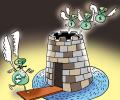
Only 10 per cent of stocks account for 93 per cent of investments.
NTPC was the top gainer in the Sensex pack, rallying nearly 6 per cent, followed by ICICI Bank, Titan, L&T, SBI, Sun Pharma and Nestle India. On the other hand, HCL Tech, Kotak Bank, Tech Mahindra, Hero MotoCorp and Infosys were among the laggards.
Finance Minister Nirmala Sitharaman will present the much-awaited 2022-23 Union Budget on February 1. While there has been strong recovery in some sectors, touch services like hospitality, tourism and leisure continue to suffer after two Covid-19 waves. Household savings have been hit due to increased spending on health care. Consumption has still not reached pre-pandemic levels.

ICICI Bank was the top laggard in the Sensex pack, cracking over 5 per cent, followed by Kotak Bank, HUL, HDFC, IndusInd Bank, HDFC Bank and Nestle India. On the other hand, Hero MotoCorp, Bajaj Auto, Maruti, TCS and HCL Tech were among the gainers.
The broad-based National Stock Exchange index Nifty rose by 10.15 points
Stocks of IT, power, healthcare, capital goods, oil & gas, banking and auto were the major drivers.

The market rally was driven by strong buying in telecom, banking, realty, metal, FMCG and PSU counters.

Sustained FII inflows and fresh spell of buying by domestic institutional investors fuelled the rally
 © 2026 Rediff.com - Advertise with us - Disclaimer - Privacy Policy - Sitemap - Feedback - About us - Terms of use - Grievances