Moody's Analytics predicts India will remain the fastest-growing major economy in 2026 and 2027, but its pace will moderate due to a global slowdown, geopolitical risks, and financial market volatility, despite the boost from AI demand.

A senior Russian official has stated that Russia is prepared to supply fertilisers and other agricultural products to countries in the Global South and East, following concerns about the closure of the Strait of Hormuz impacting global fertiliser exports and food security.

India's foreign exchange reserves increased by USD 1.08 billion to USD 676.237 billion for the week ended July 17, primarily due to a significant rise in foreign currency assets, despite a drop in gold reserves.

Indian benchmark indices Sensex and Nifty recorded sharp gains, rising over 1 per cent, driven by strong performances in IT stocks, HDFC Bank, and renewed foreign fund inflows, despite mixed global cues and elevated crude oil prices.

The Reserve Bank of India (RBI) maintained its key policy rates for the fourth consecutive time, keeping the repo rate at 5.25 per cent, while the benchmark BSE Sensex closed 152 points higher in a volatile session, recovering from an intraday dip.

The American military's air-defence missile inventories, including Patriot and THAAD interceptors, are significantly depleted due to the ongoing five-month confrontation with Iran. A CSIS assessment reveals a steep drop in reserve stocks, raising concerns about the US's capacity to maintain Middle East operations and address other global security challenges. This depletion could force the US and its allies to take higher operational risks.

A SAP study reveals that Indian enterprises are rapidly moving from AI experimentation to value-driven implementation, positioning India as a global leader in enterprise AI adoption. Indian organisations plan significant investments in AI, with projected fivefold growth in Agentic AI returns and a high percentage of businesses having defined AI strategies and dedicated AI leaders.

Indian benchmark stock indices, Sensex and Nifty, recorded their fourth consecutive day of declines, driven by selling in FMCG, financial, and auto sectors. The downturn is attributed to fresh tensions in the Middle East, uncertainty surrounding the US-Iran 60-day ceasefire, and elevated crude oil prices.

Indian benchmark indices Sensex and Nifty experienced a significant slump in early trade, mirroring a sharp decline in global equities and a fresh spike in crude oil prices, exacerbated by simmering tensions in West Asia and a global unwinding of the AI-led rally. Track how sensex, Nifty fared on June 8.

Indian benchmark indices Sensex and Nifty tumbled nearly 1 per cent for the third consecutive day, driven by a sharp spike in crude oil prices and significant selling in bank stocks, with Brent crude jumping to USD 95.27 per barrel.
Indian benchmark indices Sensex and Nifty experienced a significant slump, with the Sensex tumbling 719.08 points, driven by escalating West Asian tensions, a sharp rise in crude oil prices, and a global sell-off in technology stocks.

Indian stock market indices closed on a mixed note, with the Sensex gaining 374 points driven by buying in Reliance Industries and ICICI Bank, while the Nifty remained flat. This divergence is attributed to a new Closing Auction Session (CAS) mechanism introduced by stock exchanges, impacting market liquidity and price discovery.

US President Donald Trump has announced the cancellation of a planned attack on Iran, contingent on Tehran agreeing to rapidly open the Strait of Hormuz and end its nuclear programme. This decision follows appeals from Middle Eastern countries and includes Israel's commitment, though Iran had previously warned against any "adventurous action" from the US.

India's foreign exchange reserves increased by USD 6.118 billion, reaching USD 682.354 billion for the week ending July 24, according to the Reserve Bank of India.

Indian benchmark indices, Sensex and Nifty, experienced declines in early trade due to a significant surge in crude oil prices, exacerbated by escalating tensions in the West Asia. Track how Sensex, Nifty fared on July 23.

VinFast has gone from an unknown brand to India's fifth-largest EV carmaker in just seven months, but its toughest battle is only beginning.
Indian benchmark indices, Sensex and Nifty, closed lower due to significant selling in HDFC Bank and Axis Bank shares, driven by margin-related concerns and escalating US-Iran tensions, which also pushed crude oil prices higher.

The Asian Development Bank (ADB) has revised down India's GDP growth forecast for fiscal year 2026-27 (FY27) to 6.6 per cent from an earlier 6.9 per cent, primarily attributing the change to elevated energy prices stemming from the Middle East conflict. Despite this moderation, India is still expected to remain the world's fastest-growing major economy.
Indian benchmark indices, Sensex and Nifty, recorded their fifth consecutive day of losses, driven by investor caution over rising oil prices due to West Asia tensions and renewed concerns regarding US trade tariffs.

India's manufacturing sector activity growth declined to a five-year low in July, with the HSBC India Manufacturing Purchasing Managers' Index (PMI) falling to 53.5 from 54.2 in June, driven by a slower rise in new business orders and challenging market conditions.

Indian stock market benchmark indices closed higher, driven by strong performance in blue-chip bank shares and a positive trend in global markets, with hopes of progress in US-Iran peace negotiations also contributing to optimism.

A parliamentary panel has strongly recommended that the Indian government appoint a dedicated 'polar ambassador' to enhance its strategic engagement and diplomatic influence in the critical Arctic and Antarctic regions, aligning with global trends and India's growing focus on polar affairs.

Carlos Cordeiro, senior advisor to FIFA president Gianni Infantino, has resigned with immediate effect, protesting a proposal to sell a stake in the World Cup, which he labelled 'a bad deal for football'.
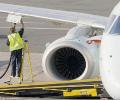
GMR Aero Technic has signed a license agreement with Honeywell Aerospace to provide maintenance, repair, and overhaul (MRO) services for LEAP engine line replaceable units (LRUs). This partnership will enhance MRO capabilities for Airbus A320neo and Boeing 737 MAX aircraft in India, leveraging Honeywell's technology and GMR's infrastructure to offer efficient and cost-effective solutions for regional airlines.

Indian stock markets this week will be primarily influenced by a series of corporate Q1 earnings, the evolving geopolitical situation in West Asia, and fluctuations in crude oil prices, according to market analysts.

Asian Football Confederation president Sheikh Salman bin Ebrahim Al-Khalifa has strongly criticised FIFA's plan to sell stakes in the World Cup to private investors, calling the lack of consultation "totally unacceptable". He stated that FIFA's unilateral actions undermine continental football and urged member federations to await further discussions before approving the $20 billion proposal.

Despite a population of 1.45 billion, India's football team is ranked a lowly 138th in the world and failed to qualify for next year's Asian Cup, highlighting deep-rooted systemic issues and a failure to implement reforms that keep the World Cup dream distant for fans.

Indian stock markets witnessed a significant rally, with the Sensex climbing 964.58 points and the Nifty reaching 24,330, driven by strong buying in blue-chip stocks, particularly in the IT and banking sectors, amidst optimism over Q1 earnings and a shift towards large-cap investments.

Indian benchmark indices, Sensex and Nifty, bounced back significantly after two days of losses, with the Sensex climbing 443.97 points to settle at 76,922.64, driven by positive global market trends and a drop in crude oil prices.

The International Monetary Fund (IMF) has reduced India's growth forecast for FY27 to 6.4 per cent, citing the potential impact of higher energy prices offsetting the country's economic resilience. Despite this, India remains among the fastest-growing major economies.
Indian benchmark equity indices, Sensex and Nifty, saw early gains driven by strong buying in blue-chip bank stocks, fresh foreign fund inflows, and a decline in global crude oil prices, boosting investor confidence.

The International Cricket Council has announced significant format changes for the 2027 ODI World Cup and the 2028 T20 World Cup, aiming to increase competitiveness and consequence in both tournaments. The 2027 ODI World Cup will feature a Super Series and Super 7 stage, while the 2028 T20 World Cup will introduce a Super 10 stage after the group phase.

India too can rise to the top if the 1.4 billion Indians back home are given better opportunities to use their innate talent and capacity to work hard, with right incentives in a more meritocratic rules-based system, asserts Ajay Chhibber.

The harsh truth is that the US is no longer a reliable partner, cautions Ramesh Menon.

Faculty recruitment is conducted directly by universities using global hiring standards while complying with Indian regulations.

India's wholesale price inflation (WPI) increased to 9.87 per cent in June, up from 9.68 per cent in May, primarily due to significant price increases in non-food and food products, with food inflation alone rising to 5.49 per cent.

The Enforcement Directorate (ED) has attached properties worth Rs 1.06 crore in connection with the 'Global Media App' fraud, an online earning platform that allegedly generated over Rs 45 crore through illicit means.

Indian benchmark indices Sensex and Nifty rallied in early trade, driven by a significant decline in Brent crude oil prices, which fell below the USD 73 per barrel level, and positive trends observed across most Asian equities.

India's foreign exchange reserves increased by USD 7.26 billion to USD 674.193 billion for the week ending July 3, as reported by the Reserve Bank of India. This surge follows a previous week's drop and comes after Prime Minister Narendra Modi's appeals to conserve forex.

'Even if the war ends tomorrow, which is unlikely, and we go back to the pre-war status quo, the world will still need some time to get over the sudden shock of oil price increases.'
