
The average estimate of 12 brokerage houses stands at Rs 6,994 crore for the June 2020 quarter. This is 30.8 per cent lower than the June 2019 quarter net profit of Rs 10,104 crore.

Billionaire Mukesh Ambani's Reliance Industries on Friday reported a 43 per cent jump in its September quarter net profit as its businesses from oil to retail fired on all cylinders, growing both sequentially and on a year-on-year basis. Net profit of Rs 13,680 crore, or Rs 20.88 per share, in July-September compared with Rs 9,567 crore, or Rs 14.84 a share, in the same period a year back, the company said in a statement. While better realisation and a sharp rise in crude oil prices benefited the old-economy business, retail saw footfalls at stores reach pre-Covid levels and per user earning from telecom business rose.

Foreign brokerage firm CLSA initiated coverage on the stock with a Sell rating and target price of Rs 1,095, citing hefty premium valuation.

Vodafone Idea will gradually lose market share given its weak balance sheet and limited financial flexibility, says Fitch.

From paper company to auto parts, 5 companies that stood the test of time.

The central government has for the first time allowed a private company, Bajaj Healthcare, to process opium to extract alkaloids used to make pain-killers, cough syrups, and even cancer drugs. Two government factories in Ghazipur, Uttar Pradesh, and Neemuch, Madhya Pradesh, do the work yet, processing some 800 tonnes of opium gum annually to extract alkaloids. The government on Tuesday gave Thane-based Bajaj Healthcare an initial contract to process 500 tonnes of opium gum annually and wants production to be at 800 tonnes per annum (tpa) in the next five years, indicating the state's exit from the highly-regulated sector.
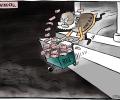
The windfall taxes on domestic crude oil production and fuel exports will generate close to $12 billion (Rs 94,800 crore) for the government in the remainder of the current fiscal while trimming profits of firms such as Reliance Industries Ltd and ONGC, Moody's Investors Service said Tuesday. On July 1, the government imposed windfall gain taxes on the export of petrol, diesel and aviation turbine fuel (ATF), and on the domestic production of crude oil. It has also mandated exporters to meet the requirements of the domestic market first.

The company raised Rs 53,124 crore through a rights issue and sold nearly 33 per cent stake in Jio Platforms Ltd - the firm that houses telecom business and apps - to likes of Facebook and Google for Rs 152,056 crore.
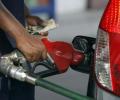
A looming global shortage of diesel in Europe presents India with more than one opportunity to profit from strong margins. A shortage of the fuel, a key contributor to inflation, has been exacerbated by the conflict in Ukraine, and western sanctions on Russian fuel supplies. The slowdown in natural gas supply means the West needs diesel to heat their homes this winter.

Reliance Industries on Friday reported more than doubling of its March quarter net profit to Rs 13,227 crore as improvement in petrochemical and consumer business countered continued weakness in refining business.

The key risks against a fast recovery would include long delays in business travel resumption, delays in commissioning, etc.

Corporate earnings grew in double digits during the April-June 2022 (Q1FY23) quarter but the momentum waned. Overall corporate earnings in the quarter were down sharply from their highs in FY22. The combined net profit of 2,981 listed companies across sectors in the Business Standard sample was up 22.4 per cent YoY to Rs 2.24 trillion in the June quarter, driven by a big jump in the earnings of banks, non-banking lenders, oil & producers, and FMCG companies. Also, earnings in the corresponding quarter a year ago were affected because of the second wave of the Covid pandemic, even though the numbers were a lot better than Q1FY21 when there was a nationwide lockdown.


Billionaire Mukesh Ambani's Reliance Industries Ltd on Friday reported a 12 per cent rise in December quarter net profit on improving oil-to-chemical business, strong continued momentum in retail and steady telecom unit Jio.

Food delivery platform Zomato has filed preliminary papers with capital market regulator Securities and Exchange Board of India (Sebi) to raise Rs 8,250 crore through an initial share-sale.
Bharti recorded $5 billion liability for past-due AGR fees, but is still completing its self-assessment to determine the final amount.

Japanese tech investor SoftBank may end up investing around $1 billion in India in 2022, nearly a third of what it did last year, according to people closely tracking its plans. Last year, SoftBank undertook investments of $3.2 billion in 12 deals. In the first five months of CY22, the giant investor has invested $400-500 million in five deals.

Richest Indian Gautam Adani's ports-to-power-to-cement conglomerate is "deeply overleveraged" with the group predominantly using debt to invest aggressively across existing as well as new businesses, CreditSights, a Fitch Group unit, said on Tuesday. In a report titled 'Adani Group: Deeply Overleveraged', CreditSights said, "In the worst-case scenario, overly ambitious debt-funded growth plans could eventually spiral into a massive debt trap, and possibly culminate into a distressed situation or default of one or more group companies." Starting out as a commodities trader in the late 1980s, the Adani group has diversified from mines, ports and power plants into airports, data centers and defence.

The brokerage reduced its target price for the company to Rs 995 per share from Rs 1,350 apiece. Credit Suisse said RIL's liabilities increased from $19 billion to $65 billion in four years.

Vodafone Idea Ltd (VIL) CEO Ravinder Takkar did some plain speaking. In an analyst call after its quarterly results recently, Takkar said that the main stumbling block to raising fresh capital from investors is "pricing" - telecom tariffs, in other words. Nine months ago, the telecom company's board had cleared a proposal for raising Rs 25,000 crore from investors, after the promoters made it clear that they were not ready to pump in more money. But potential investors are concerned that without clarity on tariff hikes (there have been none for more than 18 months) they might just lose their money. The lack of visibility on raising tariffs has also impelled VIL to request the Department of Telecom (DoT) for a fresh reprieve by extending the two-year moratorium on paying its spectrum instalment of Rs 8,200 crore for another year till FY23.

The social impact of this could be worse as 300 million subscribers may face the annoyance of network shutdown and churn.
Given the company's expansion into internet and retail, more investments including mergers and acquisitions seem highly likely.

For any airline to be eligible for restructuring, the current ratio has to be equal to or higher than 0.4, while 'debt to Ebitda' has to be equal to or less than 5.5.

The COVID-19 pandemic has not only affected outpatient services, but also led to deferment of elective surgeries, and resulted in the loss of medical tourism, all of which would hit the FY21 financials.

Hospitality firm OYO is looking to raise $600 million (over Rs 4,380 crore) in debt from the US institutional investors to service its existing loans, sources in know of the matter said on Thursday. The company is raising $600 million in a term loan B (TLB) structure, the sources said. The company is taking the TLB to service its existing loans which are on higher interest rates, they added.

Mudar Patherya lists companies whose shares can bring on Xmas cheer for investors.

Ola has reported its first operating profit of Rs 89.82 crore for 2020-21, even as the ride-hailing company's revenue declined 65 per cent to Rs 689.61 crore amid COVID-19 induced lockdowns. As per regulatory documents filed by ANI Technologies - the parent company of Ola - it had logged standalone operating profit (profit before finance cost, depreciation, amortisation and tax (EBITDA)) of Rs 89.82 crore in FY21 on a standalone basis, while it had registered a loss of Rs 610.18 crore in the preceding fiscal year.

Mukesh Ambani-owned RIL's JioMart is set to launch a slew of new products including financial services, electronics to airline tickets to take on the competition from upcoming rivals like the Tata Super app and other established players including PayTM, Amazon and Flipkart. This comes at a time when RIL's e-commerce revenues are set to grow by 35 per cent to $15 billion within four years and its core retail revenue is expected to grow at the same pace to $44 billion, as per a forecast by Goldman Sachs. "The Tata vs JioMart war will be the next big corporate battle to watch. "While Tata has an upper hand like in-house products and brands, RIL has the backing of global biggies like Google, Facebook and Microsoft," said head of a rating firm asking not to be quoted.

Operating margins for some companies dipped in Q3, 2021-22 but this sector could be nearing the bottom of the cycle in terms of profits.

Three firms, Vishvapradhan Commercial Pvt Ltd along with AMG Media Networks and Adani Enterprises Ltd, have offered a price of Rs 294 for the acquisition of up to 1,67,62,530 fully paid-up equity shares of NDTV having a face value of Rs 4 from the public shareholders.

Gautambhai has shown that he has ability to withstand payment delays or vexatious court cases. That is where he is on a more comfortable wicket than many others. A revealing excerpt from R N Bhaskar's Gautam Adani: Reimagining Business in India and the World.

Over 10 Indian start-ups with total valuations of $84 billion (some are planning fresh fund-raising) are bracing to launch initial public offerings (IPOs) in the next 36 months. While the size of their IPOs is under discussion, estimates are that they would together raise a minimum of over $8-10 billion during the initial listing.

The 62 per cent increase in natural gas prices by the Indian government will boost the profitability of upstream companies in the country and support their investment spending, Fitch Ratings said on Tuesday. The price for gas from fields that were assigned by the state to oil companies, mainly Oil and Natural Gas Corporation (ONGC) and Oil India Ltd (OIL), increased to $2.90 per million British thermal units (mmBtu) for October 2021-March 2022, from $1.79 per mmBtu in the previous six months. "Higher gas prices will increase the input cost for key end-consumer sectors, to the extent the price hike is passed on," Fitch said.
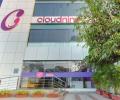
No expecting mother ever needs to travel for more than 30 minutes to reach one of their hospitals, believes the Cloudnine group.

Consolidated revenue, however, dipped 1.4 per cent to Rs 168,858 crore, the company said.

Bharti's ratings headroom is likely to improve with an equity infusion, planned asset sales and growing EBITDA from Africa.
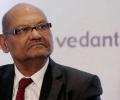
With a robust outlook for mineral-led growth in India, Anil Agarwal-led Vedanta Limited is looking to invest up to $20 billion across its businesses, which includes doubling of silver production and steel capacities. In a virtual press conference had last month, Agarwal said the company planned a capex of $5 billion over a period of three years. The company has not given a timeline for $20-billion investment.

Despite a massive underperformance at the bourses since the last six months, analysts are turning optimistic on Reliance Industries (RIL). Those at Jefferies, for instance, say that the company is a proxy play for India's consumption growth story. The key catalysts for the stock, according to a Jeffries note, include faster-than-expected market share gain in retail, oil-to-chemicals (O2C) stake sale, recovery in gross refining margins (GRM), potential public listing of Jio and even a possible banking licence going ahead. That apart, analysts feel any tariff hike in Reliance Jio (RJio) - its telecom venture - will also aid performance. With balance sheet adequately de-levered, proceeds from a strategic stake sale in the O2C business will create a sizeable war chest for the company, analysts say.

In spite of a severe second wave of the coronavirus pandemic, and a widespread disruption in public life therefore, India's fast-moving consumer goods (FMGC) sector seems to have emerged as one of the most resilient segments of the economy. The early numbers and estimates for the April-June quarter indicate a steady recovery in FMCG players' business, which is now set to exceed the pre-pandemic level. Amid nationwide lockdowns because of the first Covid wave, FMCG revenues had been severely affected in mid-2020.

The early bird results for the January-March 2022 quarter (Q4FY22) hint at a slowdown in corporate sector growth in the upcoming quarters. The combined net sales of the 81 early bird companies in the Business Standard sample were up 15.1 per cent year-on-year in Q4FY22; this was less than the 15.9 per cent YoY jump reported in Q3FY22. The slowdown could be much stronger for the domestic market-focused companies, including those in the banking, finance, and insurance (BFSI) space.
