

The textile and apparel sector is India's second-largest employment provider, after agriculture, and it is now caught in a wave of uncertainty following the Donald Trump administration's tariff policy.
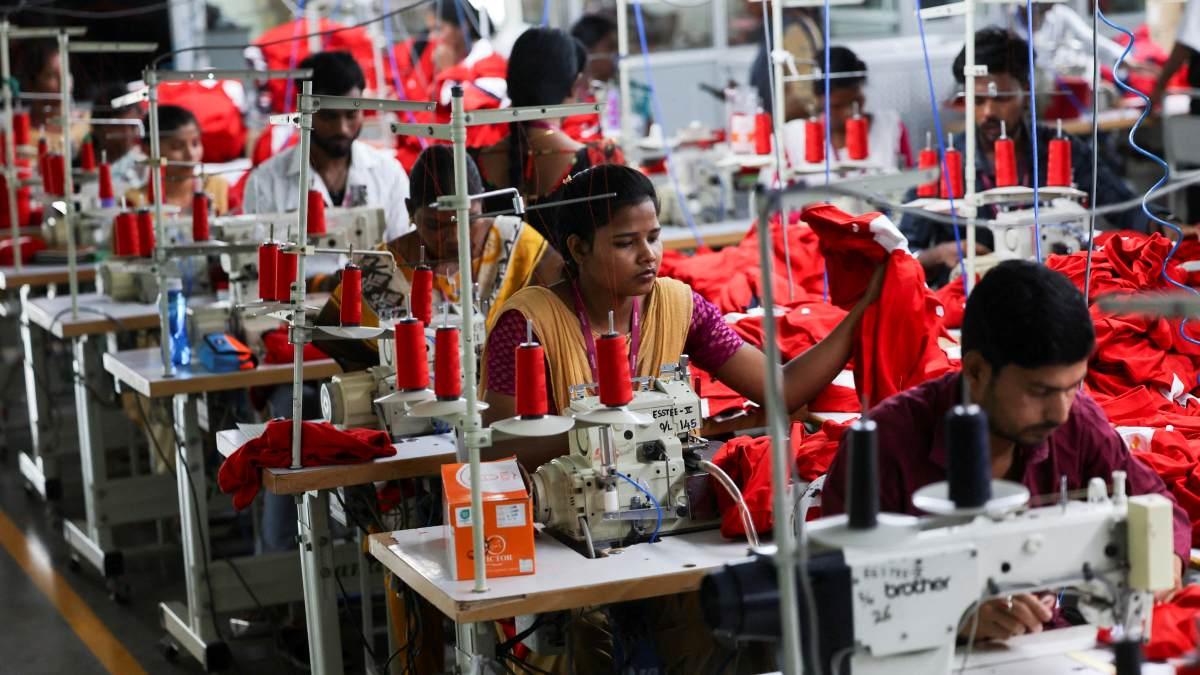
In a letter to Prime Minister Narendra Modi on August 16, Tamil Nadu Chief Minister M K Stalin raised an alarm.
Up to 3 million jobs in the state's textile and apparel sector were at immediate risk, he wrote.
Stalin pointed to the impact of the United States government's 50 per cent tariff on Indian exports, which threatens livelihoods in a sector that employs 7.5 million people in Tamil Nadu.
While the chief minister's appeal focused on his state, the crisis is national in scale.
The textile and apparel sector is India's second-largest employment provider, after agriculture, and it is now caught in a wave of uncertainty following the Donald Trump administration's tariff policy.
Exporters have either halted shipments to the US or are fulfilling orders at a loss, while American retail giants including Walmart, Target, Amazon, TJX Companies, Kohl's, Gap Inc, and H&M have asked their Indian suppliers to hold consignments until tariff clarity emerges.
India is at a steep competitive disadvantage in the American market. While Bangladesh and Vietnam face tariffs of 20 per cent, and Indonesia and Cambodia 19 per cent, India is saddled with 50 per cent.
Even China, at 30 per cent, fares better. Exporters fear not just a squeeze on revenues but also the prospect of ceding ground once again to rivals.
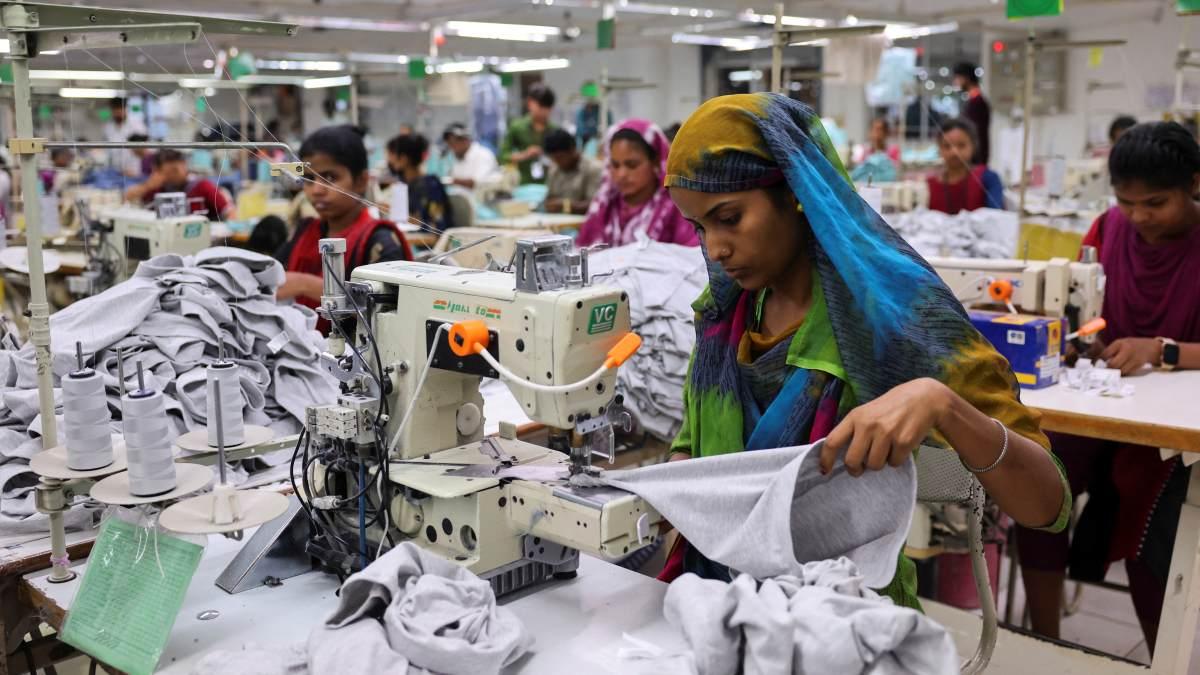
Data from January to June 2025 reflects this trend. According to the Confederation of Indian Textile Industry (CITI), India's exports to the US rose to $5.36 billion, up 12 per cent from $4.79 billion during the first six months of calendar 2024, ranking the country third (see chart).
Vietnam, now the second-largest supplier, registered $8.54 billion worth of exports, a rise of 19 per cent.
Bangladesh rebounded strongly after last year's political turmoil with a 24 per cent surge to $4.36 billion.
China, still the largest supplier, saw a 16 per cent decline to $9.34 billion.
'India, after a promising performance in the first three months of 2025, witnessed a notable slowdown in T&A (textiles and apparel) exports to the USA. In June 2025, India's exports grew by only 3.3 per cent compared to June 2024 -- much lower compared to its earlier growth trajectory and significantly below its competitors like Vietnam and Bangladesh,' the CITI report read.
The slowdown is most keenly felt in Tiruppur, the country's knitwear hub.
Last year, the region benefited from Bangladesh's political crisis, contributing ₹44,747 crore -- 69 per cent -- of India's total knitwear exports of ₹65,178 crore in 2024-25.
That advantage is now under threat. With cheaper labour, tariff benefits, and quota-free plus duty-free access to the European Union under the Everything But Arms scheme, Bangladesh -- ranked a Least Developed Country -- has regained its footing.
The EU tariff structure alone gives it a 10 per cent price advantage over India, which continues to face 9 to 10 per cent duties on most apparel items.
One silver lining for India is the UK trade deal, which is expected to bring in additional business of around ₹7,000 crore to the textile and apparel industry.
"Tiruppur is slowly moving towards the premium segment and away from the entry sector. Bangladesh is strong at the entry level where the volume is higher. It is doing three to four times what India does," said R Senthil Kumar of Premier Agencies, a major exporter from the Tiruppur region.
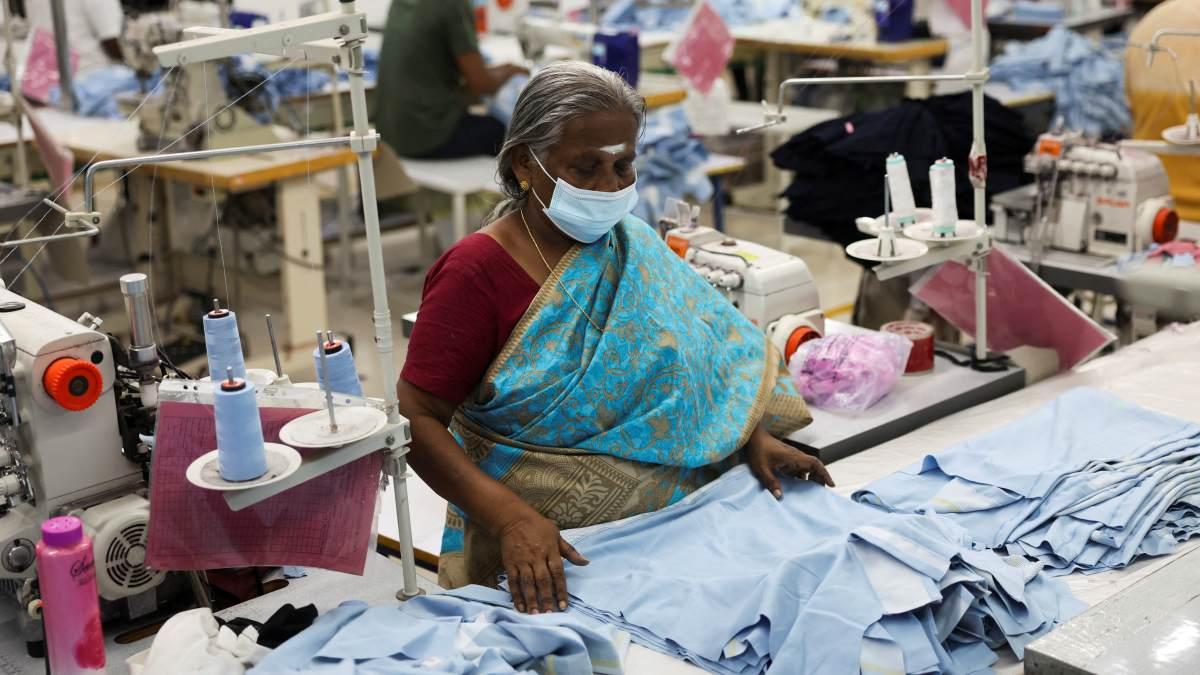
The US remains India's largest apparel market, accounting for a third of all exports. But exporters warn that orders could shift quickly if the tariff situation is not resolved.
"Across all product categories, India's contribution is barely in the single digits. US brands can shift volumes quickly if the tariff issue is not resolved," said P Senthilkumar, partner at Vector Consulting Group.
"Tariffs are expected to cause a decline in exports, reduce margins, and lead to job cuts and uncertainty in this labour-intensive sector," he cautioned.
The industry is urging the Centre to intervene with relief measures. It has asked for a correction of the inverted goods and services tax (GST) structure on man-made fibres by bringing the entire chain under a 5 per cent slab; exemption of import duty on cotton; an extension of collateral-free loans under the Emergency Credit Line Guarantee Scheme with a 5 per cent interest subvention and a two-year moratorium on principal repayment; enhancement of Remission of Duties and Taxes on Exported Products benefits to 5 per cent; and access to pre- and post-shipment credit to all textile exports, including yarn.
"We have also requested the central government to give subsidy for labour as well. That will help the industry sustain this crisis," said K M Subramanian, president, Tiruppur Exporters' Association and promoter of KM Knitwear.
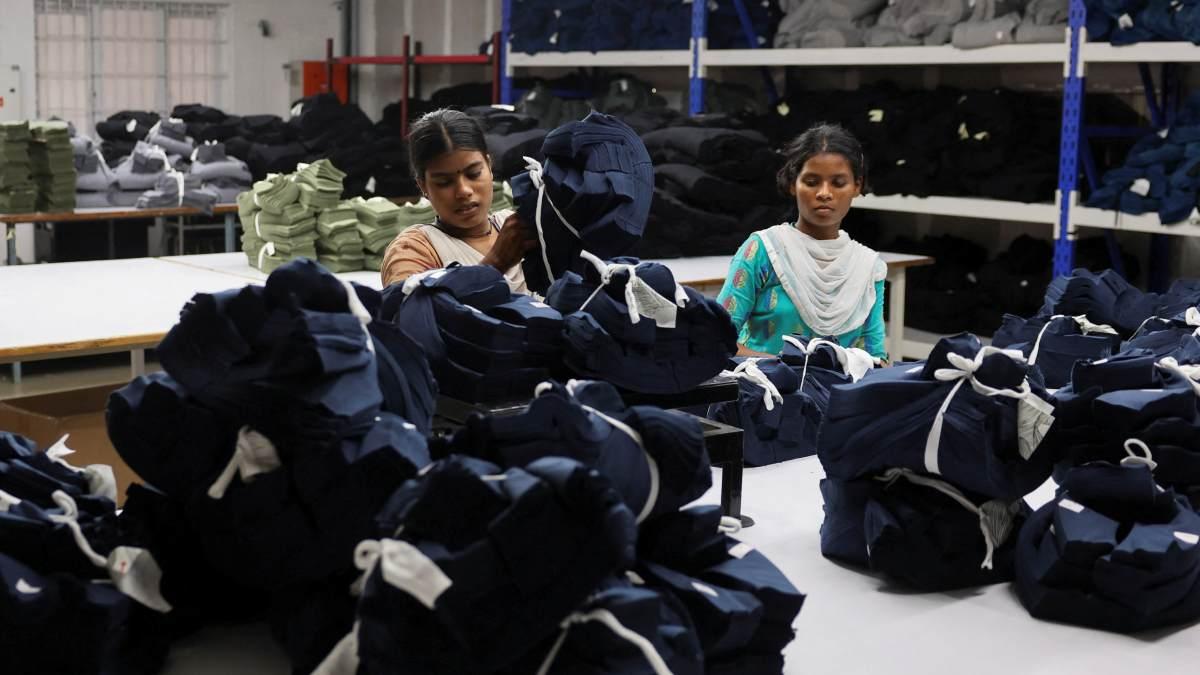
How rivals pulled ahead
Until around 2010, India held the second spot in global apparel exports, but its slow growth through the 2000s allowed Bangladesh to overtake it.
Dhaka capitalised on garment-focused policies, developed Export Processing Zone clusters, and also benefited from raw material supplies from India under the Multi-Fibre Arrangement until 2005.
During this period, many large Indian companies, too, expanded their manufacturing ecosystem to Bangladesh.
Trade-policy analyst S Chandrasekaran indicates that roughly 25 per cent of textile manufacturing units in Bangladesh are Indian-owned -- including brands like Shahi Exports, House of Pearl Fashions, Jay Jay Mills, TCNS, Gokaldas Images, and Ambattur Clothing.
As they grew in size and faced labour issues here, they moved to a place where this problem could be addressed, said Kumar of Premier Agencies.
While the average salary of employees in Tiruppur is over $180 to $200 (about ₹15,500 to ₹17,500) a month, in Bangladesh, it is around $100 to $115 (about ₹8,500 to ₹10,000).
Despite these challenges, industry players believe India retains an edge due to its strong raw material base.
The country is the world's largest cotton producer and has an abundant supply of polyester, silk, jute, and man-made fibres, while Bangladesh relies on imports from India and China.
"It is not easy for US majors to shift their orders from India immediately. Even if that happens, we can look at alternative markets like Russia, Africa and West Asia," said Chandrasekaran.
As the tariff standoff deepens, India's textile sector stands at a crossroads. The question is: can it leverage its raw material strength and new trade deals to weather the storm or will it lose more ground to rivals that have steadily outpaced it?
Photographs curated by Manisha Kotian/Rediff
Feature Presentation: Rajesh Alva/Rediff






 © 2026