

For now, Yumnam Khemchand Singh's leadership will be judged not by promises or symbolism, but by whether his government can prevent further violence and begin the slow, difficult work of rebuilding trust.

Key Points
- Despite long ideological ties to the RSS, Yunman Khemchand Singh entered electoral politics relatively late, winning his first assembly election in 2017.
- A fifth-dan black belt in taekwondo, he has spent decades teaching the Korean martial art.
- Several voices within the Kuki-Zo community argue that peace cannot be reduced to restoring law and order.
A state emerges from central rule, but scars remain
After nearly a year under direct central rule, Manipur has a new chief minister.
Yumnam Khemchand Singh took the oath of office last week at a time when the state remains deeply fractured by ethnic violence that has claimed more than 260 lives since May 3, 2023.
The violence, primarily between the majority Meitei community and the minority Kuki-Zo groups, has left Manipur effectively divided.
Entire populations have been displaced, neighbourhoods and villages segregated, and movement between the Imphal valley and the surrounding hills heavily restricted.
While the return of an elected government signals a formal end to central rule, it does not mark an end to tension.
From martial arts to hard politics
Singh, 62, brings with him an unusual personal story.
A fifth-dan black belt in taekwondo, he has spent decades teaching the Korean martial art and is widely associated with Manipur's strong sporting culture. Yet he is no political novice.
Despite long ideological ties to the Rashtriya Swayamsevak Sangh, he entered electoral politics relatively late, winning his first assembly election in 2017 as a member of the Bharatiya Janata Party.
Since then, he has served as speaker of the assembly and held ministerial portfolios including education and rural development, earning a reputation among supporters as a steady administrator.
Now, he faces the most difficult assignment of his career.

A fragile start
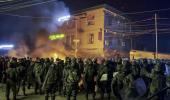
Even as Singh assumed office, signs of unrest were evident. Hours after the swearing in ceremony, protests erupted in Churachandpur district, a Kuki-Zo-dominated area, with roads blocked and markets and offices shut.
Civil society groups condemned the participation of some Kuki-Zo legislators in forming the new government, describing it as a betrayal and reiterating demands for a separate administrative arrangement for their areas.
Days earlier, a Meitei man was killed in a Kuki-Zo-dominated locality where he lived with his wife, underlining how fragile the situation remains despite the return of civilian rule.
Adding to the volatility, fresh tensions have surfaced between Kuki-Zo and Naga tribal groups. In Ukhrul district, authorities imposed restrictions on gatherings following reports of clashes, highlighting how the conflict has begun to spill beyond the original fault lines.
A carefully balanced cabinet
Singh belongs to the Meitei community, which dominates the valley areas, including the capital Imphal.
His cabinet, however, includes three ministers from the Kuki-Zo community, one of them holding the post of deputy chief minister.
The composition reflects an attempt to project inclusivity and balance in a deeply polarised state.
Supporters argue that this ethnic mix, combined with Singh's personal outreach to displaced families across communities during the height of the conflict, offers a tentative opening for dialogue.
Critics, however, say symbolism alone will not address the deeply entrenched mistrust.

Hope, scepticism and the long road ahead
Opinion on Singh's prospects is sharply divided. Some residents and observers see cautious hope in his elevation, pointing to his administrative acumen and working relationships across political and ethnic lines. Others remain deeply sceptical.
Several voices within the Kuki-Zo community argue that peace cannot be reduced to restoring law and order.
According to them, without addressing core political demands, ensuring justice for victims and guaranteeing security, any calm will be temporary.
There is also concern that the return of an elected government may prioritise administrative normalcy over meaningful reconciliation.
From the Meitei side, there is support for Singh's leadership but also insistence that peace will require firm action against armed groups that emerged during the violence.
Some warn that unchecked militias and village defence forces continue to undermine the rule of law and perpetuate fear.
A state shaped by conflict -- and resilience
Manipur, with a population of around three million, is one of India's smallest states by area, yet it has long occupied a complex place in the country's political landscape.
Decades of insurgency, ethnic assertion and the prolonged use of special security laws have shaped public life.
At the same time, the state is known nationally for producing elite athletes, from Olympic weightlifting and boxing to judo and martial arts.
Many attribute this to strong community-run sporting institutions that offered discipline and purpose in an otherwise turbulent environment -- a world Singh himself emerged from.

Authority versus trust
Analysts note that the return of an elected government creates space for political engagement that was absent under federal rule.
But authority alone, they caution, will not easily heal Manipur's festering wounds.
Deep mistrust persists between communities that now live largely segregated lives. Dialogue, confidence-building measures and visible adherence to the rule of law will be crucial in the weeks ahead.
At the same time, any political move -- whether accommodation or refusal -- risks triggering backlash from one side or another in a state with overlapping ethnic claims and anxieties.
For now, Singh's leadership will be judged not by promises or symbolism, but by whether his government can prevent further violence and begin the slow, difficult work of rebuilding trust.
The moot question confronting Manipur remains stark: Can a state brought back from central rule move beyond administrative restoration to genuine reconciliation -- or will old divisions once again overwhelm new beginnings?
Feature Presentation: Aslam Hunani/Rediff


 © 2026