

In a first for Assam, a man has survived a confirmed king cobra bite, thanks to rapid medical intervention despite the absence of species-specific antivenom.
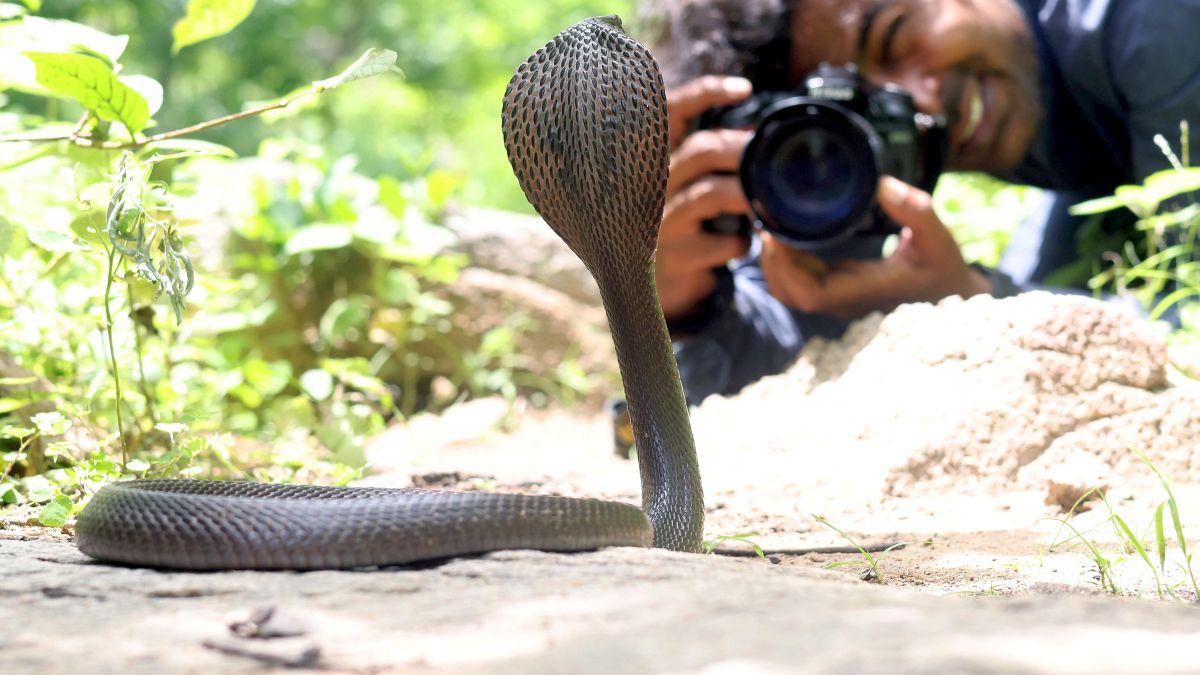
In a rare and remarkable medical achievement, a man in Assam has survived a bite from a king cobra, one of the world's most venomous snakes, marking the first recorded survival of its kind in the state, doctors and health officials said.
The incident occurred earlier this week in Kamrup district, when the man, in his early 30s, was bitten while clearing bushes near his home.
According to eyewitnesses and local officials, the victim accidentally handled the snake, mistaking it for a non-venomous species, and was bitten on his right hand.
Despite the extreme danger associated with king cobra venom -- for which no species-specific antivenom exists in India -- the man survived due to timely medical intervention, coordinated emergency response, and sheer luck, doctors said.
Race against time
Initially, the victim experienced minimal pain and swelling and delayed seeking treatment -- a common but potentially fatal mistake in snakebite cases.
As his condition began to worsen, local residents alerted a trained snake rescue and response team, which immediately arranged for his transport to a nearby government hospital.
Doctors at the first facility administered polyvalent anti-snake venom (ASV) as a precautionary measure after preliminary assessment suggested cobra envenomation.
Photographs of the snake, later verified by wildlife experts and rescuers, confirmed it was a king cobra, prompting an urgent referral to the Gauhati Medical College and Hospital for advanced care.
At GMCH, the patient was kept under intensive observation for signs of neurotoxic paralysis -- the most feared complication of king cobra bites.
However, more than 24 hours after the incident, he remained stable, showing only localised swelling and pain, with no respiratory or neurological failure.
Doctors call it the 'rarest of the rare'.

Medical experts described the survival as extraordinary.
"This is an extremely rare case. Survival after a confirmed king cobra bite without species-specific antivenom is almost unheard of," says Dr Surajit Giri, senior anesthesiologist and snakebite management expert from Assam.
"Early hospitalisation, correct clinical judgment and coordinated teamwork played a crucial role."
Doctors believe the quantity of venom injected may have been low -- a phenomenon known as a 'dry' or partial bite -- but stressed that no cobra bite should ever be considered harmless.
Significance beyond one life
Health officials say the case underscores the progress Assam has made in strengthening snakebite response systems, particularly in rural areas where fatalities are common due to delays, lack of awareness and dependence on traditional healers.
Snakebite remains a major public health challenge in Assam, especially during the monsoon season, when human-snake encounters increase.
Cobras, kraits and pit vipers account for the majority of venomous bites in the state.
This case proves that with awareness, rapid transport and trained medical teams, deaths from snakebite are preventable," says a senior health department official.
Call for awareness
Doctors and wildlife experts have once again urged the public to avoid handling snakes, seek immediate medical attention after any bite, and rely only on hospital-based treatment, not home remedies or superstition.
The survivor is expected to make a full recovery and will be discharged after further observation.
For Assam's medical community, the case stands as a milestone -- and a reminder that even against the deadliest odds, timely science-based intervention can save lives.
Feature Presentation: Rajesh Alva/Rediff






 © 2026