

The Supreme Court has quashed the FIR against YouTuber Elvish Yadav in the controversial snake venom case, citing legal flaws in the application of the NDPS Act and the Wildlife Protection Act.
Key Points
- The Supreme Court quashed the FIR against Elvish Yadav due to legal issues with the application of the Narcotic Drugs and Psychotropic Substances (NDPS) Act.
- The court found that the Wildlife Protection Act proceedings were invalid because the complaint was not filed by a duly authorised officer.
- No snake venom or other illegal substances were recovered directly from Elvish Yadav, weakening the prosecution's case.
- The offences under the Indian Penal Code (IPC) were based on a previous FIR in Gurugram where a closure report had been filed.
- The Supreme Court granted liberty to the competent authority to initiate appropriate proceedings in accordance with law by filing a proper complaint under Section 55 of the Wildlife Protection Act.
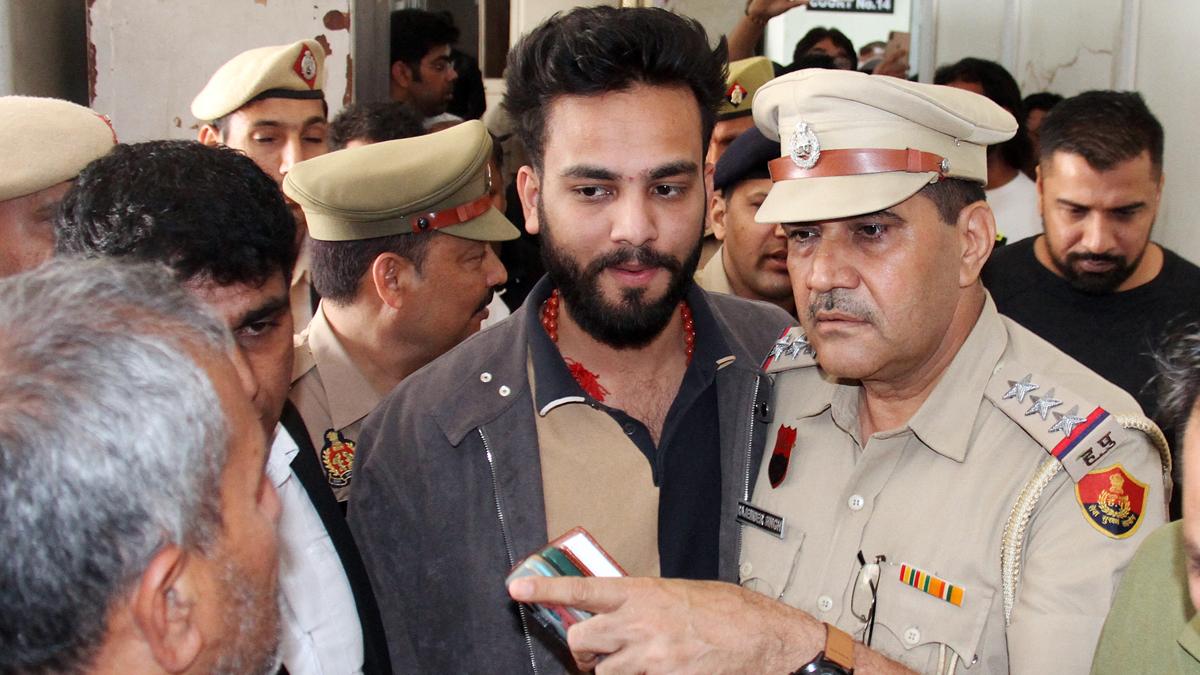
The Supreme Court on Thursday quashed an FIR and subsequent proceedings against YouTuber Elvish Yadav who was arrested for allegedly using snake venom at a rave party in Noida, Uttar Pradesh, in 2023, and said the case cannot be sustained in law.
A bench of Justices M M Sundresh and N Kotiswar Singh said it was confining its consideration to two specific questions -- the applicability of Section 2(23) of the Narcotic Drugs and Psychotropic Substances Act, 1985, and the validity of proceedings under Section 55 of the Wildlife (Protection) Act, 1972.
The top court, however, granted liberty to the competent authority to initiate appropriate proceedings in accordance with law by filing a proper complaint under Section 55 of the Wildlife Protection Act.
The case against Yadav was registered on November 22, 2023, and he was arrested on March 17, 2024.
The apex court said offences under the Indian Penal Code (IPC) invoked in the FIR against Yadav were based on an earlier FIR registered in Gurugram, in which a closure report has been filed.
The bench noted that no recovery had been made from Yadav himself, with the chargesheet only alleging that he placed orders for snake venom for recreational purposes through his friends, who are co-accused in the case.
It said provisions of the NDPS Act cannot be invoked as the liquid substance recovered from the co-accused was not a prescribed substance under the schedule.
Legal Basis for Dismissal
On the invocation of the Wildlife Protection Act, the top court said Section 55 mandates that prosecution can be initiated only through a complaint filed by a duly authorised officer.
In the case in hand, it noted, the complainant was a former employee of Wildlife Board of India and therefore not an authorised person under the Act to lodge a complaint.
The bench referred to the earlier decisions of the court and said the case against Yadav cannot be sustained in law. It quashed the FIR and subsequent proceedings, including filing of the chargesheet and cognisance order of the trial court.
The controversial YouTuber had challenged an Allahabad High Court order refusing to quash the chargesheet and the cognisance order of the trial court terming it a serious offence.
Earlier Court Observations
On February 18, the top court indicated that it would examine a complaint against Yadav under the Wildlife (Protection) Act in the snake venom case and observed that if popular persons are allowed to use "voiceless victims" like snakes, it could send a "very bad message" to society.
On August 6 last year, the apex court stayed proceedings in the trial court against Yadav in the case.
The chargesheet alleged the consumption of snake venom as a recreational drug at "rave" parties by people, including foreigners. Yadav's counsel argued in the high court that no snakes, narcotic or psychotropic substances were recovered from him. Besides, no causal link was established between the applicant and the co-accused.
Calling Yadav a "well-known influencer" and someone who appears in multiple reality shows on television, the counsel said his involvement in the FIR garnered "much media attention".





 © 2026