
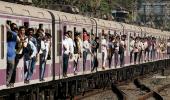
210 deaths were directly attributed to commuters falling from overcrowded trains.
A Right to Information (RTI) petition has brought to light the grim reality for Mumbai's lifeline, its local train network, revealing a staggering 922 accidental deaths between January 1 and May 31, 2025.
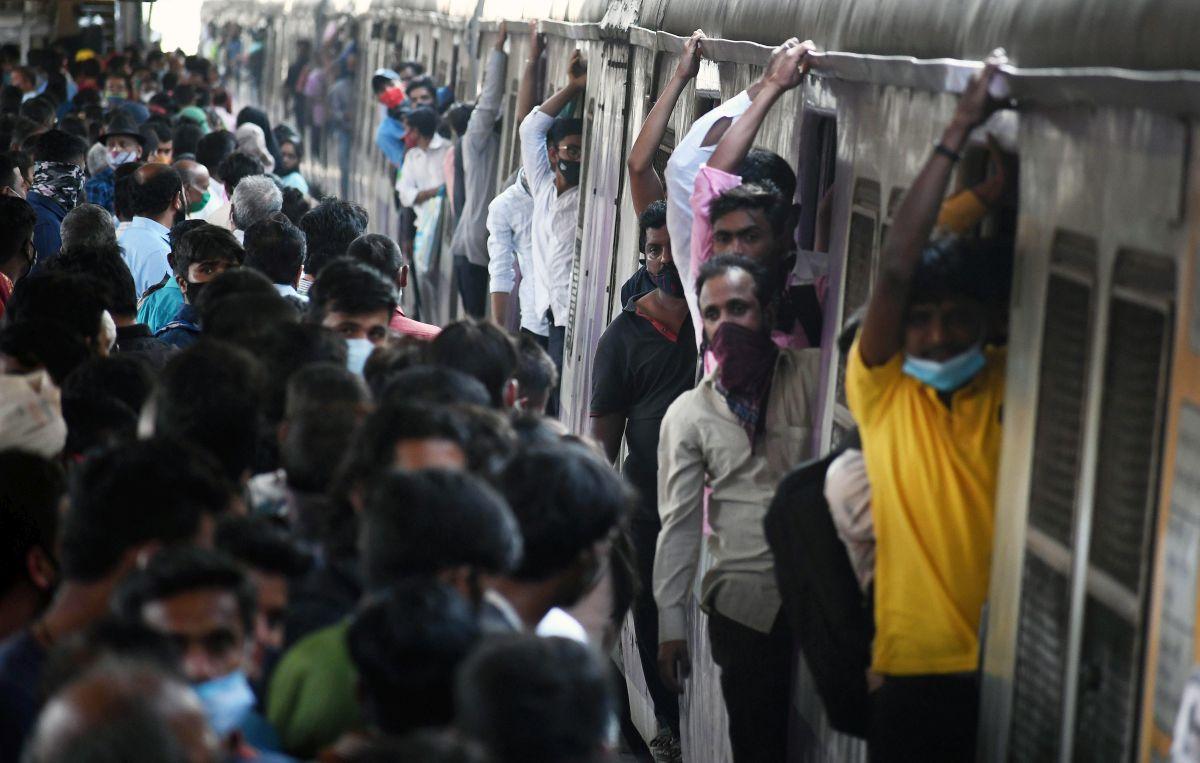
Of the total fatalities, 210 deaths were directly attributed to commuters falling from overcrowded trains.
The remaining 712 individuals tragically lost their lives due to railway track crossing accidents or suicides.
The data, obtained from the Mumbai Railway Commissionerate by RTI activist Ajay Basudev Bose, underscores the perils faced by millions of daily commuters.
On the Central Railway line, the total number of accidental deaths from January 1 to May 31, 2025, stood at 150.
The RTI data pinpointed specific stations as major danger zones for falls from trains.
Kalyan station recorded the highest number of such deaths, with 50 fatalities in the five-month period.
Following closely was Thane station, which saw 22 deaths due to falls, while Kurla station registered 19 fatalities from overcrowding-related incidents.
Meanwhile, on the Western Railway line, Borivali station reported the highest number of deaths, 13, during the same period. Vasai station witnessed 11 deaths, and Bandra station recorded 9 deaths.
These alarming statistics come weeks after a horrific incident last month where five passengers died and eight others were injured after falling onto tracks between the Diva and Kopar railway stations just outside Mumbai.
Initial investigations suggested that these commuters were standing on the footboards of crowded trains, and their backpacks brushed against each other as two trains passed in opposite directions, leading to their fatal fall.
In response to the tragedy, a committee was formed by the railways to investigate the cause of these deaths.
The railway ministry also announced plans to implement automatic door closing facilities in all existing and new Mumbai suburban local train coaches. However, sources indicate that this crucial safety measure is currently far from ground-level implementation.
Mumbai's local trains remain the backbone of the city, with approximately 7 million commuters relying on the Western and Central railway lines daily.
While air-conditioned Mumbai Metros have been introduced over the past decade to alleviate the burden on the crowded local trains, their high cost and limited last-mile connectivity have resulted in low ridership, maintaining Mumbaikars' heavy dependence on the train network.






 © 2025