

'After we were alerted about the war, none of us could sleep for the next two nights while sailing through those waters.'

Key Points
- Indian sailors aboard Dubai-based vessels faced extreme fear after missile and drone attack alerts in Gulf shipping routes.
- Ships altered routes, cancelling planned destinations and diverting to safer ports like Jebel Ali and Salalah.
- Many sailors chose to disembark and return home amid rising tensions and escalating risks to civilian vessels.
- A related vessel was reportedly hit by a missile, intensifying anxiety despite all crew members being rescued safely.
- Experts said modern precision-guided missiles have reduced effectiveness of traditional defence tactics, increasing reliance on navigation and real-time intelligence.
Missile Alerts Trigger Panic at Sea
For two sleepless nights, Amit Swain and his fellow sailors remained on high alert in the middle of the sea, unsure whether their vessel could become the target of a missile strike.
Gripped by fear after receiving alerts about a possible conflict between the US and Iran while sailing through one of the world's most sensitive maritime routes, they could think of little else but how to safely disembark from the ship and return home.
Swain, a chief officer on a Dubai-based container vessel and a resident of Cuttack, had been navigating waters near the Strait of Hormuz when the warning came.
Along with 25 crew members, including 20 Indians, his vessel had departed from Jawaharlal Nehru Port carrying export cargo on February 24 and was heading towards Dammam port in Saudi Arabia when maritime communication channels began circulating alerts about possible missile and drone attacks in nearby waters.
"On the intervening nights of February 27 and 28, we received information about a possible war between the US and Iran.
"As a precautionary measure, the ship altered its operational plan.
"We first reached Jebel Ali port, the largest port in West Asia, where some containers were offloaded.
"The plan to proceed to Dammam port was cancelled, and we immediately moved towards the port of Salalah to avoid being caught in any potential strike zone," Swain said while recounting the tense situation.
Ships Rerouted Amid War Threat
During the voyage, the vessel also carried out bunkering (refuelling) at Fujairah Port on the eastern coast of the United Arab Emirates.
After unloading the remaining containers at Salalah, about 12 Indian sailors decided to disembark and return home amid fears of further escalation in the region.
"After we were alerted about the war, none of us could sleep for the next two nights while sailing through those waters.
"In my career of more than two decades at sea, I had never experienced such a tense situation.
"The panic and fear during those hours are something I can never forget.
"After we disembarked at Salalah on March 1, a special flight arranged by the shipping company took us to Hyderabad, from where I reached home the next day," Swain said.
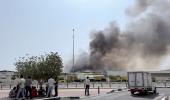
The anxiety among seafarers intensified after a vessel belonging to the same shipping company -- a sister ship linked to the cargo ship Safeen Prize -- was reportedly struck by a missile on March 4.
While the attack caused damage to the ship, all crew members were rescued safely.
"We were constantly receiving alerts about missile launches in nearby waters, and the atmosphere on board had become extremely tense.
"After reaching a safe port, I decided to disembark immediately because the risk to civilian vessels had increased sharply.
"My wife was sick, and the only thought at that moment was to get off the ship and return home safely," said Ashirvad, a sailor with another Dubai-based company and a native of Bhubaneswar.
A crew member of another vessel from Hyderabad said their ship was drifting in the high seas when the Safeen Prestige was attacked.
"Several other container and cargo vessels, including ours, narrowly escaped.
"The crew of Safeen Prestige saved their lives by abandoning the ship following a missile attack that caused a fire in the engine room.
"They were immediately rescued by the Omani navy.
"A few hours after the attack, our vessel moved towards Salalah, and we disembarked there before being flown back home," he said.
Maritime experts said defensive strategies used in earlier conflicts are no longer effective due to advances in missile technology.
Captain Prashant Kumar Padhi, who worked for a Dubai-based company, explained that ships earlier used flaring techniques to evade heat-seeking missiles.
"In earlier war situations, vessels would deploy flares on the upper deck of the foremast (forecastle or fo'c'sle) so that heat-seeking missiles would strike the flare instead of the vessel.
"But with modern precision-guided missiles and advanced targeting systems, such techniques are far less effective," Padhi said.
Modern Missiles Change Naval Defence
Instead, ships now rely on evasive navigation and real-time intelligence.
Crews are advised not to expose the broadside of a vessel towards the perceived direction of threat and to keep drifting or changing position rather than remaining anchored in one place.
"They are constantly alerted about possible missile launches through satellite imagery, sophisticated radar systems, and other long-range tracking technologies.
"Continuous movement and vigilance are now the main ways to reduce the risk and minimise potential casualties," Padhi added.
Feature Presentation: Ashish Narsale/Rediff





 © 2026