
'America holds about 16% of IMF voting rights, giving it crucial influence over Pakistan's desperately needed bailout loans.'
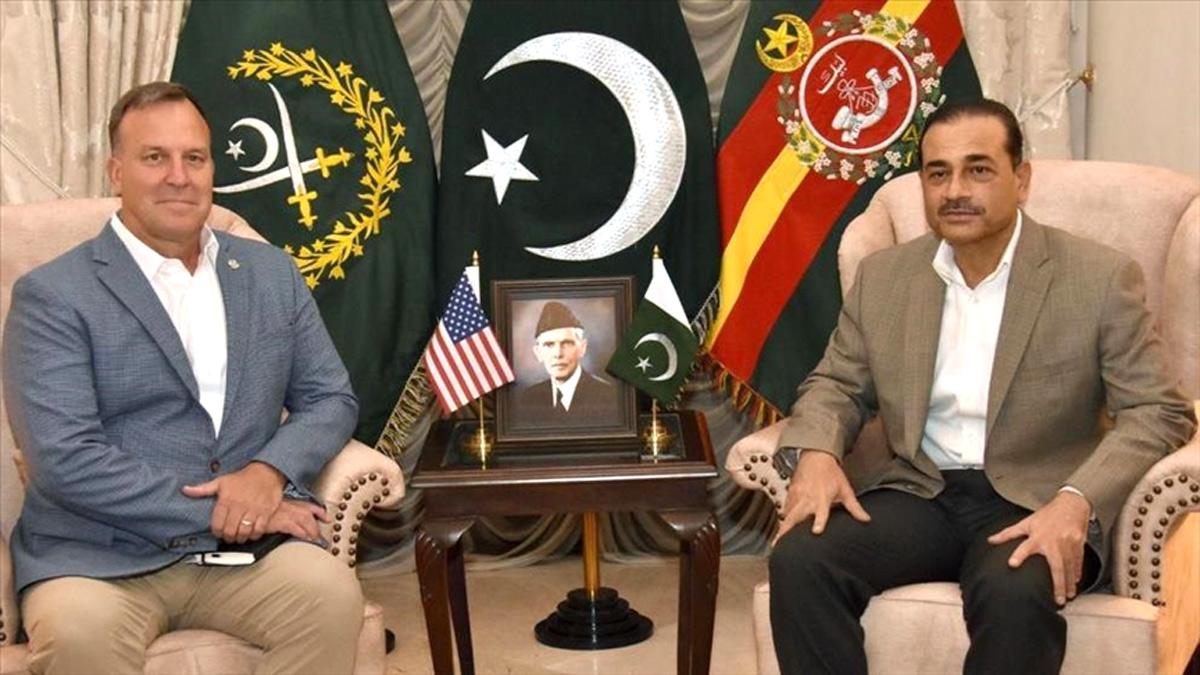
The stark contrast in US President Donald John Trump's approach towards Pakistan and India reveals a calculated strategy that goes beyond mere diplomatic preferences.
Avinash Mohananey, a retired Intelligence Bureau officer who spent a considerable time in Pakistan on security assignments, in an interview with Prasanna D Zore/Rediff, exposes the transactional nature of America's renewed courtship of Pakistan, which serves primarily as a tool to pressure India into compliance with US strategic objectives.
While Pakistan benefits from lower tariffs and renewed American attention, India faces the uncomfortable reality -- of 50% tariffs on Indian exports to the US -- and the realisation that its assumed special relationship with Washington carries little weight when American interests are at stake.
- Part 1 of the Interview: 'Pakistan Does America's Dirty Work'
How does this US-Pakistan bonhomie put India at a strategic disadvantage?
Obviously, India is in a disadvantageous position because we were relying largely on the US for strategic and economic support. During and after Operation Sindoor, the kind of expectation we had with the Americans was not fulfilled.
The US did not condemn or blame Pakistan for the terror attack. The Americans did condemn the (Pahalgam terrorist) attack, but they did not blame Pakistan for the same.
In the overall bigger chessboard, India's requirement from America is largely against China, but we may not be willing to do it because we have huge trade with China and we can't have an inimical relationship in the region.
After Operation Sindoor, it has become clear that China has emerged as a regional hegemon in the region. Picking a confrontation with China will be foolish for us.
Prime Minister Modi will meeting Chinese President Xi Jinping at the SCO meeting on August 31-September 1. Can this US-Pakistan coming together open doors for India-China cooperation despite China supporting Pakistan during Operation Sindoor?
Yes, absolutely. But even if we get close to China, it is unlikely in any way that China is going to ditch Pakistan.
What China would like -- and China has said so also -- is that China, Pakistan, and India can work together.
What China would like to do is bridge the gap between the two countries, India and Pakistan, so that China's CPEC becomes successful.
At some level, although China doesn't say so, the Chinese are worried about the killing of Chinese nationals in Pakistan, which Pakistan largely blames on India -- that India is involved.
Earlier, China asked India also to join CPEC, but we didn't join because of the territorial issue with Pakistan and China. We didn't join because this CPEC road passes through Pakistan occupied Kashmir.
If we go close to China or improve our relationship with China, China would certainly not do it at the cost of Pakistan. Pakistan would remain the buyer of Chinese military equipment.
Right now Pakistan imports about 82% of its defence requirements from China. That is not going to go away.
What is China's broader global strategy in this context?
What the Chinese are trying to do globally and strategically is to increase the number of countries and economies to its advantage to confront America at the global level.
That is why SCO becomes important, BRICS becomes important, because if BRICS comes out with its own exchange mechanism on foreign exchange and discards the dollar -- even if there is no common currency -- then the American dollar loses value, and obviously America also loses (political and economic) influence.
American efforts will be to see that India doesn't fall into the trap of China, and that Pakistan also doesn't fully embrace China.
How do economic factors play into Pakistan's balancing act between the US and China?
What's likely to happen, given that the US and Pakistan have come closer -- even the US president has imposed far lesser tariffs on Pakistan than on India.
Pakistan doesn't affect the US economy that much, so there is no issue even if the tariffs are low because imports from Pakistan in the bigger US economy are very low.
From Pakistan's point of view, its relationship economically is more important with the US and the Western world because they generally give lower tariffs for their export of textiles and cotton.
Pakistan can also be used for dumping soybean, agricultural products, milk, etc, from America.
Pakistan can't afford to fight America because America gives its crucial foreign exchange earnings. Whereas on the Chinese front, it's in the same situation like India -- it imports a large quantity of goods and the balance of trade is in favour of China.
There is also the problem is that it doesn't give them foreign exchange; rather, Pakistan loses foreign exchange on imports from China.
Pakistan can't afford to annoy America economically. America holds about 16% of IMF voting rights, giving it crucial influence over Pakistan's desperately needed bailout loans.
So both India and Pakistan are in difficult positions?
If we are in a difficult situation in this ongoing confrontation between China and America, Pakistan is equally in the same situation. It's not that Pakistan is having a cozy time because it has to balance its economic interests with strategic interests.
For Pakistan, the strategic interest becomes prominent because from 1947 onwards, its foreign policies were guided by the possibility of confrontation with India.
How does Pakistan balance its Iran policy between its dependence on Gulf patrons like Saudi Arabia and also with the US, while sometimes cozying up with Iran?
Pakistan has both Shia and Sunni populations, but these sectarian divisions don't matter much in geopolitics -- they are largely artificial constructs.
During the recent Israel conflict, Iran enjoyed support from both Russia and China. The bloc China is assembling includes Iran and will soon incorporate Saudi Arabia as well.
Remember, China mediated the Saudi-Iran reconciliation, re-establishing their diplomatic ties at Beijing's initiative.
Iran's concerns about American companies entering Pakistan stem from security fears -- unrestricted US corporate access could compromise Iranian interests. This warning likely came at China's behest.
Pakistan finds itself in an increasingly tight corner: It cannot afford to antagonise Iran, especially with China now backing Tehran.
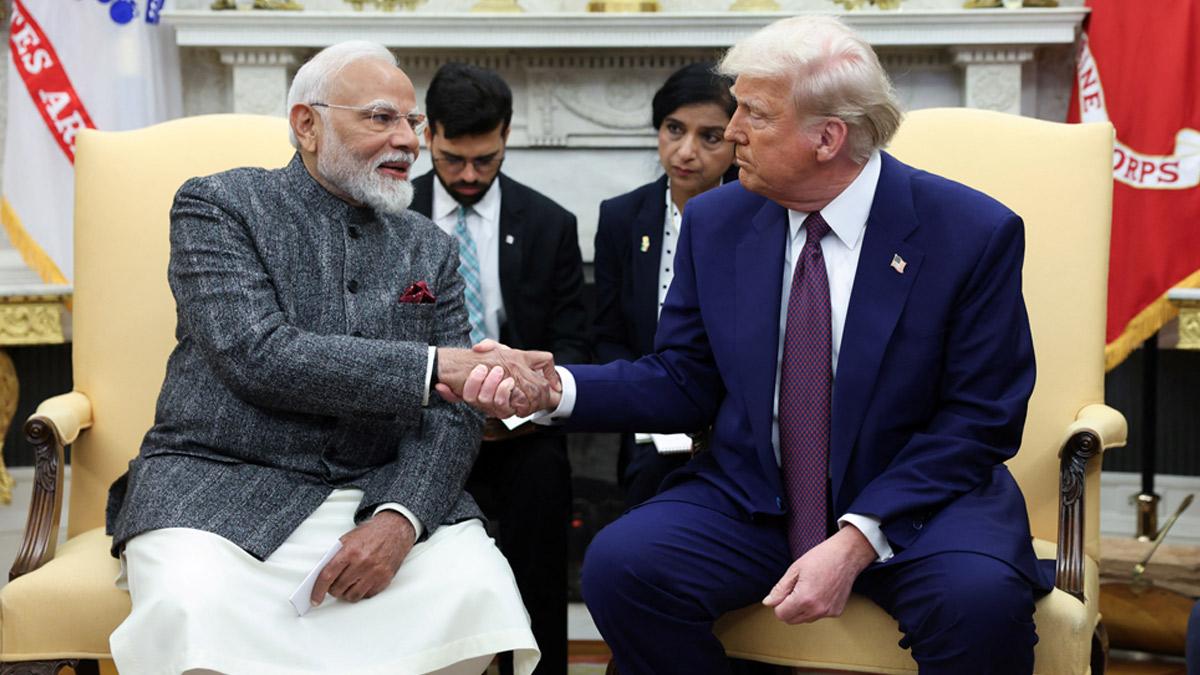
Is the US using Pakistan to browbeat India into accepting high tariffs and other demands?
Absolutely. Trump's vocal Pakistan overtures are largely about teasing India -- dangling prospects like oil exploration in Pakistan, suggesting India might buy Pakistani oil, essentially saying, 'We can cozy up elsewhere'.
The ramping up of tariffs on Indian goods from 25% to 50% including the 25% penal tariff for buying oil from Russia, is nothing but posturing and diplomatic embarrassment tactics.
Pakistan understands these are purely transactional relations. There's no genuine long-term US strategic commitment behind this Pakistan courtship -- it's simply leverage against India.
So what is the US strategic intent behind this Pakistan strategy?
Yes, teasing India to fall in line. Their strategic interest with India is: Don't let BRICS succeed, don't let SCO succeed, and keep the confrontation with China alive -- join us. These are the requirements of America from India. That's the strategic intent behind US President Donald Trump's strategy.








 © 2025