

'Due to orographic rainfall, localised areas are experiencing intense downpours.'
'In a very heavy downpour, the burst of water has to find its way and therefore whatever comes in its path gets washed away.'
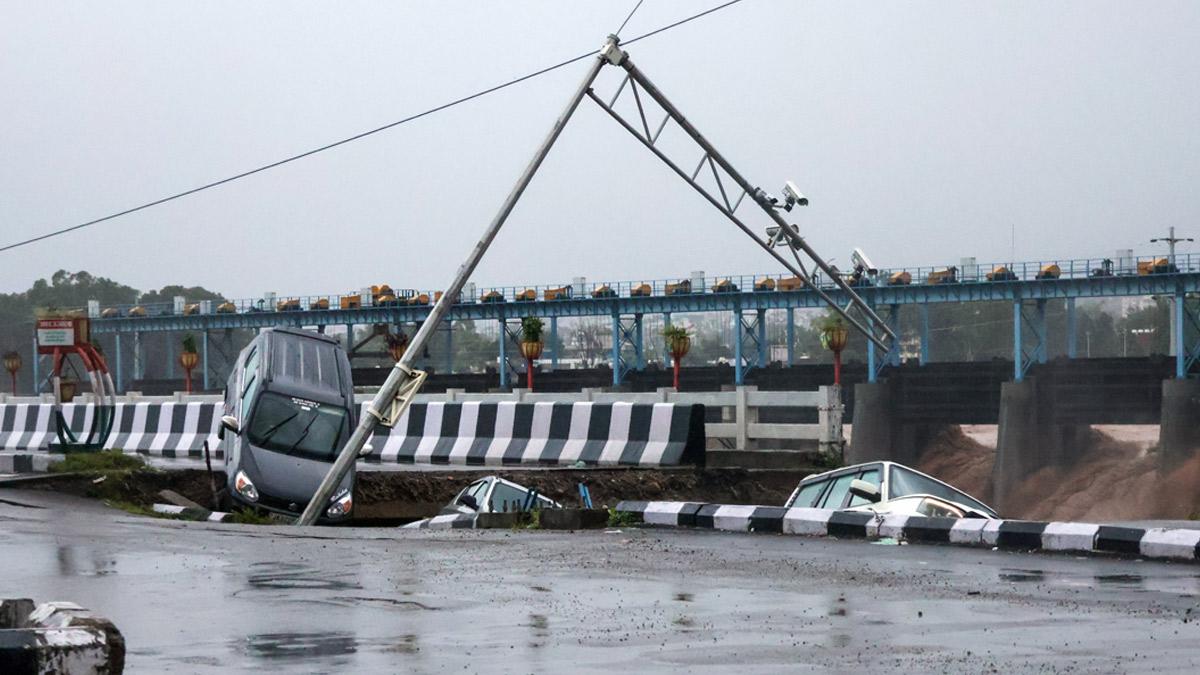
"The snowline in the higher altitudes has shifted upwards. Areas that used to receive regular snowfall are now experiencing heavy rainfall instead," says Professor Sarfaraz Asgher, head of the Geography department, Jammu University.
"There are many research papers which indicate that the Himalayan region is warming up at a faster rate than the plains. The increase in temperature has led to more instances of localised, high-intensity rainfall or 'cloudbursts'," the professor tells Rediff's Archana Masih discussing the reasons behind the unprecedented rainfall in J&K.
What has caused such heavy rainfall in Jammu region, highest since 1910?
What I've observed is that climate change and global warming is having a clear impact.
The snowline in the higher altitudes has shifted upwards. Areas that used to receive regular snowfall are now experiencing heavy rainfall.
This shift is a direct result of changing climatic patterns.
There are many research papers which indicate that the Himalayan region is warming up at a faster rate than the plains. The increase in temperature has led to more instances of localised, high-intensity rainfall or cloudbursts.
What's happening now is that due to orographic rainfall, very small and localised areas are experiencing intense downpours.
As moist air moves upward over the terrain, the temperature drops, leading to condensation and heavy rainfall concentrated in those regions.
These events are highly concentrated in small areas but bring very heavy downpours.
For instance, the rain in Kishtwar wasn't due to a glacial lake outburst or a landslide, but due to a cloudburst. Tragically, more than 500 people were washed away. This area had many pilgrims who had halted for rest, shelter and were having a meal.
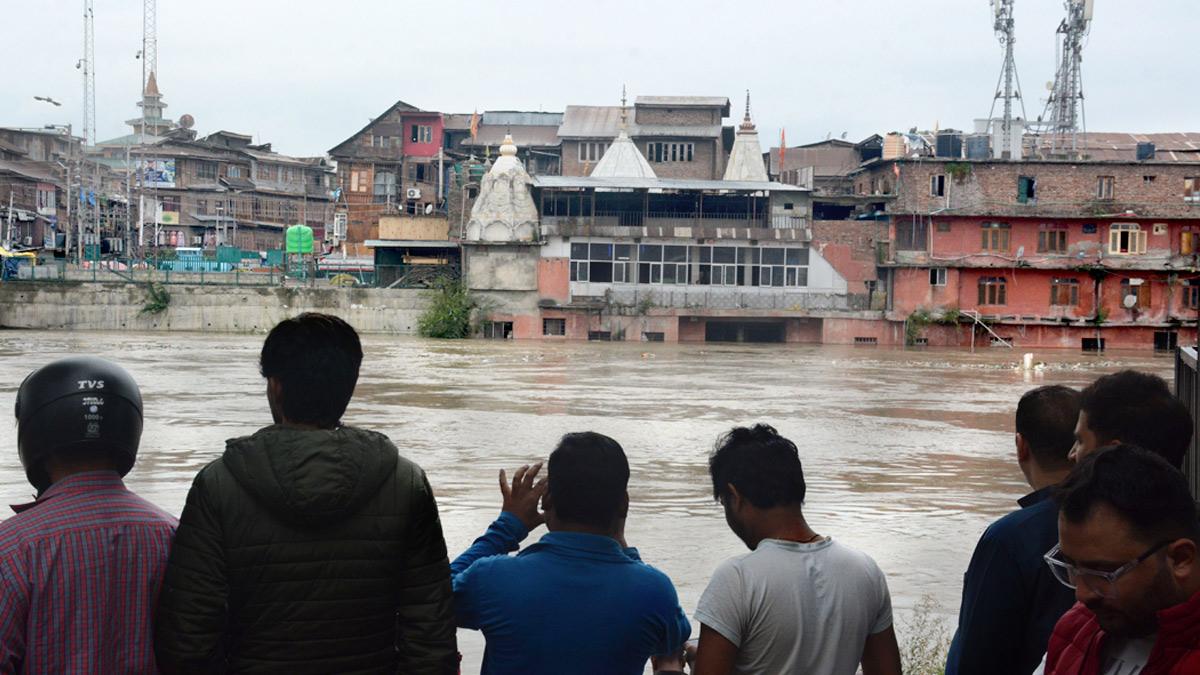
Local residents were seen placing sandbags to stop the breaches in the Jhelum. Photograph: Umar Ganie for Rediff
Jammu specifically hasn't seen such rain in a 24 hour period Tuesday-Wednesday. What has the city experienced in the last couple of days?
Jammu also saw unprecedented rainfall in 2014. The Tawi river was over the danger mark and Jammu City was flooded.
But this time, it was massive.
The bridge on the Tawi is very high, but the water level rose dangerously close to it.
There are several institutions, including a college from British times located on the bank of the river. The water has gushed in with very high velocity and submerged the ground floor of several buildings.
This has happened because of continuous, heavy downpour.
We have observed during the last few years that the intensity of either snowfall or rainfall has become very high.
Jammu is in the foothills. The drains, temporary streams, nalas were overflowing which has resulted in heavy losses.
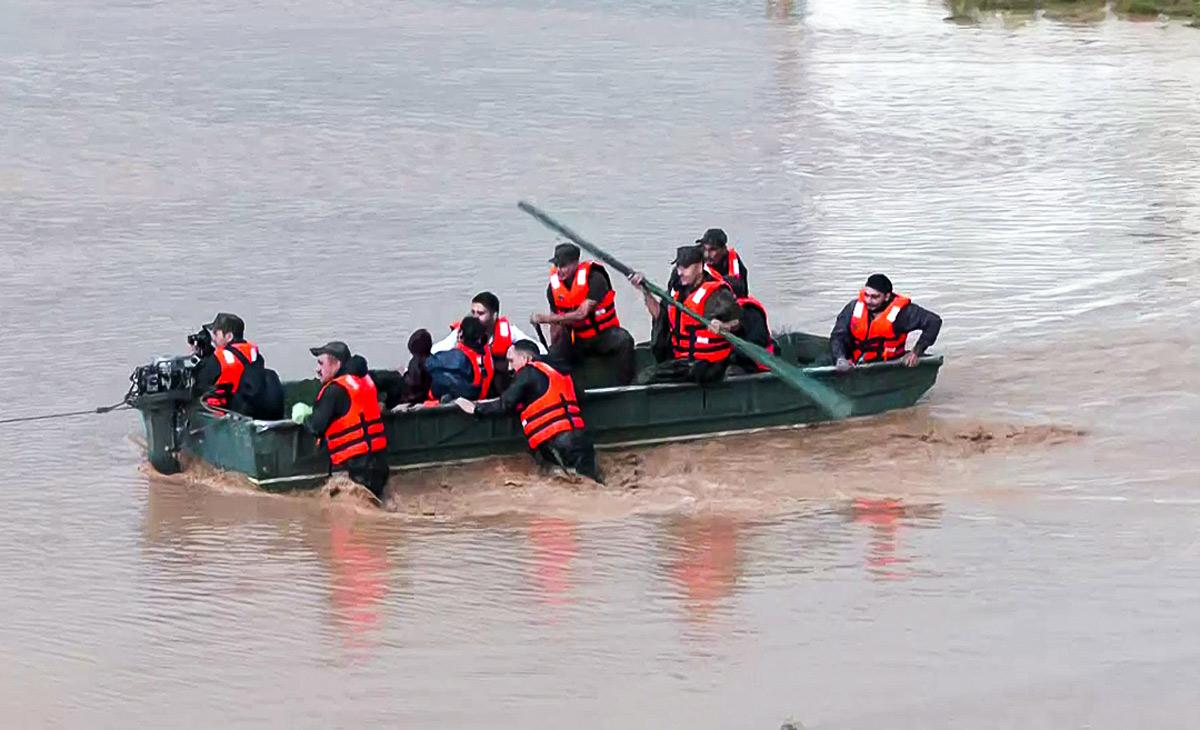
All the rivers were above the danger mark. Even the Jhelum river was flowing above the danger mark in Kashmir. What has caused this?
This is essentially orographic rainfall. What happens is that in the higher mountain areas, heavy rainfall occurs due to condensation happening at relatively low altitudes.
Various types of clouds, such as cumulonimbus or nimbus clouds, form at these lower heights. When condensation takes place, water droplets accumulate within these clouds and suddenly fall as intense rainfall over small areas.
This sudden, concentrated downpour is the primary reason for the heavy rains.

There has been a lot of unplanned construction near river banks and we have seen horrifying videos of houses, parts of roads, bridges being washed away. How has construction contributed to such disasters?
Many floodplain areas have become residential areas. These settlements hinder the free flow of water. In a very heavy downpour, the burst of water has to find its way and therefore whatever comes in its path gets washed away.
We need a masterplan and we need to follow it. We must remove settlements from such areas of high risk.

What are the measures that need to undertaken to prevent such calamities?
At the individual level, we need consciousness among the people.
Many tunnels, roads and bridges have been constructed by cutting the mountains. We are disturbing nature because of construction and urbanisation.
We are encroaching mountains and facing its repercussions in the form of disasters.
Feature Presentation: Aslam Hunani/Rediff







 © 2026