

'The Pakistanis knew there was only one route up and they could take direct aim at us as we climbed up.'
'They knew they could kill us.'
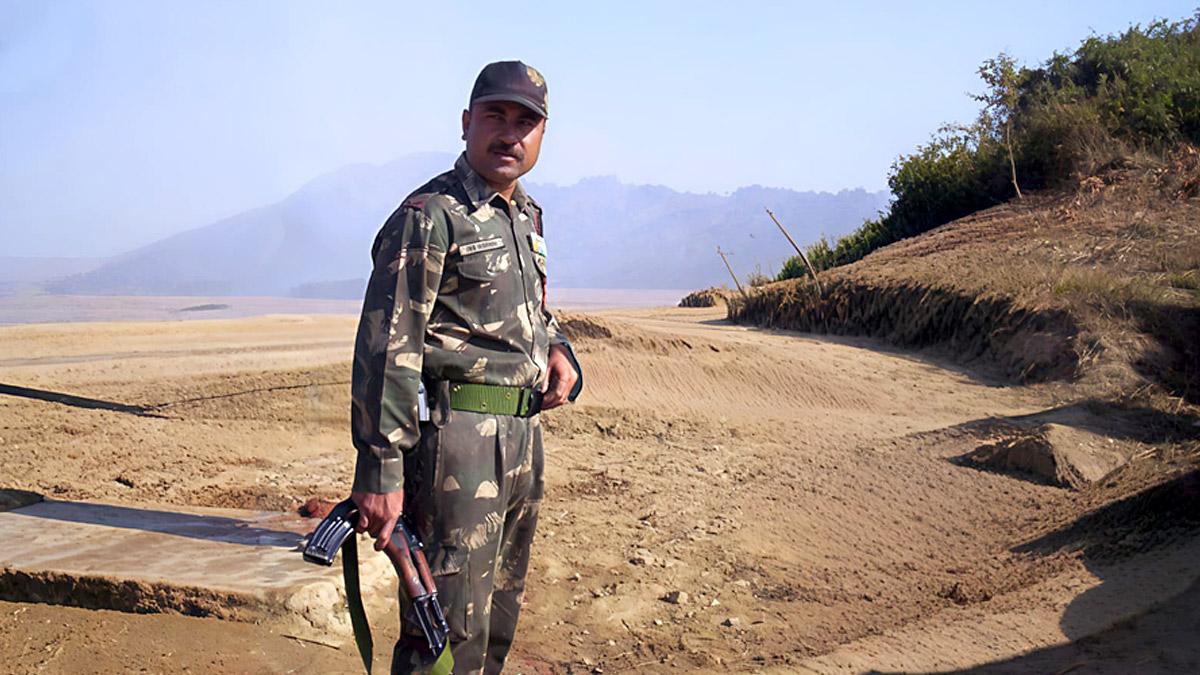
Colonel R K Sharma is a rare officer to have won three medals for gallantry -- the Kirti Chakra (the second highest medal for gallantry in peacetime), the Shaurya Chakra (the third highest medal for gallantry in peacetime) and the Sena Medal.
He wears the badges of bravery with humility and talks with simplicity.
Colonel Sharma was a newly commissioned officer in the 22nd battalion of the Grenadiers during the Kargil War fought between May and July 1999.
In the face of tremendous odds, he led his men to capture important peaks and finally drove the Pakistanis from the Batalik sector.
He did not lose a single man under his command. It is an accomplishment he is more proud of than the medals on his chest.
"It is all because of the blessings of the Almighty. I believe you will go only when your time comes," Colonel Sharma tells Rediff's Archana Masih , sharing memories of Kargil and how young soldiers fought inch by inch on perilous heights to bring victory for India.
Part 1 of a must-read interview:
26 years ago, the Kargil War was on at this time and you were fighting in the Batalik sector. Are you reminded of those days at this time every year?
Last year, I had travelled to all the features in Khalubar and Batalik where we had fought and was wondering how we climbed those heights to reach Point 5465?
[At 17,000 feet it was the highest point in the area.]
Those mountains are now well connected and have vehicular access, but at that time there was a single track.
If your foot slipped even a wee bit, you would fall 500 to 800 metres down the cliff.
I remember the steep climb and how difficult it was to breathe.
Salute to the Indian Army for doing what they did!
You had been sent from the plains of Hyderabad in the south to the peaks of Kashmir. What were the biggest difficulties faced by your troops when you got there?
This war had been shoved on to us by Pakistan.
For the last 40, 50 years there was an understanding that some of these heights were ours and some theirs.
In the winter the posts would be vacated by both troops, but that year the Pakistanis did not go back. They stayed put.
It was first thought that those were militants, then suspected as infiltrators, only as the war progressed did we get to know they were Pakistani regular forces.
We did not have enough troops in that area to push them back and therefore forces were called from different parts of the country.
The weather and terrain posed great difficulty. We operated in such high altitudes without acclimitisation.
Our deployment was in a very limited space while the Pakistanis occupied dominating heights.
Some of those heights had no access routes and we had to create pathways.
They had placed weapons on the frontline and had the advantage of height. They knew there was only one route up and they could take direct aim at us as we climbed up.
They knew they could kill us.
Everything was against the Indian forces, but we won.
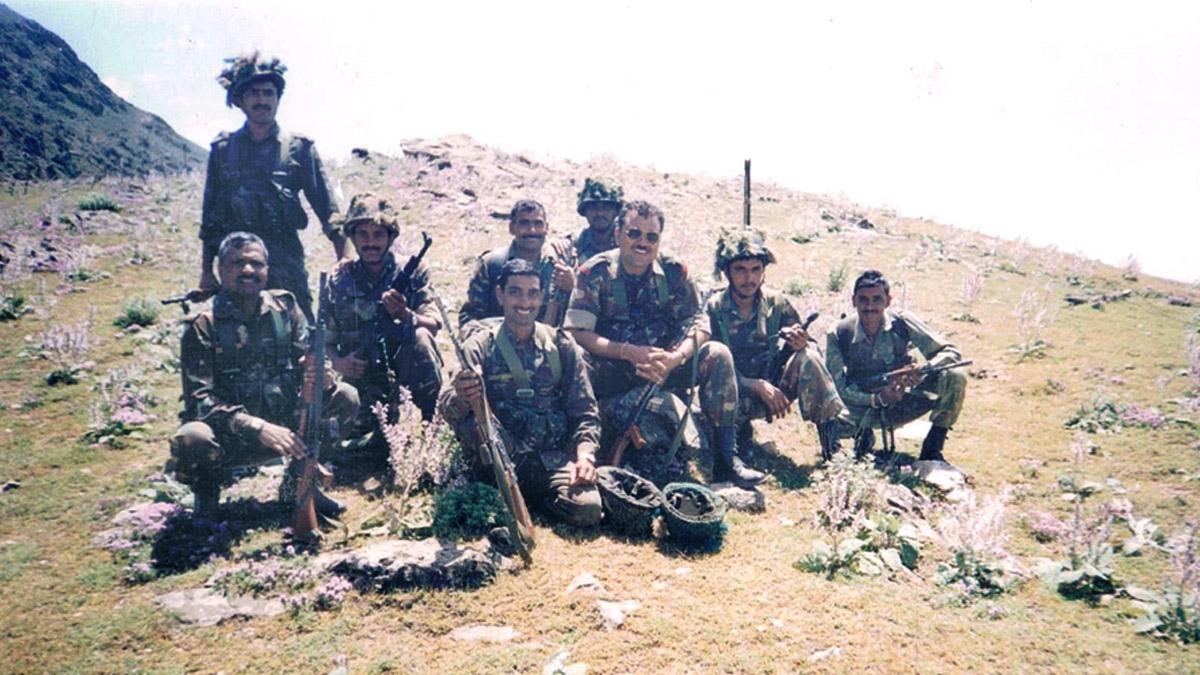
How old were you at that time and what is it that you remember most vividly about the war?
I was 32 and had never been in that sector before.
I had just met Lieutenant Manoj Kumar Pandey a day hours before he was killed in action. Twenty-four hours later I learned that he was no more. [Lieutenant Pandey was awarded the Param Vir Chakra.]
There was no mobile facility. Telephones were not available at those peaks. We could not talk to our loved ones.
The fauji is not afraid of dying on the battlefield, but of the thought of what his family must be going through seeing news of the battle on TV kills him several times over.
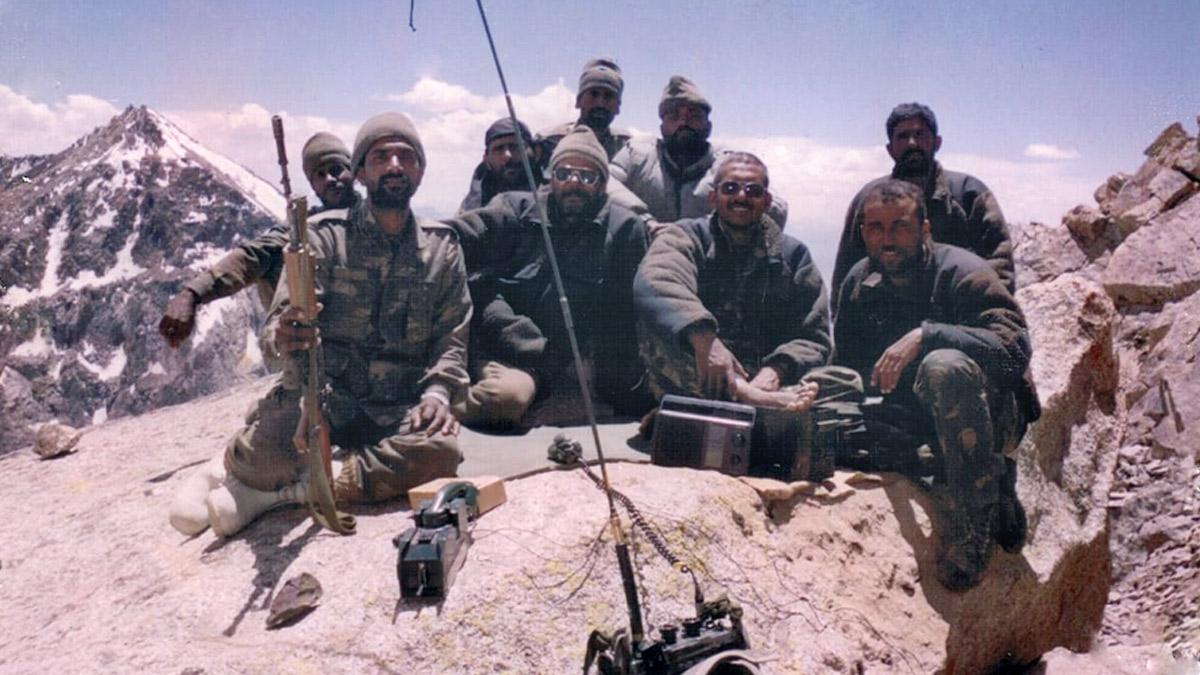
You must have forged lasting bonds with the soldiers you fought alongside. Do you still discuss the war when you meet?
Soldiers of my unit are very close.
When we meet, we invariably end up talking about our memories from the war.
Later, when I was posted to 28 Assam Rifles with another officer who had served with me in the war, we mostly spoke of our Kargil days even though we were in an operational area in the North East.
Indian armed forces paid a heavy price, but we know that for the security of our nation, we will give our life, our all.
We are willing to pay any cost.
Even our ladies in the fauj learn that it is better to be a widow of a hero than a wife of a coward.
Pakistn was entrenched on those peaks for six months. They had thought that the territory beyond Drass was in their control.
But we were able to drive them out.
It is called the Kargil War, but the battles were fought to the left and right of Kargil town -- in Drass, Mushkoh, Batalik...
The Indian armed forces fought pitched battles and won back that territory at a heavy price.
We achieved our objective.
- Part II of the Interview: 'We Would Rain Hellfire On The Pakistanis'
Photographs curated by Manisha Kotian/Rediff
Feature Presentation: Aslam Hunani/Rediff








 © 2026