

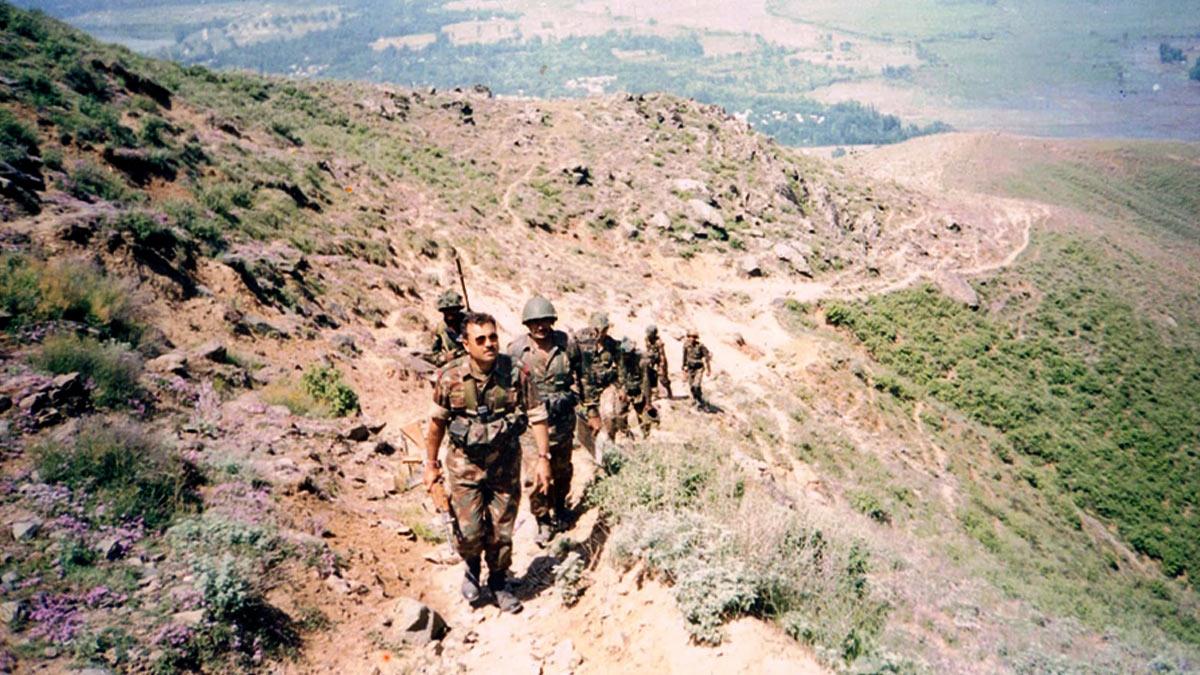
'5465 was over 17,000 feet -- our eyes were out of the sockets by the time we got to the top.'
'We had not eaten in 2-3 days and climbed in extremely difficult terrain.'
'I was there for 5-6 days, but had to be evacuated because I started vomiting blood.'
"The Pakistanis raised the white flag. In accordance with the code of war, we held our fire.
"An officer approached us. He was in a panic. As commander of my company, I stepped forward to discuss the ground situation as per the norms of a flag meeting.
"He told me they had suffered many casualties. I said your position is two kilometres behind. You have breached the line and come forward.
"I told him you have pushed the war on us."
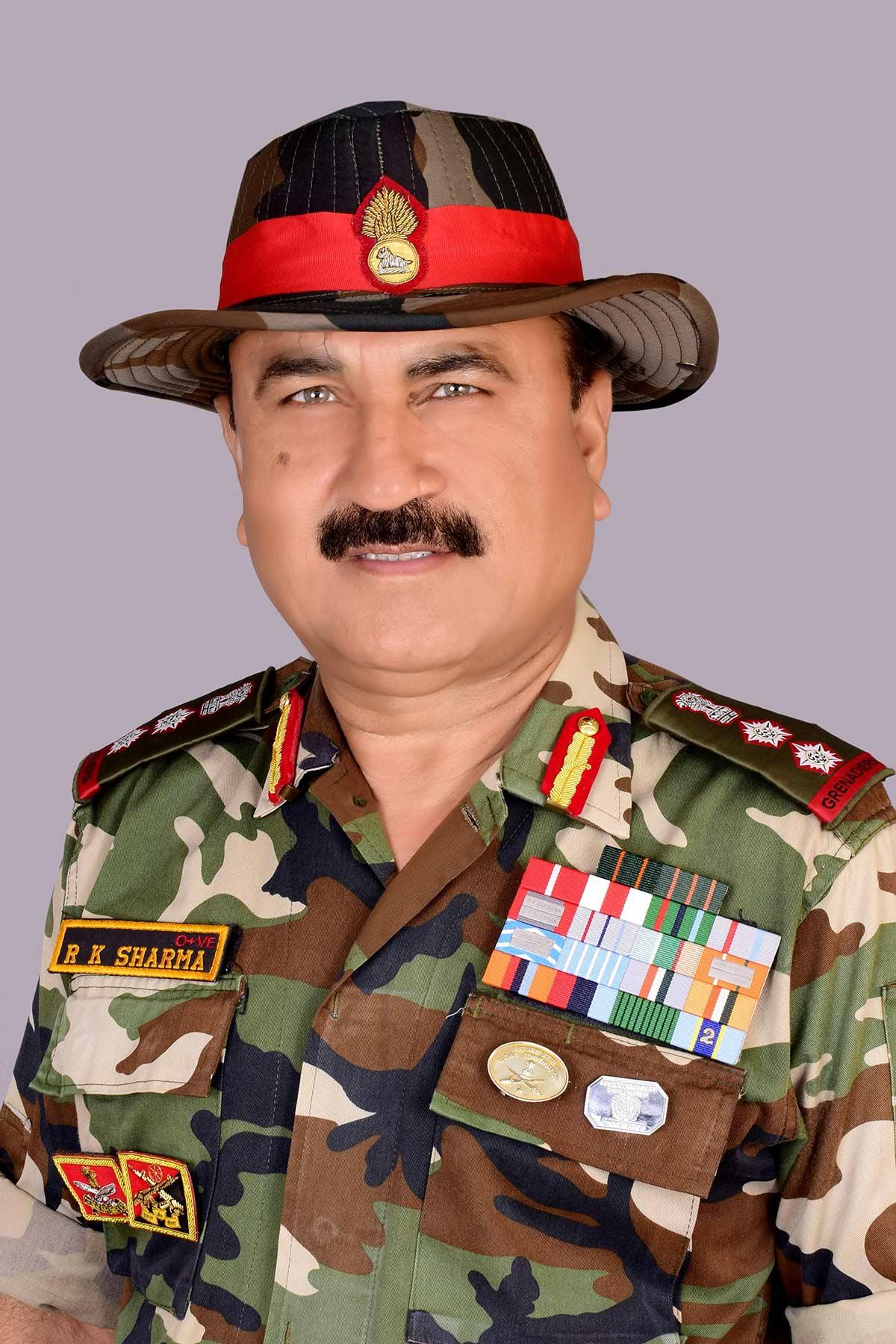
One of the Indian Army's most decorated soldiers, Colonel R K Sharma, Kirti Chakra, Shaurya Chakra, Sena Medal tells Rediff's Archana Masih how he and his men won the battle to recapture the highest peak in the Batalik range at 17,000 feet this month 26 years ago, during the Kargil War.
"My order was to win 5465 and I was going to do it at any cost," the colonel says in a multi-part interview.
- Part 1 of the Interview: 'Everything Was Against Indian Forces, But We Won'
How did you recapture 5203 and 5465 in the Batalik sector? It was a crucial victory in the Kargil War, but a very difficult and dangerous objective.
We paid a heavy cost to achieve that objective. Captain Amol Kalia and his men lost their lives in the first attack.
[Captain Kalia and 10 soldiers were killed in action. Despite grievous injuries, Captain Kalia bravely fought till his end. His body could be retrieved only 12 days later because the area was under constant enemy fire. He was awarded the Vir Chakra.]
The second attack was launched by the Ladakh Scouts and 5 Paras. After the objective was achieved, we were tasked to hold that point because the enemy was present nearby.
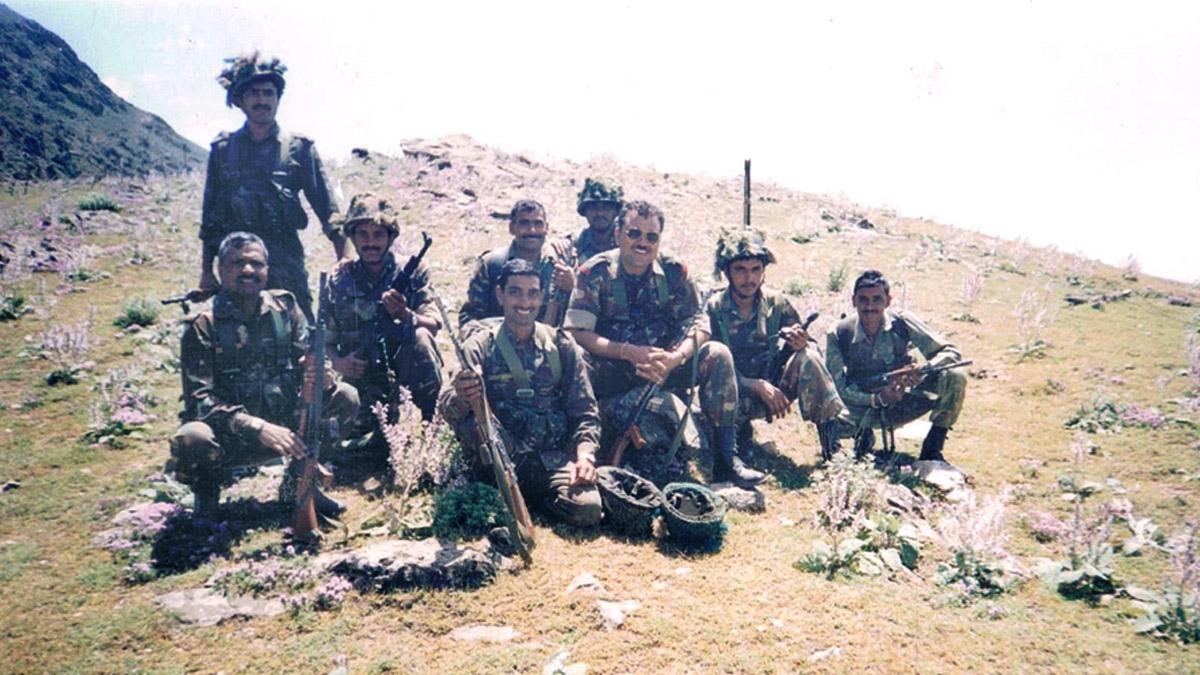
After 5203, our next task was to capture Point 5465, but we had to clear an area called 'Wall' to get to 5465.
Wall was halfway from 5465. It was called 'Wall' because the Pakistanis had made a well-fortified wall of stones from where they took aim at us.
The Indian troops received maximum fire from Wall. Therefore, we had to first capture Wall, then the Helmet area from where they fired rocket launchers. Only after clearing these intermediate points could we attack Point 5465.
We captured it in 2, 3 days.
We were 20 of us. Some soldiers had to stay back at these intermediate points to hold the ground after we had recaptured it.
5465 was a dominating point where the Pakistanis had stationed big guns. We could not move ahead till our men at the Wall did not fire at 5465.
In war you have to employ tactics according to the ground situation, and we did that.
I learnt from an earlier interview that a Pakistani officer raised the white flag.
Our troops were firing at the Pakistani position from the Wall area. I had told my men to rain fire which resulted in several deaths on the enemy's side. There was absolute commotion among the enemy troops.
They raised the white flag. In accordance with the code of war, we held our fire.
A Pakistani officer approached us. He was in a panic. As commander of my company, I stepped forward to discuss the ground situation as per the norms of a flag meeting.
He told me they had suffered many casualties. I told him that your position is two kilometres behind. You have breached the line and come forward.
He said he had orders from his seniors to come to that position.
He had climbed down to meet us and was in the line of fire of my men.
If they tried to betray the ethics of the flag meeting and attacked me, my men stationed in the Wall area would have fired.
He looked scared. I told him we were advancing to 5465 and if they fired, my men would rain hellfire on them.
My task was to win 5465. I had to achieve the objective. I had told my commanding officer that I will either come back victorious or not return alive.
What if they had attacked you?
My commanding officer's order was to win 5465 and I was going to do it at any cost.
Soldiers are trained not be daunted by situations and this was one of them.
When he raised the white flag I went without my weapon.
Lance Naik Tula Ram, a brave soldier, told me not to go unarmed. I told him that since he had a long range weapon, he could shoot if anything happens to me.
My unit was concerned about what if the Pakistanis captured me. The radio operator was relaying messages that the orders from the superiors were not to proceed.
The radio operator was told that RK had to be brought back dead or alive because if a Pakistani had captured any Indian solider alive, it would be humiliation for our forces.
But I knew he could not have captured me because he had climbed down to meet me, and my men had him in the line of fire.
They would have rained fire on both of us and he would not have been able to take me alive.
We met for 4-5 minutes and he said war is the deadliest thing.
I told him you have pushed the war on us.
What happened next?
I had told my men that till the time I was dealing with the Pakistani officer they should continue their movement to 5465.
By the time the flag meeting ended, my boys had reached the base of 5465.
Then Lance Naik Tula Ram and I joined them at 5465. It had taken us a full day to get there. It was over 17,000 feet -- our eyes were out of the sockets by the time we got to the top.
All of you must have been exhausted but exhilarated on achieving victory.
We had not eaten in 2-3 days and climbed in extremely difficult terrain. There were 8 of us who reached the top and held it.
I was there for 5-6 days, but had to be evacuated because I started vomiting blood. I was then brought down to brigade headquarter and replaced by Captain B K Singh.
I had a severe stomach infection and was in hospital for a week.
Last year I went to 5465 for the inauguration of the Khalubar memorial. I met the unit deployed there.
There must be so many unsung heroes of the Kargil War whose bravery we do not know of.
There were so many in 22 Grenadiers -- our battalion is called the 'bravest of the brave'.
I know Colonel S S Pillai, a true soldier. I heard so many stories about him from others who served with him. e did many ops in Kashmir.
[Colonel Pillai sacrificed his life in counter insurgency operation in J&K. He was killed in action on his birthday.]
Major Ajit Singh from my own company fought in Khalubar. Out of 22 men, 12 were killed in action in achieving that victory.
He was recommended for a Mahavir Chakra, but only two soldiers from that company got Sena Medals -- but faujis don't expect awards.
They fight for the nation, not for awards.
General V K Singh complimented you at the launch of your book Shoorveer by saying that a real warrior is one who ensures the safety of his men and achieves the objective at the same -- and you are one such warrior.
Touch wood. I have spent most of my life in operational areas and have never had to call a home and convey this message.
It is a blessing of God. I have never lost a man.
- Part 3 of the Interview: '527 Soldiers Gave Their Lives In Kargil'






 © 2026