
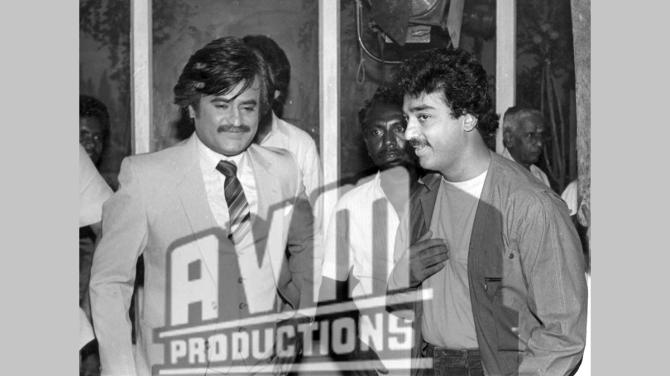
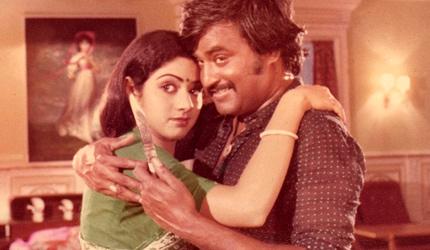
Whether it was in the company of superstars Rajinikanth and Kamal Haasan -- or, on rare occasions with both together, among others -- Saravanan's demeanour would stand out, recalls N Sathiya Moorthy.
Simply put, God has stopped making men like him.
Saravanan Surya Mani, better known as AVM Saravanan, died just a day after his 86th birthday owing to age-related ailments in Chennai, on December 4. He was, by all means, a 'gentle colossus' in the glitzy world of cinema, this one the Tamil filmdom.
Until he withdrew from public life a few years ago, Saravanan stood out in any crowd, any company, and literally so.
He was tall, and his sharp eyes surveyed all that he could see in a large gathering.
Even as he would be paying attention to the man standing in front of him and exchanging more than pleasantries, possibly, his deep-set eyes would wander now and again to catch a glimpse of men and events around him.
But it was natural, and came naturally to him, not cultivated or carefully crafted.
So much so, whether it was in the company of superstars Rajinikanth and Kamal Haasan -- or, on rare occasions with both together, among others -- Saravanan's demeanour would stand out.
His gentlemanliness contrasted with the loud behaviour of the younger generation in an industry that no more belongs to his generation of film producers, who counted every rupee that they spent as much as every rupee that tickled in through the box office.
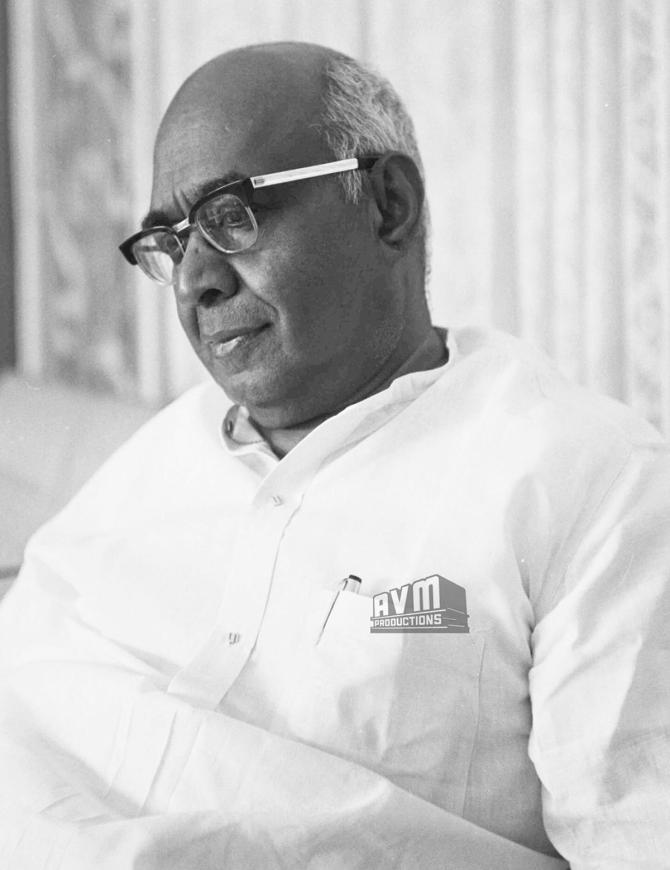
Always seen in white-and-white, trousers and half-sleeve shirts, with a bright vermilion religious mark in place on his forehead, his simplicity and calm exterior were not cultivated but inherited.
His late father A V Meiyappan belonging to the industrious Nattu Kottai Chettiar community, belonged to a generation of committed filmmakers and studio-owners of his generations, others being, 'Gemini' S S Vasan and Nagi Reddy of Vijaya-Vauhini Studios, once the largest film studio in Asia -- now a row of buildings unconnected with the industry.
It is not that all three of them, and many other filmmakers and studio-owners from that generation were clad in white.
Their business practices were also as clean as their exterior and attire.
Rarely did issues of non-payment arose in that generation, and not from Saravanan either.
When he found that the industry had become too flashy and the economics of which was unsustainable, Saravanan had the courage of conviction to declare that the AVM was withdrawing from film production, at least for the time.
After persuasion by friends, the AVM, with its unmistakable 'Globe' logo, to promote their films but also business ethics in an industry where ethics has lost its value and meaning, began producing television serials -- where they were the masters of what was being made and what was to be paid and could be expected as financial returns.
Even here, business standards are still unknown, but AVM, under the father-son duo has maintained their social, cultural and business values, from which others can learn but find it too difficult even to attempt.
Just as the story of the AVM legacy story could not begin with father AV Meyiyappan, it cannot continue without mentioning Saravanan even more.
The AVM Heritage Museum that Saravanan's two grand-daughters have curated is one of the rarest and boldest attempts.
At a time when film studios and studio-owned films are dying a natural death all around them, the younger generation (only) in the AVM family has demonstrated this adventurism aimed at not only sustaining business but also expanding and diversifying.
Yes, the museum is not a business venture in that sense of the term.
Both are directors in the family business and are also creative directors of the studios otherwise. And they had the blessings and guidance of that quiet innovator called AVM Saravanan and his son M S Guhan. Both realised that they needed to move with the times, and that the younger generation was best suited to see the transformation, forward.
The museum thus is symbolic, and symbolic of what to expect -- for even a legacy institution like AVM to return to their roots, re-invent and re-establish their old credentials.
It is not going to be easy, but it is an indication that the AVM story is not going to end as abruptly as happened in the case of other big names in the Tamil industry, including S S Vasan's Gemini of Chandralekha fame, and Vijaya-Vauhini, whose brand-name itself was itself a calling card.
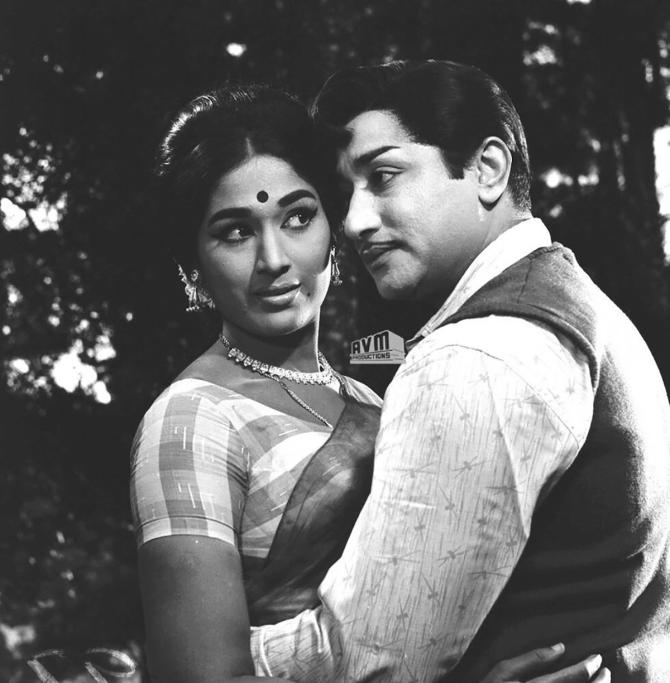
For the uninitiated, AVM, like other big-ticket producers of the times, used to make Hindi films with some of the shining stars of yesteryear.
Born in 1940, Saravanan joined the family business at 19, and was a part of AVM's continuing forays into the Hindi and Telugu industries, too, before settling down for native Tamil cinema.
He learnt the art of film production, as different from filmmaking at the feet of his father, who up to a point was also a filmmaker/director in his own right. Saravanan settled for the business side, and that may also be one reason why AVM has survived and continuing unlike contemporaries and later-day inventions.
Imagine an era before Saravanan's business times when Meiyappan, who was funding their distributor, A Perumal Mudaliar of National Pictures fame to produce a film, which the latter was confident would re-write the history of Tamil cinema.
After the film had been shot up to 7,000 feet or so, Meiyappan saw the rushes, and declared that the film won't run because the young, new face of a hero, looked famished.
Meiyappan scrapped not the project but the portion that had already been shot, paid the actor and gave the unit another six months for him to eat well and improve his physique. Thus was born the social drama, Parasakthi(1952), one of the all-time greats -- and also an actor, better known as Sivaji Ganesan, The Thespian.
Sivaji Ganesan, in fact, acted in another eight movies for the AVM banner. That includes his landmark 125th film Uyarndha Manithan (1968), a family drama. It was said that The Thespian wanted it that way, and approached Meiyappan -- and not the other way round, as has become the unhealthy norm, now.
Later-day Tamil Nadu chief minister M Karunanidhi's religiously and politically sensitive dialogues would have got the goat of present-day Hindutva groups, but even in its time, it has its own critics, going beyond the nascent print media.
There was a concerted effort to paint even Meiyappan and AVM with the same black brush as critics painted Karunanidhi, a follower of 'Periyar' E V Ramaswami Naicker and his 'anti-god, anti-Hindu' socio-politico philosophy.
But before Karunanidhi and Parasakthi, AVM had collaborated with another star of the Dravidian movement, C N Annadurai. AVM's Velaikari and Nallathambi (both 1949) were followed by Oru Iravu (1951).
Meiyappan and AVM weathered the storm.
It also demonstrated their grit and determination to face off and grow against adversity, without giving an inch.
This imagery extended to their handling of filmmakers, actors and business collaborators like distributors and exhibitors.
'Tough and fair' is the name that began going with the AVM brand, and Saravanan carried the flag high, but without making any noise.
It became another underlying principle of AVM, which became well known across industries, along with their 'clean' image and civil behaviour at all times.
So much so, when Saravanan decided to cast the mercurial M G Ramachandran (MGR), then the reigning superstar of the Tamil box office with a massive fan-following that also doubled as the committed cadres of the undivided DMK party, much as the producers wanted to be seen as pleasing the man.
But it was the other who was more accommodative, as they together shot Anbe Vaa (1966), shot in Shimla and Ooty -- the first AVM product to be shot in colour.
So much so, when Director A C Thrilokchander did not approve of MGR's 'suggestion' for the climax to be changed and wanted his original to remain, the superstar simply obliged. His reputation was otherwise.
The film, to use a contemporary phrase, was a super-duper hit.
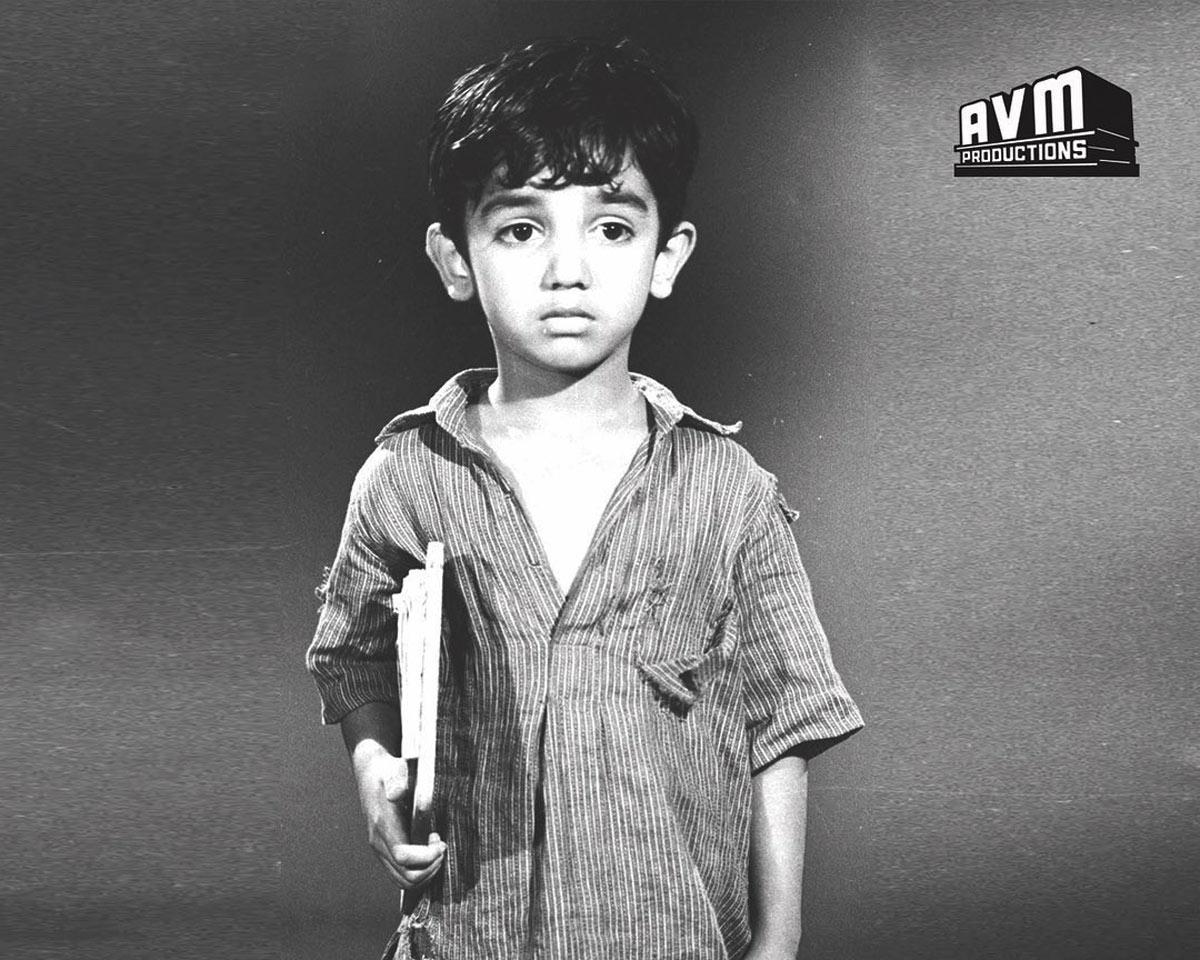
It was not only MGR and Sivaji Ganesan, even the next generation superstars, namely, Rajinikanth and Kamal Haasan that their unforgettable association with AVM and Saravanan. It is an old story that Kamal, as coincidence would have it, cut his filmi teeth, as a child artiste, in Kalathoor Kannamma (1960).
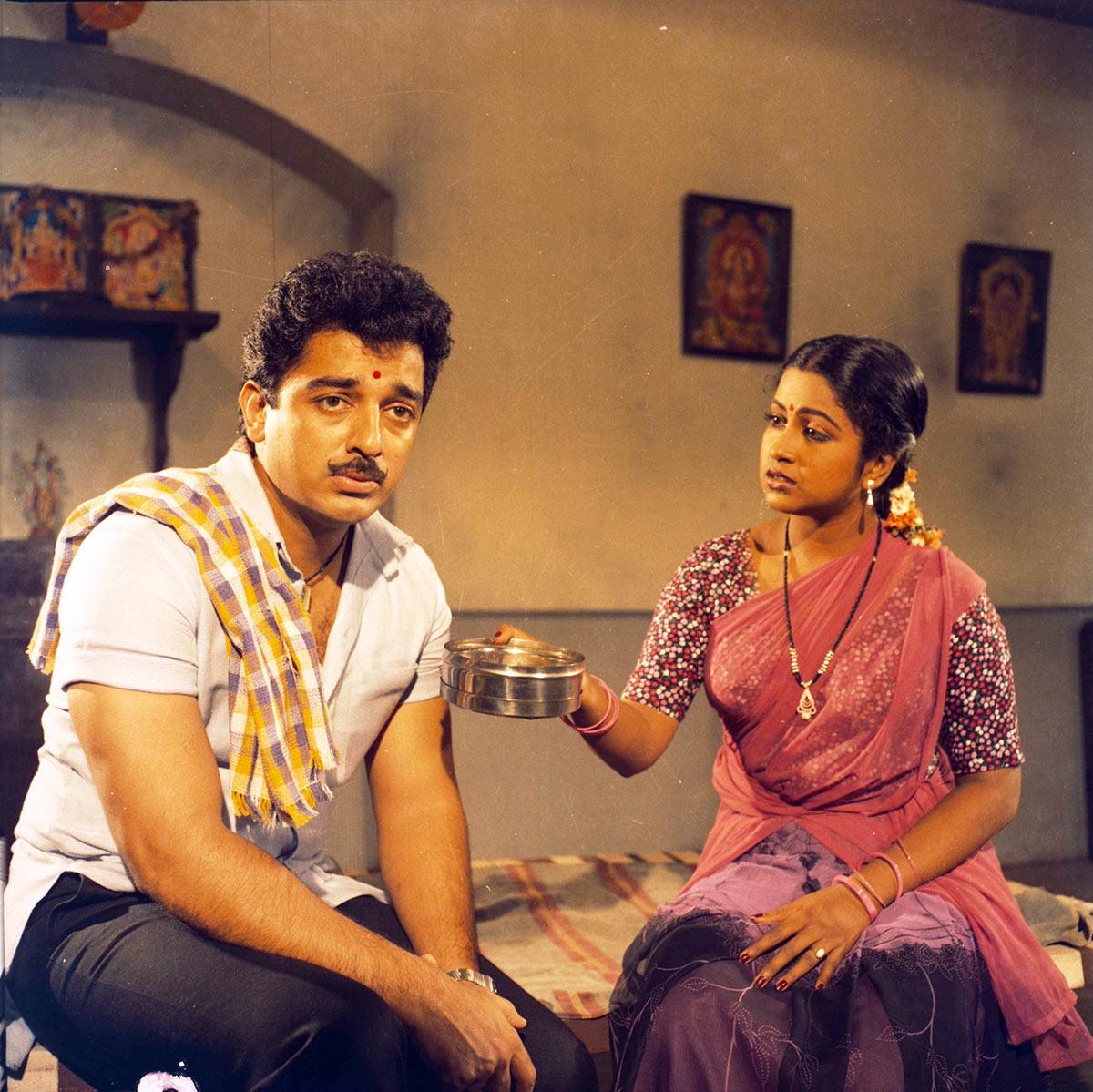
True to reputation, Meiyappan replaced the busiest of the child artiste of the time, Daisy Rani, after dumping her shot scenes and replaced her with the innocent-looking fresh face of Kamal. He also had a 'prayer song' sung by M S Rajswari for child Kamal, Ammavum Neeye, Appavum Neeye, included at all cost.
Sixty-five years down the line, it's still a very popular song, especially among women. And a young Saravanan was a part of it.
That way, the Kamal-AVM collaborations went beyond his child roles.
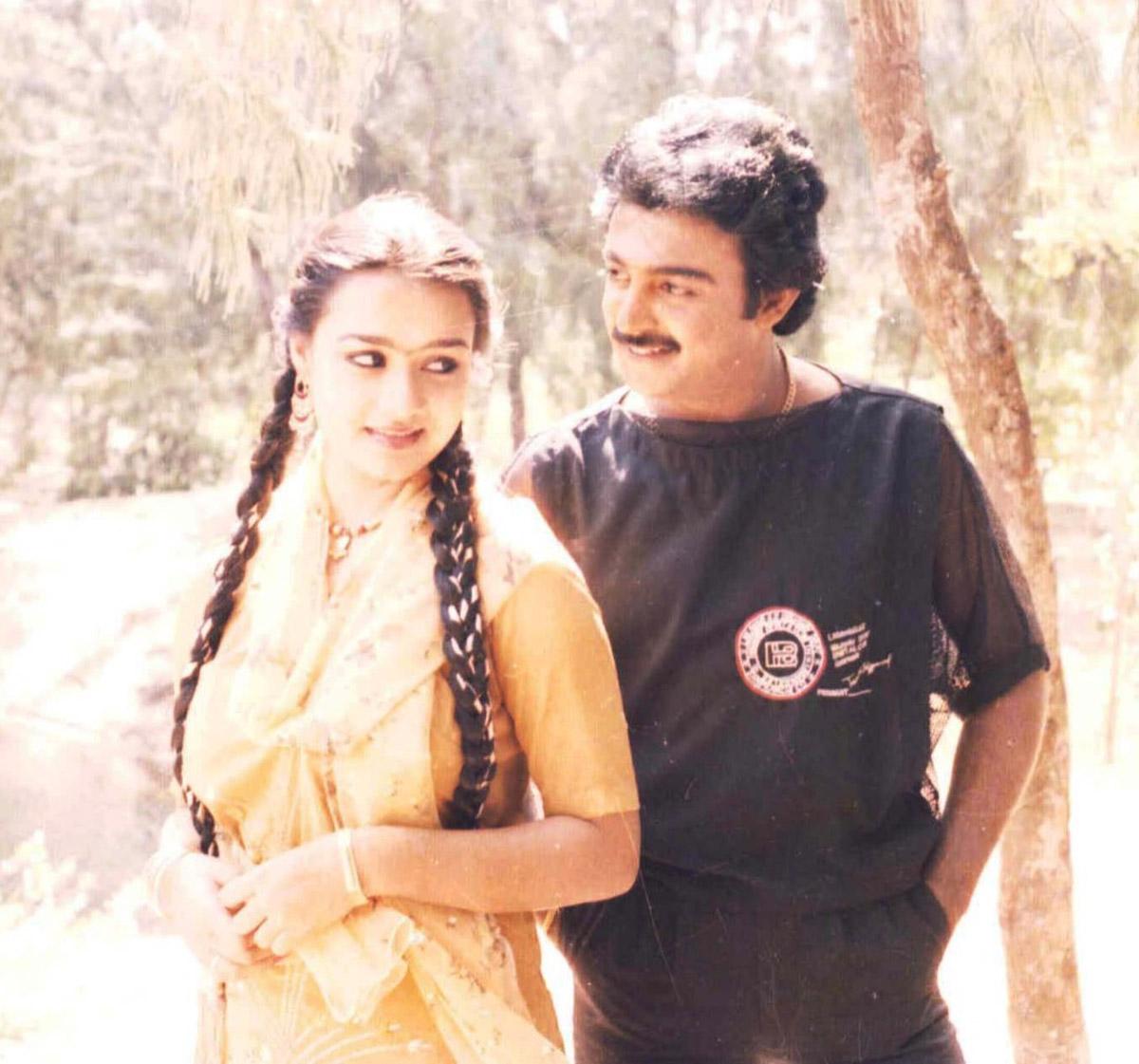
As a manly actor, Kamal acted in Sakalakala Vallavan (1982), a great grosser, followed by Thoongathey Thambi Thoongathe, Uyarndha Ullam and Per Sollum Pillai.
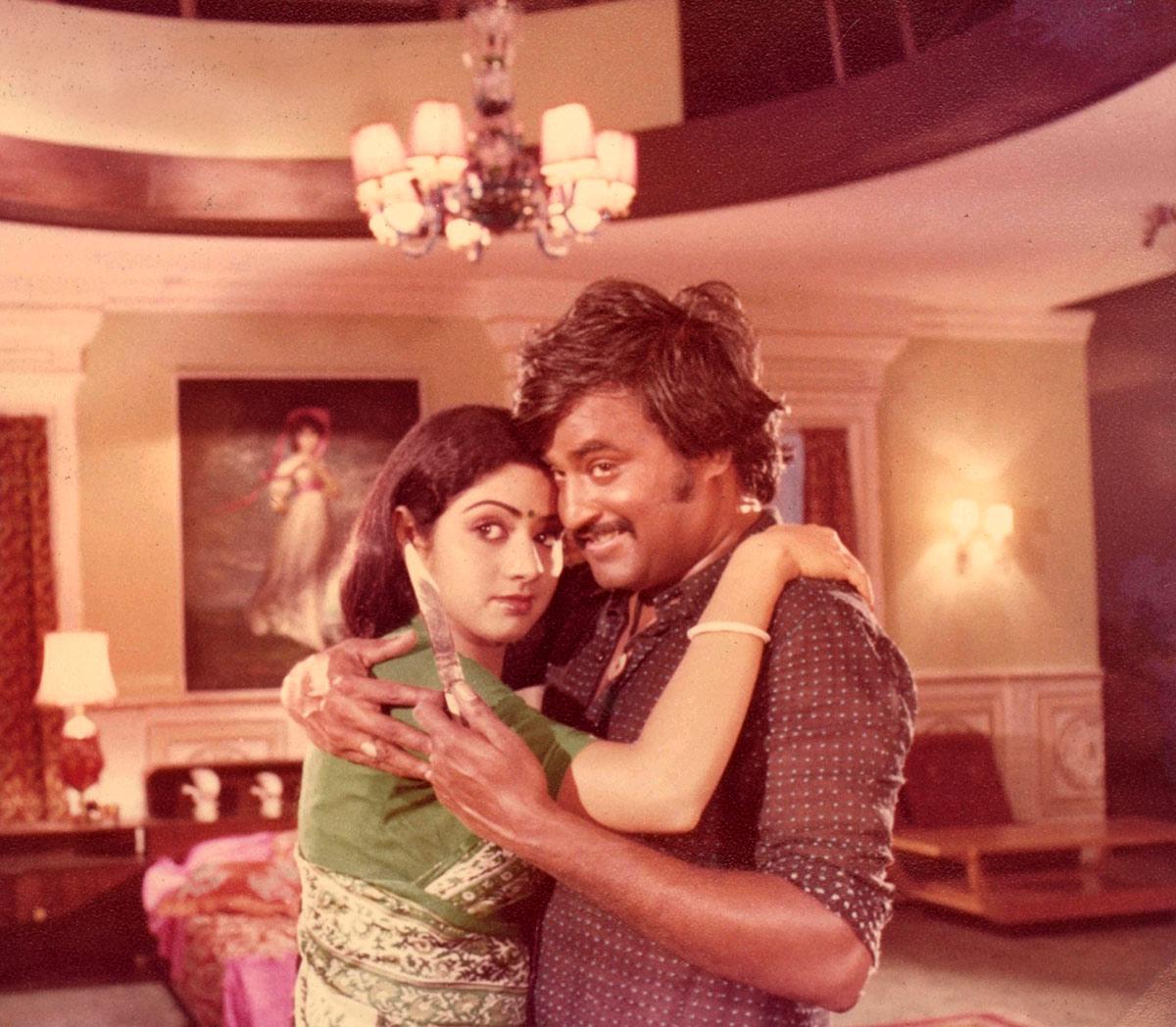
True, yes, K Balachander, the master of the middle-class Tamil characters and fans, who introduced Rajinikanth in a cameo role in Apoorva Ragangal (1975). After a few films, Rajini had his real break in AVM's Murattukaalai (1980), which took him to superstardom in due course.
And as superstar, he acted in Sivaji: The Boss for AVM (2007), a film by famed grandiose filmmaker S Shankar, in 2007.
In between the duo had collaborated in Pokkiri Raja (1982) and Mr Bharat (1986), apart from Raja Chinna Roja, Nallavanukku Nallavan and Ejaman.
Rajini's Sivaji was followed by another film, and then Ayan (2009), starring third-generation front-line actors Suriya, displaying Sarvanan's ability to move through the generational gaps that are more visible and more pronounced.
Then the AVM's return foray into the Telugu industry with three movies, followed by their 175th Tamil film, Idhuvum Kadandhu Pogum (2014).
Eleven years down the line, they are yet to produce another film, in 2025.
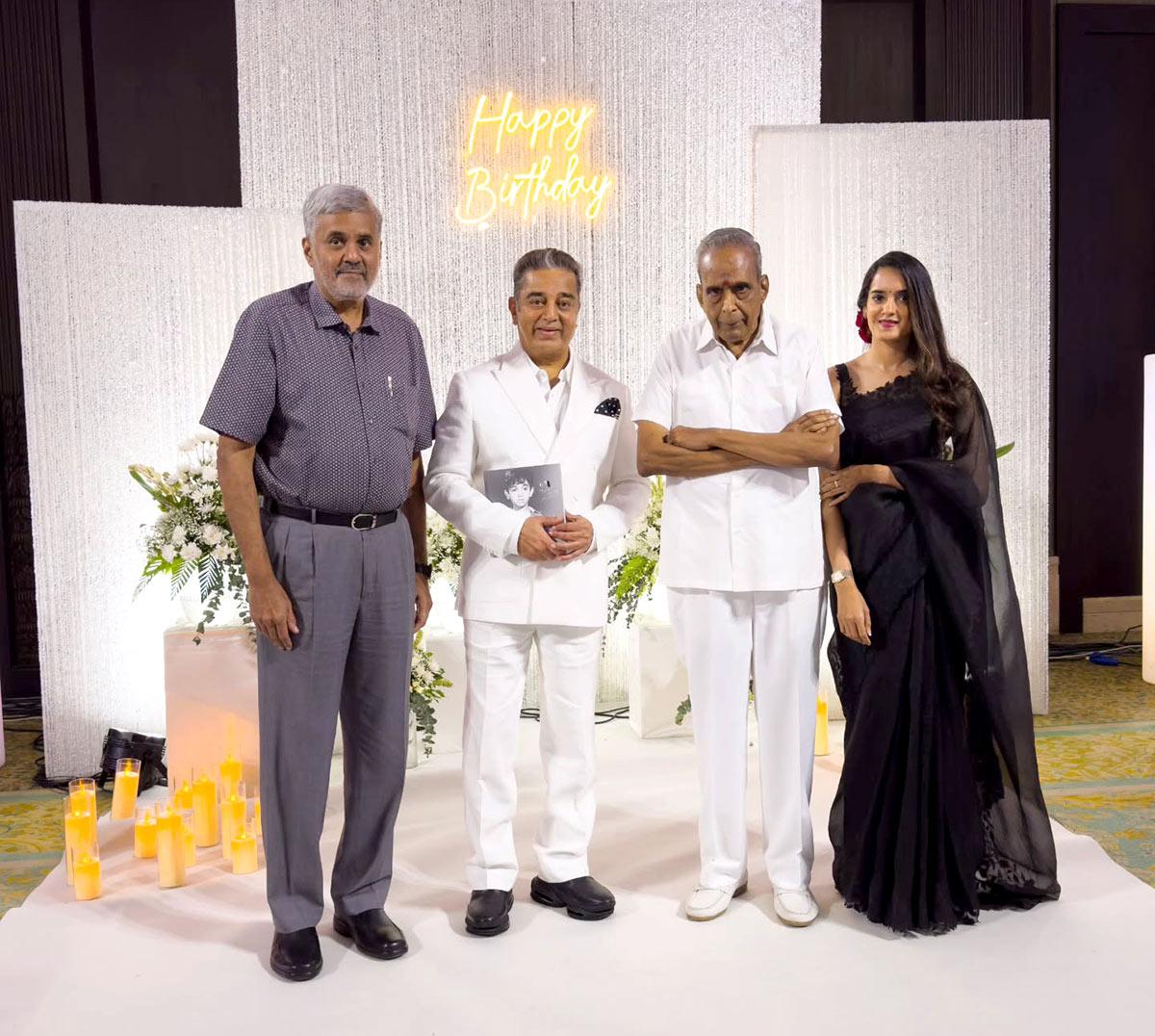
Saravanan was the third of three sons. As it turned out, managing the family's mainstay fell on his shoulders after father Meiyappan died in 1979.
Sarvanan was succeeded by his son M S Guhan. The fourth generation in the AVM clan, Aruna Guhan and Aparna Guhan, are already here.
They begin with what their great grand-father had built and what their grandfather Saravanan had nurtured, through the decades -- the dignity and decency of the film-producer, whose name was never ever involved in any controversy, business or personal.
Then, there is tough ethics and business rules that he had cherished and protected, along with the family motto of not allowing to be intimidated by superstardom.
Saravanan institutionalised it all in his own persona, through difficult, in and for the industry, too -- and leaving behind a legacy that is difficult to match but not something that could not be carried forward, given the DNA and genes of the AVM in you.
Photographs curated by Satish Bodas/Rediff






 © 2025