

'A deal will only be possible if India stops buying Russian oil -- but even then, New Delhi must not compromise its core red lines.'

India and the United States on Tuesday agreed to intensify efforts to reach an early conclusion of a 'mutually beneficial' trade deal, setting aside recent strains in their bilateral relationship.
The announcement from the Indian side followed a seven-hour meeting between the chief negotiators from both countries, at Vanijya Bhawan.
The US team was led by Brendan Lynch, assistant US trade representative (USTR) for South and Central Asia, while the Indian delegation was headed by Rajesh Agrawal, special secretary in the commerce department.
'Acknowledging the enduring importance of bilateral trade between India and the US, the discussions were positive and forward looking, covering various aspects of the trade deal,' the ministry of commerce and industry said in a statement.
'It was decided to intensify efforts to achieve early conclusion of a mutually beneficial trade agreement,' the ministry added.
This marked Lynch's third visit to India and the first official meeting between the trade negotiating teams since the US administration last month imposed relatively high tariffs -- a 50 per cent duty on a majority of Indian goods, including a 25 per cent punitive tariff targeting New Delhi's purchases of Russian oil.
The meeting also paved the way for the sixth round of negotiations, originally scheduled for August 25 in New Delhi but derailed after tensions flared.
Both sides refrained from announcing the date of the next round of talks, describing the latest engagement not as a formal round of negotiations but as a stock-taking exercise, following a gap of one-and-a-half months.
"Assistant US Trade Representative Brendan Lynch had a positive meeting in Delhi with his counterpart, Ministry of Commerce and Industry Special Secretary Rajesh Agrawal, on September 16 to discuss next steps in bilateral trade negotiations," a US embassy spokesperson stated.
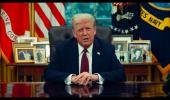
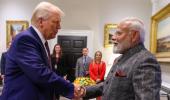
The meeting came amid signs of easing tensions between the two countries, with US President Donald Trump and Prime Minister Narendra Modi posting conciliatory messages on social media last week, expressing optimism about resolving outstanding issues and concluding negotiations for a trade deal at the earliest.
In February, Modi and Trump had announced the intention to conclude the first phase of a Bilateral Trade Agreement (BTA) by the fall of 2025.
Commerce and Industry Minister Piyush Goyal in recent days indicated that a trade deal with the US could be finalised by the end of November.
Ajay Srivastava, former trade ministry official and founder of the Delhi-based think tank Global Trade Research Initiative, said the US appeared desperate to close a deal with India, even as its officials routinely use disparaging language against New Delhi in public forums.
By naming India in its supreme court filing, Washington has made any deal politically harder.
"A deal will only be possible if India stops buying Russian oil, even though China and the EU will continue doing so -- but even then, New Delhi must not compromise its core red lines," Srivastava said.
"India must hold firm on agriculture and dairy, which it views not as trade issues but livelihood concerns for over 700 million farmers."
Feature Presentation: Ashish Narsale/Rediff





 © 2026