

The TVS Orbiter works best as a city scooter with good range and comfort, but it quickly runs out of steam on steep climbs, finds Rajesh Alva.

A Long Ride That Revealed the Orbiter's Limits
It had been far too long since I’d gone out on a proper long bike ride.
So on a Sunday morning, before the city had fully woken up, I rolled the TVS Orbiter out of my building and headed off, no destination in mind, just the promise of open roads, and rode out purely for the joy of it.
The night before, I had charged the scooter to a full 100%.
At around 6 am, I left Kandivali in Mumbai's western suburbs, slicing through empty streets towards Vashi, learning the Orbiter as I went.
The roads were smooth, the air cool, and time slipped away unnoticed.
Before I realised it, Vashi was behind me. I kept going.
I hadn’t planned to go this far. But the road was inviting and so I kept going, finally pulling into the McDonald’s outlet at Kalamboli.
The numbers told the first part of the story: 52 km done, battery down to 45%. Reasonable, I thought. But if I was going any further, I needed a charge. That’s when optimism met reality.
Most charging stations around me were built for cars. Fast chargers, brand-locked systems, four-wheeler bays.
I even found an Ather fast charger, only to discover it was useless unless you were riding an Ather. The freedom of the morning suddenly felt fragile.
After circling around, I returned to McDonald’s and, almost out of options, asked a nearby garage owner if I could plug into a wall socket.
He agreed. I connected the TVS-supplied 650W off-board charger and waited, coffee in hand, watching percentages climb painfully slowly. When the battery reached 75%, I made a call.
Lonavala.
That should be enough, I told myself, but in reality the ghats had other plans.

Built for the City, Not the Ghats
The moment the climb began, the battery started falling fast.
Each incline felt like it was draining confidence along with charge. The numbers dropped... 10%... 7%... 5%. Anxiety crept in.
I was now riding with one eye on the road and the other glued to the display.
Another frantic search followed, and finally, relief, a hotel with a socket in its parking lot.
I plugged in again. For the next ninety minutes, time slowed. Snacks, fruit juice, pacing around the scooter. The battery inched its way from 2% to 38%.
It wasn’t much, but it was enough to try.
I rolled on, nursing the throttle, and by around 2 pm, I made it to Mapro Garden in Lonavala with just 4% battery left.
The destination felt less like a pit stop and more like a finish line.
Tired of waiting around for slow charging, I booked an MTDC cottage in Karla and decided that the ride, for the day, was over.
Morning brought clarity and a fully charged scooter.
The ride downhill was pure joy. Regenerative braking quietly worked its magic, feeding energy back into the battery as the road flowed effortlessly beneath me.
By the time I reached Kalamboli again, roughly halfway home, I still had 51% charge left.
I could have pushed on. Instead, I chose caution over confidence.
Back at the same garage, I plugged in once more, waited an hour, and left with 75% on the display.
This time, there was no drama.
I rolled back home comfortably, the Orbiter still showing 25% charge left, proof that sometimes, the return journey tells a very different story from the ride out.
Key Points
- TVS Orbiter is designed primarily for urban commuting.
- Real-world range of 100-110 km is impressive for the price
- Low 7-degree gradeability makes hill climbs difficult
- Comfortable seat, relaxed riding posture, good practicality
- Cruise control is a rare and useful feature in this segment
- Smooth, beginner-friendly performance but lacks punch on open roads
- Strong value proposition under ₹1 lakh (ex-showroom)

Where the TVS Orbiter Makes Sense
That ride summed up the TVS Orbiter perfectly. It is not meant for hilly terrain or long rides without fast-charging support. But within its intended role, it actually makes a lot of sense.
Positioned below the TVS iQube, the Orbiter is the brand’s more affordable electric scooter, priced at just under ₹1 lakh (ex-showroom).
It’s clearly designed for daily urban use, focusing on comfort, usability, and range rather than outright performance.

Design That Looks Better in Real Life
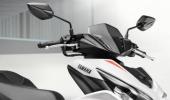
In terms of design, the Orbiter looks better in person than in pictures. The dual-tone colour schemes give it a youthful, modern vibe.
Compared to the safe, family-friendly iQube, the Orbiter feels bolder and more contemporary.
Build quality is impressive for the price, with good paint finish and neatly fitted panels.
The LED headlamp, wraparound DRL with integrated indicators, and matching LED tail-lamp give it a clean, modern appearance.
The LCD display is clear and easy to read, showing speed, range, distance-to-empty, and time.
Switchgear feels solid, and the cruise control button immediately stands out, mainly because cruise control itself is a rare and genuinely useful feature in this segment, something even the iQube doesn’t offer.
It works between 25 and 60 kmph and is simple to operate, making relaxed city rides easier.

Comfort and Practicality Come First
Comfort and practicality are strong points. The wide, flat seat is comfortable, with a seat height of around 763 mm, making it accessible for most riders.
The riding posture is relaxed and well suited for commuting.
Under the seat, the 34-litre storage can easily hold two half-face helmets and the charger, though a full-face helmet may be a tight fit.
There’s also a small front storage space with a USB charging port and a bag hook, adding to daily convenience, even if the opening could be wider.

Performance That Suits Urban Traffic
Power comes from a 2.5 kW hub-mounted motor with two riding modes, Eco and City.
Eco mode tops out at 45 kmph, while City mode goes up to 68 kmph.
Throttle response is smooth and predictable, making the scooter friendly for new riders.

Hill Climbs Expose the Orbiter's Biggest Weakness
Performance is adequate in city traffic, but it feels slow on open roads and lacks the punch of some rivals.
The biggest limitation is its low 7-degree gradeability, which became painfully obvious on the ghats, despite the presence of hill-hold assist.

Value for Money With Clear Trade-offs
Ride quality is comfortable and stable. The 14-inch front wheel inspires confidence, and the scooter feels composed through corners.
Suspension is not as soft as the iQube’s but handles speed breakers and rough roads reasonably well. It can feel slightly bouncy at times, though never uncomfortable.

The Orbiter uses a 3.1 kWh lithium-ion battery with an IDC-claimed range of 158 km.
In real-world conditions, you can expect around 100–110 km, which is genuinely impressive at this price point.

The distance-to-empty display showed around 115 km during my ride.
Charging, however, is limited to the 650W off-board charger, which takes about five and a half hours for a full charge. The absence of fast-charging support severely restricts long-distance usability.

An Affordable Entry Point into Electric Mobility
In the end, the TVS Orbiter is a sensible, well-rounded electric scooter for city use.
It looks good, is comfortable, practical, and delivers a strong real-world range.
It’s not built for steep climbs, highway runs, or spontaneous long rides but as a daily urban commuter under ₹1 lakh, it does its job well.
If TVS improves gradeability, adds better braking hardware, and introduces a fast-charging ecosystem in the future, the Orbiter could become an even more compelling package.
For now, it remains a smart choice for buyers looking to enter the electric scooter space without stretching their budget.

Feature Presentation: Rajesh Alva/Rediff







 © 2026