
A nationwide strike called by central trade unions saw a mixed response across India, impacting various sectors and states differently, with some areas experiencing disruptions while others remained largely unaffected.
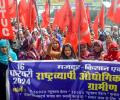
Over 25 crore workers across India are set to strike against new labour codes and privatisation, potentially disrupting banking, postal, and other essential services.
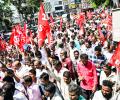
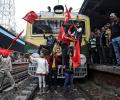
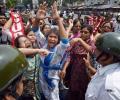
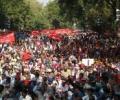
A nationwide strike called by trade unions to protest against the central government's labor policies had a mixed impact across India. While normal life remained largely unaffected in most parts of the country, some sectors like banking, transport, and insurance experienced disruptions. Sporadic incidents of violence were reported in West Bengal.

Talking to PTI Amarjeet Kaur, General Secretary of All India Trade Union Congress (AITUC), said, "The two-day nationwide strike by the joint forum of central trade unions has begun this morning". About the impact of the agitation, she said that the entire coal belt (mining area) is affected in Jharkhand, Chhattisgarh and Madhya Pradesh. She also said that there is a good response in industrial areas of Assam, Haryana, Delhi, West Bengal, Telangana, Kerala, Tamil Nadu, Karnataka, Bihar, Punjab, Rajasthan, Goa, Andhra Pradesh and Odisha. The AITUC official noted that the banks and insurance sectors are affected all over India, while steel and oil sectors are also seeing partial impact due to the strike. Kaur said that she has got preliminary reports that markets are closed in Odisha.
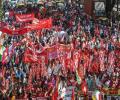
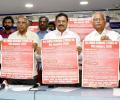
A joint forum of central trade unions has given a call for a nationwide strike on March 28 and 29, to protest against government policies affecting workers, farmers, and people. The Joint Platform of central trade unions held a meeting in Delhi on March 22, 2022, to take stock of the preparations in various states and sectors for the proposed two-day all India strike on 28-29 March 2022 against "the anti-worker, anti-farmer, anti-people and anti-national policies" of the central government, a statement said. The statement said that roadways, transport workers and electricity workers have decided to join the strike in spite of the impending threat of ESMA (Haryana and Chandigarh, respectively). Financial sectors, including banking and insurance, are joining the strike, it stated.

According to reports, public transport and banking services remain partly disrupted for the second day in some states.
Most of the lenders had informed their customers in advance about the strike call given by All India Bank Employees Association (AIBEA), All India Bank Officers' Association (AIBOA), BEFI, INBEF, INBOC and Bank Karmachari Sena Mahasangh (BKSM), and its impact on banking services.
While all indicators pointed to economy drastically slowing down due to lack of demand, the government continued to steer its policies in the name of 'ease of doing business', aggravating widespread impoverishment and deepening the crisis further, the unions alleged.

A joint forum of central trade unions has given a call for a nationwide strike on March 28 and 29 to protest against the government policies affecting workers, farmers, and people.
None of the issues which have been continuously raised by the central trade unions, including unemployment, minimum wages, social security and 14-point charter of demands, were addressed by the minister.

Ten central trade unions on Tuesday said they are going ahead with their planned nationwide general strike on November 26 and also announced their support to a two-day farmers' agitation next week. The meeting of the Joint Platform of Central Trade Unions (CTUs) and Sectoral Independent Federations and Associations was held virtually on November 16, 2020. Unions expressed satisfaction over the tremendous response being received from workers and the people at large throughout the country to the ongoing campaign for the countrywide general strike on November 26, 2020, a joint forum statement said.
The unions, CITU, AITUC, BMS, INTUC, HMC, AUITUC, TUCC, AICCTU and UTUC demanded that the government stop disinvestment of public sector units and bring in a lagislation to protect workers of unorganised sector.

Ten central trade unions except Bharatiya Mazdoor Sangh are observing one-day general strike on Thursday to protest against various government policies.
Ten central trade unions on Friday gave a call for a nationwide strike on May 22 to protest against the suspension of labour laws by some states during the lockdown period, and also decided to take the matter to International Labour Organization (ILO). "The joint platform of Central Trade Unions (CTUs) in their meeting held on May 14 , 2020 took note of the critical situation for the working people in the country during the lockdown period and decided to enhance united actions to meet the challenge," a joint statement by 10 CTUs said.

In a joint statement issued on Monday, the central trade unions also threatened to give a call for nationwide agitation to protest against such moves by state governments. "The CTUs consider these moves as....gross violation of the Right to Freedom of Association (ILO Convention 87), Rights to Collective Bargaining (ILO Convention 98) and also the internationally accepted norm of eight hour working day espoused by Core Conventions of ILO)," the statement said.

Central trade unions on Wednesday decided to hold a nationwide demonstration on January 20 against the government's notification of 8.5 per cent EPF rate for the current fiscal.

Sunder Navalkar devoted her whole life to the cause of workers' rights, remembers Sanober Keashwaar.

The government has introduced the Code on Wages Bill 2019 and the Occupational Safety, Health and Working Conditions Code Bill 2019 in Lok Sabha on July 23.
 © 2026 Rediff.com - Investor Information - Advertise with us - Disclaimer - Privacy Policy - Sitemap - Feedback - About us - Terms of use - Grievances