
India has accused Pakistan of violating the spirit of the Indus Waters Treaty by engaging in acts of terrorism and refusing to modify the treaty. India's Permanent Representative to the UN, Ambassador Parvathaneni Harish, addressed the UN Security Council, highlighting Pakistan's disinformation regarding the treaty and its continued support for cross-border terrorism. He stated that India has always acted responsibly as an upper riparian state and that Pakistan's actions have jeopardized civilian lives, religious harmony, and economic prosperity. India has suspended the treaty until Pakistan ends its support for terrorism.

Yet another India-Pakistan engagement has been put off in the backdrop of strain in bilateral ties arising out of ceasefire violations.
Water Resources Minister Saifuddin Soz emphasised that river Jhelum, on which the project is proposed to be built, is a 'symbol of our civilisation' and cannot lose the right of navigation on it.

"Pakistan is now waiting for India's response to the proposed dates," Sartaj Aziz, Pakistan Prime Minister Nawaz Sharif's adviser on foreign affairs, said.

Aziz said all issues, including Kashmir, would be part of the peace talks under the agreed formula for the fresh re-engagement with India.

India is actively considering the Pakistani proposal on the talk schedule for remaining secretary-level meetings in the third round of resumed dialogue with dates on the crucial issue of water and Sir Creek being suggested ahead of the meeting between their prime ministers in New York in September.

Amid growing strain in India-Pakistan ties, the government is planning to fast-track four projects in Indus river basin to increase irrigation area in Jammu and Kashmir by nearly 2.05 lakh acres, weeks after India decided to "exploit to the maximum" the water of Pakistan-controlled rivers, including Jhelum, as per Indus Water Treaty.

India to exploit to the maximum the capacity of Pak-controlled rivers -- Indus, Chenab, Jhelum as per the Indus Treat, source said.

Breaking the logjam in their ties, India and Pakistan on Wednesday announced that they have decided to engage in a "comprehensive" dialogue that will include peace and security and Jammu and Kashmir.

'The softening of India's attitude towards Pakistan -- whatever the compelling reasons -- opens up the BJP to harsh scrutiny.' 'This is a high stakes gamble with the potential for devastating losses,' warns Vivek Gumaste.

While Prime Minister Modi may pursue the laudable aim of building a cooperative relationship with Pakistan, he and his advisers should never think that concessions (and dialogue is a concession in itself) will change the Pakistan army's approach to India, says Vivek Katju.
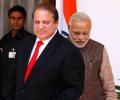
The government has returned to talks with Pakistan, but can it withstand pressure from a jingoistic press and a rabidly nationalistic social media.
 © 2026 Rediff.com - Advertise with us - Disclaimer - Privacy Policy - Sitemap - Feedback - About us - Terms of use - Grievances