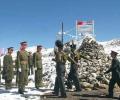
At the talks, the Indian side insisted on complete disengagement of Chinese troops at the earliest and immediate restoration of status quo ante in all areas of eastern Ladakh prior to May 5 when the standoff began following a clash between the two armies in Pangong Tso, they said.
The talks between the two sides have been going on for the last three months including five Lieutenant General-level talks but have failed to yield any results, so far.
Chinese troops have been camping in the Finger area for over three months now and have even started fortifying their bases there with construction of bunkers and sangars.
The CSG is one of the topmost bodies in the government which provides directions to the military and diplomats on the stand to be taken during talks with the Chinese and also take a stand on the points and demands raised by the Chinese side.

The structure and the level at which the hotline would be set up is likely to come up for discussion in future meetings between the two countries at the military level, they said.

Weidong said India and China "should live in peace and avoid conflicts."

India recently outflanked China by taking control of strategic height near Pangong lake's southern bank.

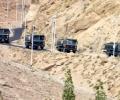
The Indian Army started bringing the T-90 Bhishma and T-72 Ajay tanks along with the BMP series Infantry Combat Vehicles from the deserts and plains in a big way to these high altitude locations from last year with the beginning of the Operation Snow Leopard to counter the Chinese aggression in eastern Ladakh last summer.
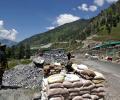
It will be the third road link to Ladakh after the other two roads: the Manali-Leh road and Srinagar-Leh highway. The work on reopening an alternative road to Ladakh from Himachal Pradesh has been expedited as it is a strategically key road, said an official on condition of anonymity, adding the project is expected to be completed by the end of 2022.

Out of 18, four personnel were critically injured but they are responding to treatment and are stable now, people familiar with the matter said.
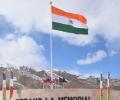
Visiting the Rezang La Memorial, one has a feeling of super-humans defending the Indian territory against the Chinese onslaught, says Claude Arpi on the 60th anniversary of the heroic battle of the 1962 War.

The memorial has been built at the unit level near the KM-120 post on the strategic road Durbuk-Shyok-Daulat Beg Oldie, Ladakh. The memorial has names of 20 soldiers and the details of the June 15 operation.
The last time the Chinese military had taken Indian soldiers captive was in July 1962 after a clash in Galwan Valley.
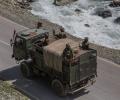
The strengthening of the Mountain Strike Corps is part of the steps taken by the force to rebalance its focus more towards the Chinese border from the western front with Pakistan.
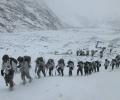
The Indian side has an edge over their Chinese counterparts in terms of battling the weather as a large number of them have already done duty in the Ladakh sector, including the Siachen glacier or other high altitude positions, sources said.

The incident had taken place at a time when the Indian Foreign Minister, S Jaishankar, was in Moscow for the Shanghai Cooperation Organisation meeting, where he met his Chinese counterpart to address the border issues.
Singh said a meeting between senior Indian and Chinese military leaders has been scheduled for June 6 even as he asserted that India is not going to back off from its position. Asked about the current situation in sensitive areas in eastern Ladakh, he said Chinese have come up to what they claim is their territory while Indians believed it is theirs.

Defence Minister Rajnath Singh on Saturday asserted that the government will not allow India's pride to be hurt under any circumstances even as he said bilateral talks were on at military and diplomatic levels to resolve the row.

The participants would include senior ministers dealing with the situation along with the senior military leadership. The leadership is likely to discuss the Chinese military activities in Doklam and other areas on Bhutanese soil along with the Indian preparations to deal with the situation.
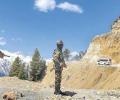
In the next few days, Indian Army will carry out a detailed verification to check actual implementation of the disengagement process, he said. It is learnt that the mutual disengagement in Gogra (patrolling point 17A) is expected to be completed by Thursday.

The talks between the two sides near Galwan Valley ended in a stalemate on Tuesday as well as Wednesday, the sources said.
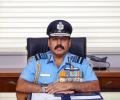
Air Chief Marshal Bhadauria was at the Leh IAF base on Wednesday where he reviewed operational preparedness of the force in effectively guarding the sensitive border areas in eastern Ladakh where Indian and Chinese armies have been on a nearly six-week standoff.

Sources said the Indian delegation was warmly greeted by senior officials of the Chinese Army before the talks began.
The two sides have already held at least 12 rounds of talks between local commanders and three rounds of talks between major general-rank officials but no positive outcome came out from the discussions, they said.
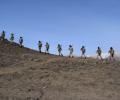
The enhancement of combat capability by the two armies in the region came even as both the countries continued their efforts to resolve the dispute through talks at military and diplomatic levels.

According to sources, the post at which the Chinese army has put up loudspeakers is under 24x7 constant watch by Indian soldiers and it is possible that the Chinese might be indulging in such drama to distract our troops or perhaps just relieve the pressure.

Sources said the Indian side has prepared very well for responding to the Chinese reaction in view of the action by own troops including a Special Operations unit and Sikh Light Infantry troops there.

Sources said that even though India and China have been talking at the diplomatic and the military level for over six weeks now, there has been no thinning down in troop numbers or equipment by the Chinese side on this front.

"The contents of video being circulated are not authenticated. Attempt to link it with the situation on the Northern borders is mala fide," the army said in a statement. It said differences between the two sides are being addressed through interaction between military commanders following established protocols on management of border between the two countries.
It is learnt that Defence Minister Rajnath Singh has conveyed to top military brass that there was no need for reviewing the implementation of any of the key projects along the Line of Actual Control (LAC) in Ladakh, Sikkim, Uttarakhand or in Arunachal Pradesh in view of the aggressive behaviour by Chinese troops in several sensitive areas.
"A strict vigil is being maintained in almost all the sectors with China from Ladakh to Arunachal Pradesh as the Chinese suffered a setback in the southern Pangong Tso area and may try to make fresh attempts to ingress into newer dormant areas," government sources told ANI.
The major general-level meeting discussed ways to implement the disengagement of troops from Galwan Valley as agreed during high-level military talks between the two sides on June 6. The Indian delegation at the talks was led by Leh-based 3 Infantry Division commander Major General Abhijit Bapat. The two sides held Major General-level talks on Tuesday as well.

The Central Military Commission, which is the overall high command of the Chinese military, is headed by Chinese President Xi Jinping.

India on Wednesday delivered a strong message to China that the 'unprecedented' incident in the Galwan Valley will have a 'serious impact' on the bilateral relationship and held the 'pre-meditated' action by Chinese army directly responsible for the violence that left 20 Indian Army personnel dead.

Army chief General Naravane said the ongoing dialogue will sort out all the perceived differences between the two countries.
The talks between the two armies are going to be held this week at multiple locations including Patroling point 14 (Galwan area), Patrolling point 15, and Hot Springs area, top government sources said.

It seems that the People's Liberation Army (PLA) is not in a mood to de-escalate the situation on the Line of Actual Control (LAC) as it has continued deployment of around 40,000 troops in its front and depth areas for the Eastern Ladakh sector.
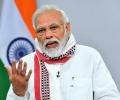
The military brass is learnt to have apprised Modi about the evolving situation in eastern Ladakh, though officials maintained that the agenda of the pre-scheduled meeting was to discuss the ambitious military reforms and ways to boost India's combat prowess.
Asked about the reports of the troops on both sides disengaging and moving back to their previous positions, Chinese foreign ministry spokesperson Hua Chunying told a media briefing in Beijing that both sides are taking steps to ease the situation along the borders.
Talks between the two sides were held on June 6 at the military commanders' level, including the 14 Corps Commander Lt Gen Harinder Singh from the Indian side while the Chinese side was represented by its South Xinjiang Military District commander Major General Liu Lin at Moldo opposite Chushul in Ladakh.
 © 2026 Rediff.com - Advertise with us - Disclaimer - Privacy Policy - Sitemap - Feedback - About us - Terms of use - Grievances