
The additional 25 per cent tariff imposed by US President Donald Trump on India is set to deliver a major blow to West Bengal's export-driven economy, with the state's labour-intensive leather, engineering and marine sectors expecting losses ahead of the festive season, stakeholders said. The increased levies on Indian products for the country's purchases of Russian oil came into effect on Wednesday, bringing the total amount of tariff imposed on New Delhi to 50 per cent.

Closely watched by the world for any escalation, the Iran-Israel conflict is already showing early signs of stress for India Inc - longer deliveries, doubling freight rates, extended working capital cycles, and higher costs. For those yet to feel the heat, there is growing apprehension and nervousness over future developments, observed industry executives.

From toys, footwear and furniture to insulated flasks, smart meters, and air coolers - the Central government over the last decade has mandated higher standards for production and imports of such items. Sample this: Till 2014, there were 14 Quality Control Orders (QCOs) covering 106 products. By the latest count, there are 156 QCOs on 672 products.

Engineering Export Promotion Council (EEPC) of India has urged the Centre to extend lower corporate tax benefit to Limited Liability Partnerships (LLPs) and proprietary firms as it would make funds available with MSMEs and boost private investment cycle. A body of direct tax professionals also sought for reduction of tax burden on individuals and requested the government to raise the income tax exemption limit at Rs 2.5 lakh to Rs 4 lakh per annum in the upcoming budget for 2022-23 fiscal. EEPC India chairman Mahesh Desai claimed around 84 per cent of small businesses are being denied the benefit of lower corporate tax which was aimed at providing industrial units with more investible surplus.

After the first quarter was washed out, exporters are now keeping their fingers crossed over a turnaround in outbound shipments to at least North America from September onwards. This comes even as other key destinations such as Europe may take longer to revive in FY24. Slowdown in key economies, as well as geopolitical tensions resulted in sluggish demand for Indian goods.

Subdued demand from developed countries and blocs like the US and EU is impacting exports of key sectors including engineering, gems and jewellery and may have implications on India's exports in case the global situation does not improve in coming months. Global inflation, Russia-Ukraine war, simmering China-Taiwan crisis and supply disruptions are hurting economic growth worldwide, leading to poor demand, experts say. The world merchandise trade volume is expected to grow 3 per cent in 2022 against the earlier forecast of 4.7 per cent, mainly due to the ongoing war between Russia and Ukraine, according to the World Trade Organization forecast, released in April.

Outbound shipments of engineering products in June to these nations doubled to $1.32 billion in June 2020, from $653.52 million in June 2019.

Nepal's decision to ban the import of non-essential items amid depleting forex reserves may hit Indian exports. The country's central bank - Nepal Rastra Bank - last week instructed commercial banks not to open letters of credit (LCs) for importing non-essential items. This is to prevent further decline of the country's foreign exchange reserves. However, it has not issued any formal communication yet.
Uncertainty looms over India's export outlook, with the new Covid-19 variant Omicron spreading rapidly across the country's key shipment destinations. With the US and parts of Europe witnessing more than 100,000 Covid-19 cases a day, exporters expect some disruption. However, there may not be an immediate decline in exports from India because the order books remain strong at least for the next few weeks, they said.

After the Ukraine war, coke prices just soared and most units don't have money left to buy raw material. Customers are not absorbing the price escalation'

The steep depreciation of rupee will not give an immediate advantage to the country's exporters.
India's exports grew by 67.39 per cent to $32.21 billion in May driven by healthy growth in sectors such as engineering, pharmaceuticals, petroleum products and chemicals, according government data released on Wednesday. Exports in May last year stood at $19.24 billion and in May 2019 it was at $29.85 billion, the commerce ministry's preliminary data showed. Imports in May rose by 68.54 per cent to $38.53 billion, from $22.86 billion in May 2020. In May 2019, imports stood at $46.68 billion.

With the Covid-19 pandemic showing signs of ebbing and economic activity picking up, factory owners in Jalandhar had hoped that the worst was over. However, the heat wave in April and extensive power cuts that came with it, have crushed their hopes. The city's large number of micro, medium and small enterprises (MSMEs) are now gearing up for yet another struggle, this time to survive with the shortage of power that is severely impacting their operations.

India's exports rose marginally to $27.15 billion in December 2020, while imports surged 7.56 per cent to $42.59 billion, official data showed on Friday. The merchandise exports were valued at $27.11 billion in December 2019 while imports had totalled $39.59 billion.
According to Ajai Sahai, director-general and CEO of Federation of Indian Export Organisations, rising cases are a cause for concern as it adds to the uncertainty and may impact exports.
Imports too declined by 12.71 per cent to $38.11 billion in November, narrowing the trade deficit to $12.12 billion. Cumulatively, during April-November 2019, exports were down 1.99 per cent to $211.93 billion while imports contracted by 8.91 per cent to $318.78 billion.

The trade to-and-from India so far is not affected. But if the situation continues to remain the same for the next two to three months, it could definitely hurt India trade, including essential cargo.

India pays 55% of the value of oil its imports from Iran in euro payments through Turkey's Turkiye Halk Bankasi.
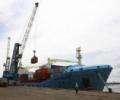
Exporters are now looking at new markets.

The US government on Tuesday shut down -- for the first time in nearly 18 years -- as the Republican and the Democrats failed to strike a deal on spending and budget mainly due to their differences over 'Obamacare', the flagship healthcare programme of President Barack Obama.

The study has been conducted by Ernst & Young on behalf of EEPC-India, the apex body of engineering goods exporters.

Even as the engineering goods sector, which has the largest share in the country's export basket, registered an export growth of 22 per cent (dollar terms) in the April-July period of this year, a recent study has revealed that the volume of exports has gone down in majority of the products manufactured by the sector, leading to job losses.
Engineering Export Promotion Council has warned the government that growth in engineering exports will turn negative if the average rupee rate to a dollar falls below 40 during the year.
Imports during October also rose by 17.62 per cent to $44.11 billion, leading to widening of trade deficit to $17.13 billion.
The Engineering and Export Promotion Council will send a 15-member delegation to China in February-March, 2005, to explore export potential, its chairman Rakesh Shah said.

RBI has cut the rates thrice so far in 2015 by 25 bps each.

Economists polled in a recent survey by Ficci unanimously felt that the rupee will continue to be under pressure in 2018-19

India Inc on Wednesday said the Reserve Bank's move to cut interest rate by 0.50 per cent is "pro-growth" and exhorted banks to transmit the lower interest rate to borrowers to revive demand and kick-start the investment cycle.

September import growth was the second lowest this fiscal year, after the April growth figures of 4.6 per cent, bringing the trade deficit down to $13.98 billion

Forex dealers said besides continued demand for the American currency from importers, increased capital outflows by foreign funds kept pressure on the rupee.

'His death is an irreparable loss to the nation'.

India's software and engineering exports may take a hit and the country may also face larger capital outflows.

Exporters believe the situation will also have a grave outcome for employment, with large numbers of casual laborers looking at no work, as well as downstream units facing a loss of work, reports Subhayan Chakraborty.

The manufacturing sector, a key indicator of economic activity, grew 10.6 per cent year-on-year in October.
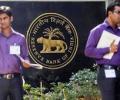
Banks normally park almost 27 per cent of their funds in government securitie.

RBI had previously cut repo rate by 0.25 per cent each in January and March.

Corporate houses believe RBI must cut rates to boost investment in the system.

Hailing the announcement of Raghuram G Rajan as the new RBI Governor, India Inc on Tuesday said the appointment of the former IMF Chief Economist will help bring the economy back on growth path.

Emphasising that revival of growth should be the number one priority of the RBI at this time, industry groups said apprehensions about inflation rearing its head again may prove to be misplaced.

RBI Governor Raghuram Rajan expressed anguish at the banks' reluctance to pass on benefits of the earlier rate cuts.
 © 2026 Rediff.com - Investor Information - Advertise with us - Disclaimer - Privacy Policy - Sitemap - Feedback - About us - Terms of use - Grievances