
'The Indian Army won't induct anyone who has killed Indian soldiers.'
'That's why the army respects these reformed men so much -- they're on the frontline now, protecting India.'
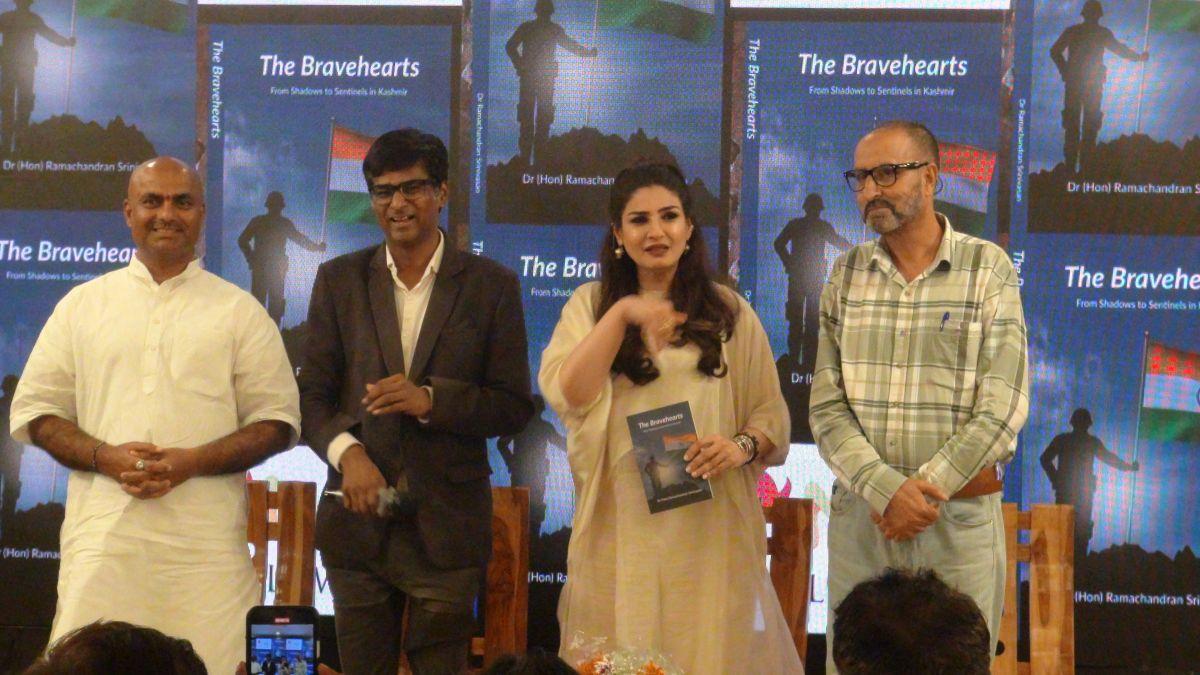
Dr Ramachandran Srinivasan is a seasoned journalist and filmmaker, known for his in-depth storytelling and commitment to capturing the human side of conflict.
In his latest book, The Bravehearts, he takes us into the complex and often harrowing journey of young militants who crossed borders -- some in search of livelihood, others for adventure, and some under the shadow of jihad.
What awaited them, however, was not the promised land of El Dorado, but an unforgiving terrain and the harsh realisation that their chosen path was not only dangerous but misguided.
Dr Ramachandran's book tells the story of not just about conflict but about also transformation of these dreaded terrorists to reform militants and then joining Indian Territorial Army.
While some militants met tragic ends at the hands of the army, many found a second chance at life, thanks to the intervention of individuals like Sanjay Kumar who runs a non-government organisation in Srinagar.
Sanjay Kumar's efforts, supported by the Indian Army and local administration, enabled men like Romeo to abandon violence and instead pick up arms in service of peace -- joining the very forces they once stood against.
"Over the years I met about 400 to 500 ex-militants and their families. I've lost count of how many days I spent in Kashmir," Dr Ramachandran tells Rediff's Prasanna D Zore and Syed Firdaus Ashraf.
What is your book about?
It's basically a story of reform -- about militants who not only returned to normal life but were also inducted into the Indian Army. This process has been going on for 23 years now.
In fact, one of these reformed militants who joined the army even went on to win the Ashok Chakra. Most of them became part of the JAK LI 162, a Territorial Army battalion which is now also called the Ashok Chakra Battalion.
Nazir Wani was given the Ashok Chakra (posthumously after he died in action in 2018). Over the last 23 years, more than 3,000 such people have joined the amy after being reformed.
That's remarkable. Could you tell us about Mushtaq Ahmed Bhat whom you have mentioned in the book?
Bhat was a former militant whose code name was Romeo. He was actually the person who first alerted the Indian Army about the Kargil attack while he was in Pakistan. He was disguised as a terrorist. He had been going back and forth -- living undercover in Pakistan, starting families, gathering intelligence, and returning to India.
In many ways, he's like our own James Bond.
But it's not easy. His multiple families across the border are a huge emotional burden. Even today, civil society doesn't accept their children fully. He has not yet got a passport due to some issues. Meanwhile, militants still want to kill him because he chose to change.
So he was once fighting for 'azaadi'?
Yes. In the late 1980s and early 1990s, he was a militant fighting for the cause of Kashmir's 'azaadi'. But he realised the folly, surrendered, and since then has been working undercover, providing critical intelligence to India.
How did you come across this story?
I learned about it through someone who connected me to Sanjay who then helped me explore this further. I spent a lot of time in Kashmir -- work on this book started five years ago. I had to meet many army officers and ex-militants who are now army men. Some stories were under the Official Secrets Act, so I needed clearances, which Sanjay helped secure from R&AW and the NIA.
Is your book mainly about Mushtaq, or are there more stories?
There are many stories.
Mushtaq is one of the central ones and he is a primary hero. He came out and gave his name. After turning good their life turned bad. Civil society does not trust because they feel they will go back to their old ways. Still, for 23 years, none of them has ever turned rogue. That trust is remarkable.
Mushtaq Ahmed: A reformed militant featured in the book.
You mention the battalion is called the Ashok Chakra battalion. Are there others like it?
JAK LI 162 is known as the Ashok Chakra battalion, but many of these men are also in other regiments like the Rajputana Rifles. Mostly, they are part of the Territorial Army, which means they don't fight at the border.
When they come back, what kind of support do they get?
Initially, they are used as informers. Once that phase is over, they are given the option to join the army at a good salary. Jobs are always a challenge in Kashmir, so this is a big opportunity -- and respectable.
We saw what happened with the Ikhawan forces after they surrendered. They turned out to be extortionists and the Government of India had to disband them. How different are these surrendered militants of the JAK LI?
Unlike the Ikhwan of the early 1990s who often turned rogue, these men never have. Ikhwan has become a curse word in Kashmir.
How different would you say these men are from the Ikhwan?
They are different because they are in the Territorial Army. These men are inducted into the Indian Army formally. They have never turned rogue.
Video: Actress Raveena Tandon was the chief guest at the book launch.
Was it easy to find information on people like Mushtaq?
Not at all because when I first searched online, there was nothing (written material) on people like him. So I had to get boots on the ground -- meet army officers. I've thanked them in the book, but couldn't quote them because by the time I finished, many had retired.
How many people and families did you meet?
Over the years I met about 400 to 500 ex-militants and their families. I also met Nazir Wani's wife -- he's from Pulwama. I've lost count of how many days I spent in Kashmir because work started just after COVID and stretched over years.
Did you think this was better as a film script?
Initially yes, because I have a film background. But I was advised to write the story first -- cinema needs many more permissions and carries a different public perception. Books are taken more seriously.
Could you share one striking story from the book?
There's a man I've renamed in the book -- he was six when his elder brothers took him to Pakistan. They finished school there; he wanted to join the Army but was rejected as a refugee, tried the police but disliked it, so joined a terror group as a radio operator in the communication team of a terrorist group. Then he connected with a Border Security Force commander who convinced him to surrender.
The Army didn't treat him as a terrorist. Later, he got 40 others to surrender. His life is like a film -- and this is just the tip of the iceberg.
Video: Dr Srinivasan Ramachandran on his book
Do you think Kashmiris are still naïve enough to join terrorists?
Not really, right now. There's more education now; almost every second house has a postgraduate. Earlier, sometimes it was just the sight of a shiny gun that lured boys. Or money -- like during the stone pelting days.
Even now, militancy is mostly in South Kashmir and heavily driven by foreign terrorists. Local ground support still exists, but it's much reduced.
Did you face any threats while working on this book?
Honestly, I was well taken care of. I did not move in army vehicles. I met hundreds of ex-militants and their families, as well as army men. It was dedicate work as I met 300-400 people during my stay.
You've used the words 'terrorist' and 'militant' for these men. How do you see the difference?
In Kashmir, there are two kinds -- those who purely spread terror and those who didn't directly kill Indian soldiers.
The Indian Army won't induct anyone who has killed Indian soldiers. That's why the army respects these reformed men so much -- they're on the frontline now, protecting India.







 © 2025