
'...it should not delude itself into thinking that India's security or its great-power ambitions will be advanced by those partnerships.'
'Instead, what India should focus on is on riding out the next three-and-a-half years of Trump's presidency with minimal damage to itself.'
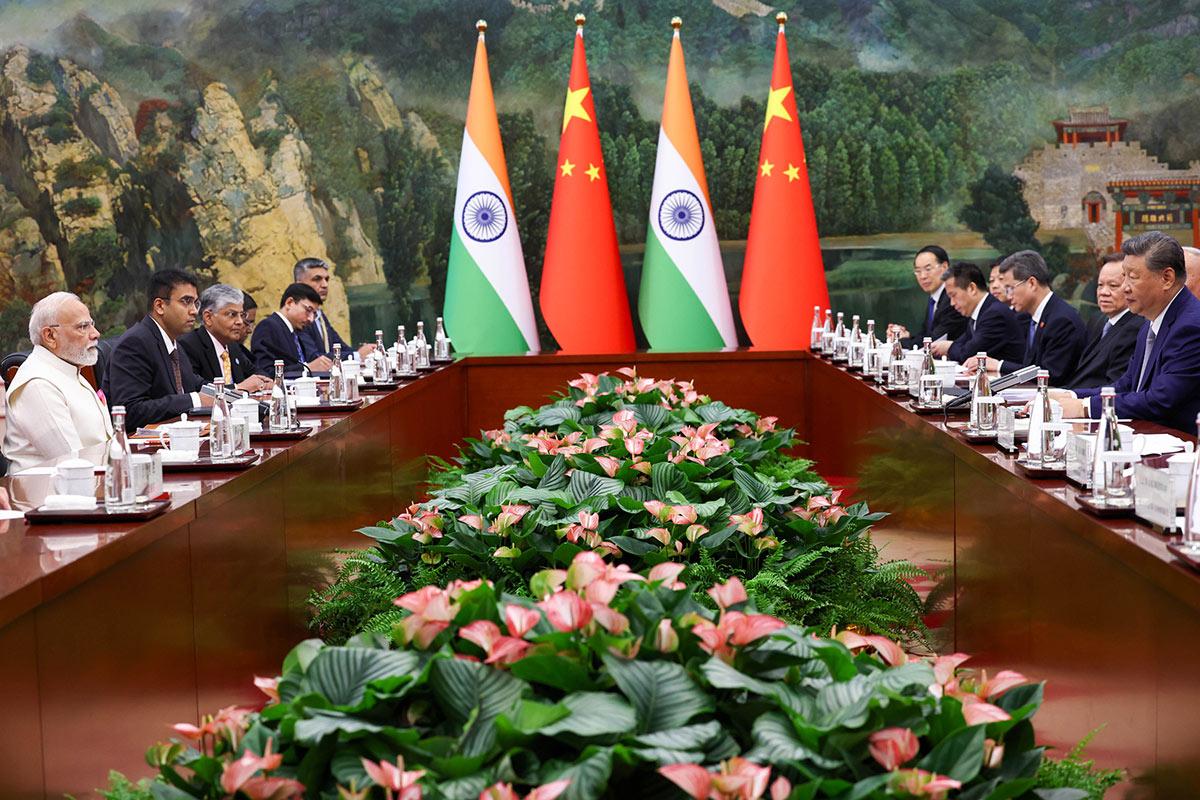
"I can understand India's temptation to seek refuge in the Russia-India-China (RIC) axis as an antidote to its deteriorating relations with the United States. But the RIC is an illusory solution -- it will not resolve India's security challenges nor will it meaningfully endure," Dr Ashley J Tellis -- the Tata Chair for Strategic Affairs and a senior fellow at the Carnegie Endowment for International Peace, the Washington, DC think-tank.
Dr Tellis -- who was born and raised in Bombay -- played a stellar role during the negotiations on the India-US civilian nuclear treaty as senior adviser to the US undersecretary of state for political affairs at the State Department.
He earlier served as senior adviser to then US ambassador Robert D Blackwill at the US embassy in New Delhi and prior to that was a member of the National Security Council staff as special assistant to President George W Bush and senior director for strategic planning and Southwest Asia.
"The remainder of Trump's term promises to be uncertain, perhaps even more difficult. Even if we recover from the immediate problems on oil and trade, much of the next few years will be consumed by putting the broken pieces together. Which is such a shame given that this fracas was neither necessary nor inevitable," Dr Tellis tells Nikhil Lakshman/Rediff.
- Part 1 of the Interview: 'India's Confidence In The US Is Shattered'
Apart from the Trump tariff tantrum and its shadow on India-US relations, what has caused consternation in New Delhi is Washington's outreach to Rawalpindi.
How would you explain President Trump's luncheon for Syed Asim Munir, the second visit to the US in weeks including an invitation to General Kurila's retirement event at US Central Command, his bizarre remarks from American soil (which no Pakistani leader, civilian or military) has expressed before, the tariff deal Pakistan has received?
What has Pakistan done to redeem itself in American eyes?
Why is Mr Trump so enamored with Pakistan?
Is it driven by the Trump family to make money via cryptos in Pakistan?
Could we see a consequential American security relationship with Pakistan or is that out of the question given the Chinese elephant in the room?
Does India have reason to be worried about all this?
Nothing has changed in the objective realities of geopolitics to warrant Trump's current embrace of Pakistan. This is the result of idiosyncratic personal propensities rather than considerations of national interest.
Whether this embrace will be lasting is unclear. Certainly, the expectation that Pakistan will provide energy and critical minerals to satisfy the United States is laughable.
I also do not see the president's infatuation with Pakistan shared by his administration, and I think a resuscitation of the US-Pakistan security relationship of yesteryears is unlikely.
But all the same Trump's new fascination with Pakistan is troublesome for several reasons: It betrays an ignorance of the political realities in South Asia and the Indo-Pacific; it represents a pernicious neglect of the role Pakistan played in ensuring the US defeat in Afghanistan and the American and allied lives lost in that war; it reveals an incomprehension of what evolving US interests demand in the region; and, finally, it could produce presidential decisions, however passing, that are harmful to India and do not serve US interests well either.
How would you explain the anger against India expressed by senior members of the administration -- from Stephen Miller to Peter Navarro to Scott Bessent?
Are they just being their Master's Voice, echoing their boss' displeasure about India buying Russian oil?
Indians -- whether it is your old sparring partner on the nuclear deal, S Jaishankar, or the man on the street -- say they are perplexed about the administration's reaction to buying Russian oil when the previous administration had encouraged India to do so to keep crude prices low, and more so why China, which buys more Russian oil than India, is not faced with punitive tariffs like India has been.
How would you explain these double standards?
I see such expressions simply as subordinate officials echoing Trump. There is only one thing that matters for survival in this administration -- loyalty. The courtiers merely mimic the king's views. And as his preferences change, so do US policies and their tunes.
Trump's policy towards Russia and Ukraine is a case in point. At the beginning of his term, Trump was more solicitous of Moscow and disdainful of Kyiv. His officials then competed among themselves to abuse Ukraine and Europe, and India's purchases of Russian oil were not a problem then.
After Trump changed his mind about Russia and the Ukraine war -- though it's still unclear what his policy toward Russia really is -- India's oil purchases have suddenly become a threat.
Given the current state of the Trump-Modi relationship, however, the president's problems with India's oil purchases mask other grievances. These certainly do not pertain to trade or the trade deal, as some have speculated. But they do involve penalising India without reference to the fact that many other countries, including the United States itself, have been inadvertently subsidising the Russian war effort.
That India has been singled out however says more about the weakening priority of good US-India relations and Trump's disregard of them than it does about New Delhi's relationship to Moscow's war, however disheartening that may be.
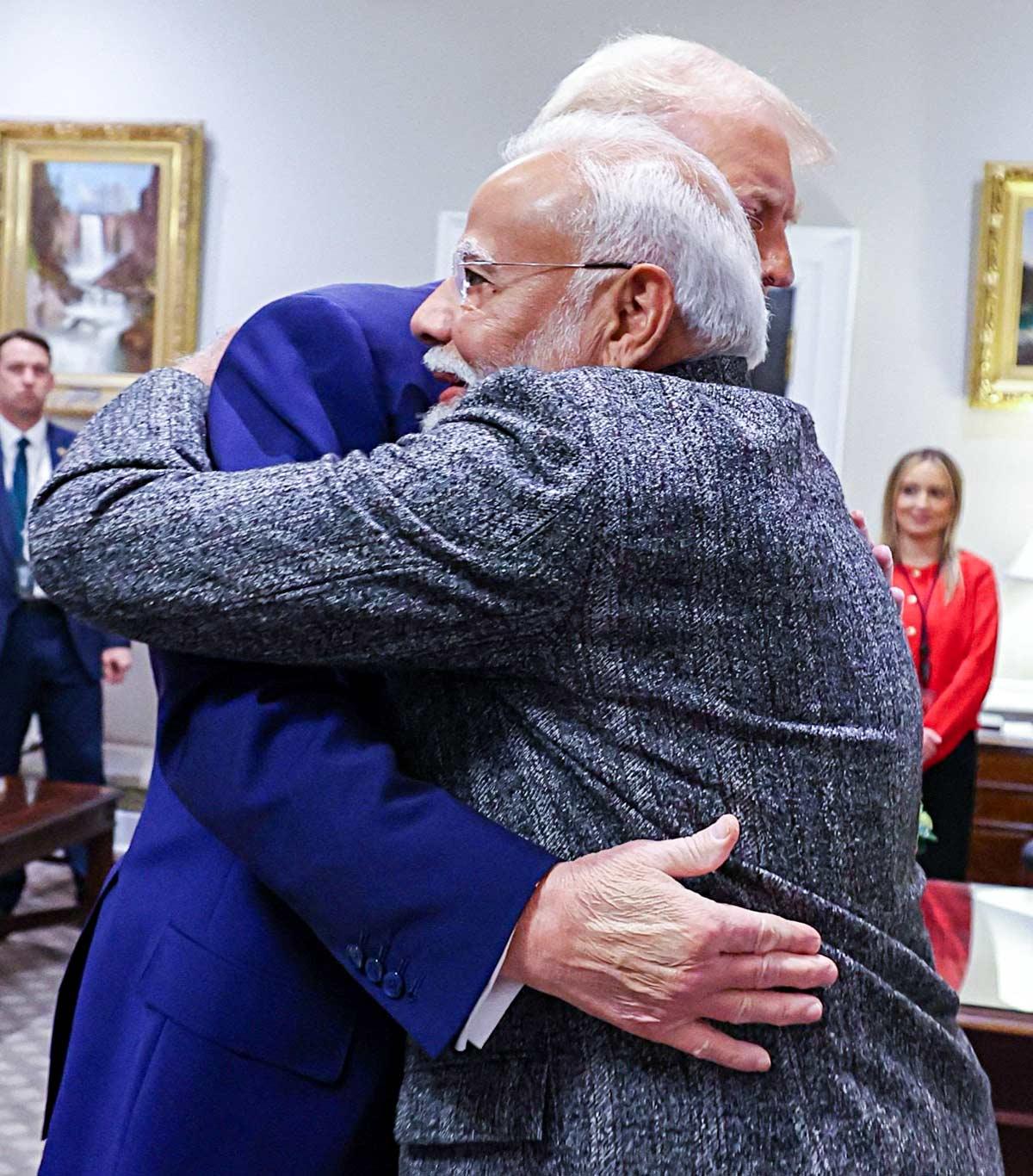
Are there aspects of the India-US relationship that are in peril because of the volatile past weeks?
Could the security arrangements, which have been the foundational presence in this relationship, be seriously undermined?
Will it require a commercial transaction like India buying American military hardware to ensure that it is business as usual on that front?
Everything is up for grabs right now.
Security cooperation, which has been the biggest driver of success in the past, is at risk not because the Trump administration disdains it but because there are limits to how far and fast both sides can move if the president continues to remain disenchanted with India.
I don't think increased commercial transactions, defense or otherwise, can resolve this fundamental roadblock. Only a renewed rapprochement between Trump and Modi personally can push things forward.
Do you believe that the Trump administration has altered its perception that India can be a counter weight to China in Asia?
Does it believe that India will not be at America's side in any future military standoff with China and stay neutral?
Has India's strategic value been devalued as a result?
And where does this leave groupings like Quad?
Will it recede in strategic importance, be limited to a talking shop with a few annual military exercises involving its members but not ascend to intelligence sharing about China and a future military doctrine to deal with Beijing's territorial ambitions?
Do you believe President Trump will skip the Quad Summit in New Delhi this November and instead send Messrs Vance or Rubio? What would his absence convey to New Delhi?
I am not persuaded that Trump believes that China is a strategic competitor. It is an economic threat, to be sure. But whether he believes it is a geopolitical rival that must be balanced through concerted collective action led by the United States -- of this I'm not sure.
Given the shift in attitude manifested during this term -- ironic because it was Trump who had announced the arrival of great-power competition during his last stint in office -- India's importance decreases considerably.
And if China is not perceived as a systemic competitor, what use does the QUAD actually have? These are big imponderables, but there are no clear answers right now, which is unsettling.
Trump appears to believe that if a satisfactory trade deal can be forged with Beijing, the China challenge goes away. If so, much of what we've previously built with India and the QUAD counts for little.
In such circumstances, even if Trump goes to India for the QUAD summit, how does it matter? We might be, I fear, in a moment of dangerous geopolitical amnesia with profound consequences for the long-term preeminence of the United States.
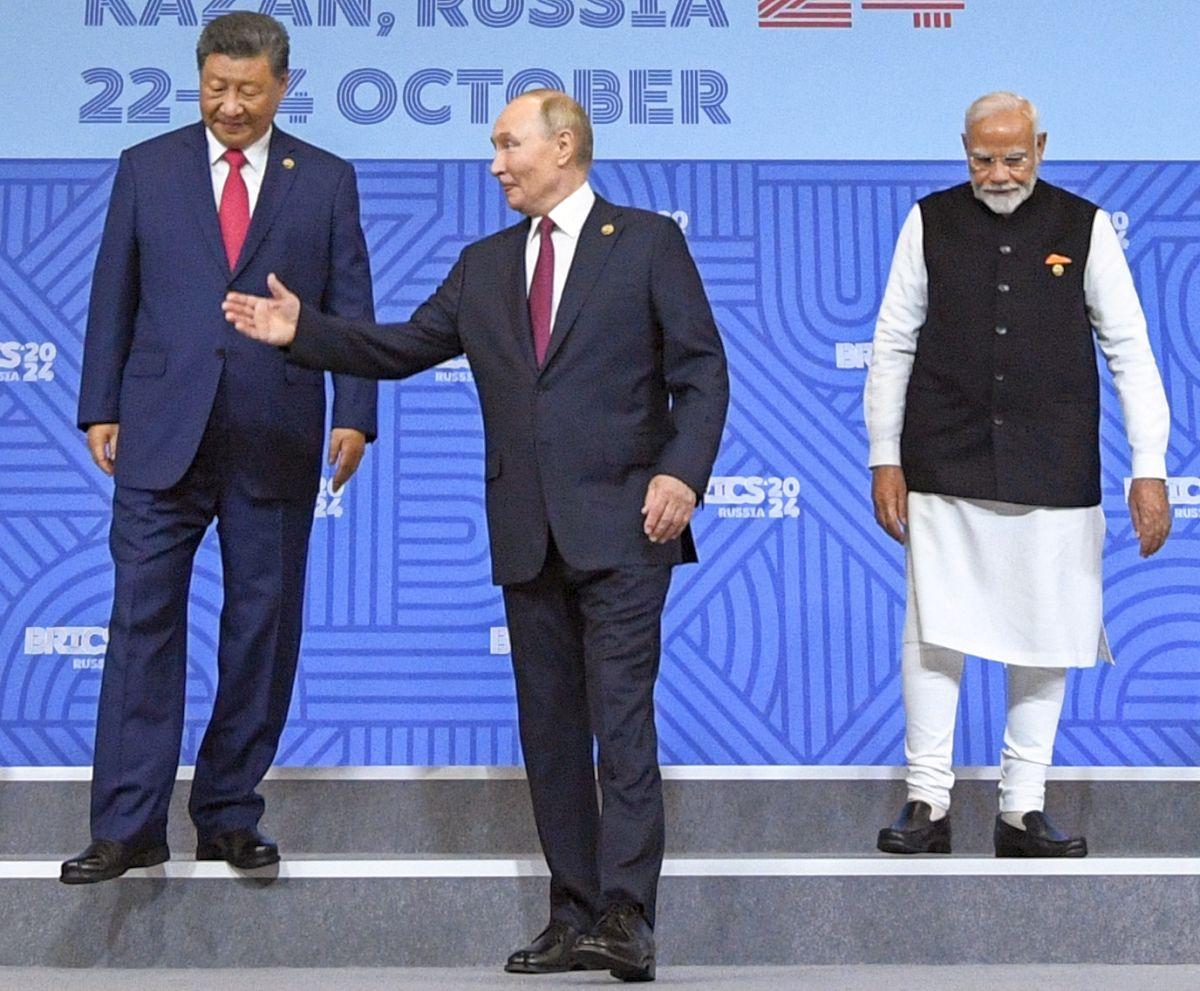
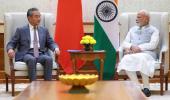
One consequence of the events on the US front has been a kind of India-China rapprochement after the bad blood of the last 5 years.
How would that and talk of a Russia India China grouping play out in Washington since even the word BRICS annoys President Trump so much?
Would you advise India's external affairs mandarins to stay the course on the US front and not embark on an RIC adventure?
I can understand India's temptation to seek refuge in the Russia-India-China (RIC) axis as an antidote to its deteriorating relations with the United States. But the RIC is an illusory solution -- it will not resolve India's security challenges nor will it meaningfully endure.
New Delhi can hobnob with Moscow and Beijing for whatever it's worth, but it should not delude itself into thinking that India's security or its great-power ambitions will be advanced by those partnerships.
Instead, what India should focus on is on riding out the next three-and-a-half years of Trump's presidency with minimal damage to itself and to the US-India relationship on the presumption that Washington will come to its senses after the current hallucinations have passed.
Finally, how do you see India-US relations play out over the next 18 months? What are the positive or negative signs we need to watch out for?
The remainder of Trump's term promises to be uncertain, perhaps even more difficult. Even if we recover from the immediate problems on oil and trade, much of the next few years will be consumed by putting the broken pieces together. Which is such a shame given that this fracas was neither necessary nor inevitable.








 © 2025