
The collective West has always opposed strong leaders and economic development in India, asserts Colonel Anil A Athale (retd).
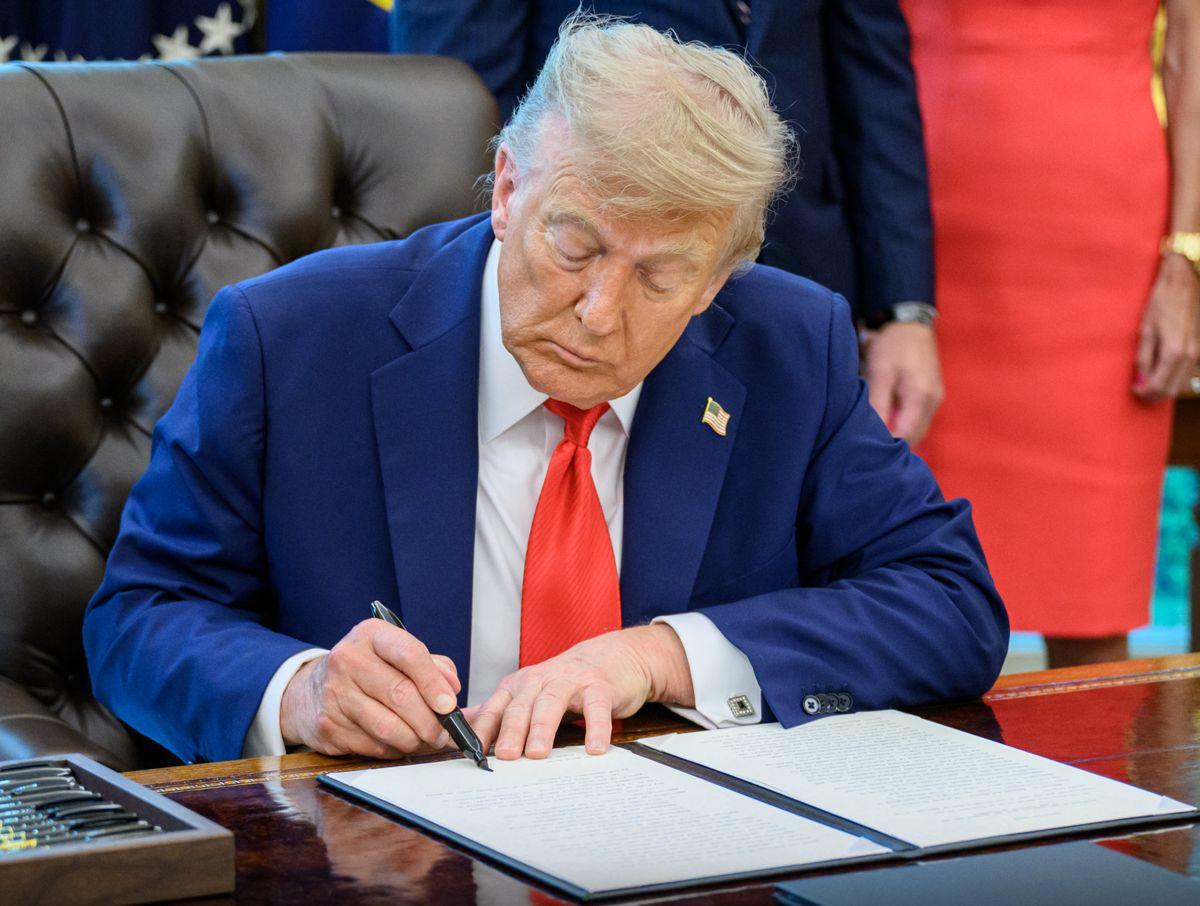
America's tariff war has nothing to do with either the Ukraine war or Indian oil imports from Russia.
Naive arguments, harping on the fact that China imports more oil or Europe imports gas from Russia, show the utter bankruptcy of Indian thinking.
Let it be clearly understood: The 50% tariffs imposed on Indian exports to the US and US attempts to force Europe to do likewise is nothing short of a trade war against India.
The objective is not merely trade, but a means to cause widespread unemployment and consequent civil unrest in India.
As yet, the US has not touched the IT sector. But should that happen, it will be a major blow to the Indian economy.
Economic distress caused by these measures could possibly repeat in India what happened in Sri Lanka, Bangladesh and most recently in Nepal. It is an attempt at regime change.
So if not the Ukraine war, then what are the reasons the US has decided to jettison India? The US is extremely angry with the current regime on three counts.
Readers need to be reminded that in the wake of the attack on Parliament on December 13, 2001 as well as the Mumbai terror attacks (26/11), the Americans had successfully lobbied to prevent Indian retaliation against Pakistan.
The Indian retaliatory action to Pahalgam showed that India had possibly ignored the American warnings on this score and went ahead.
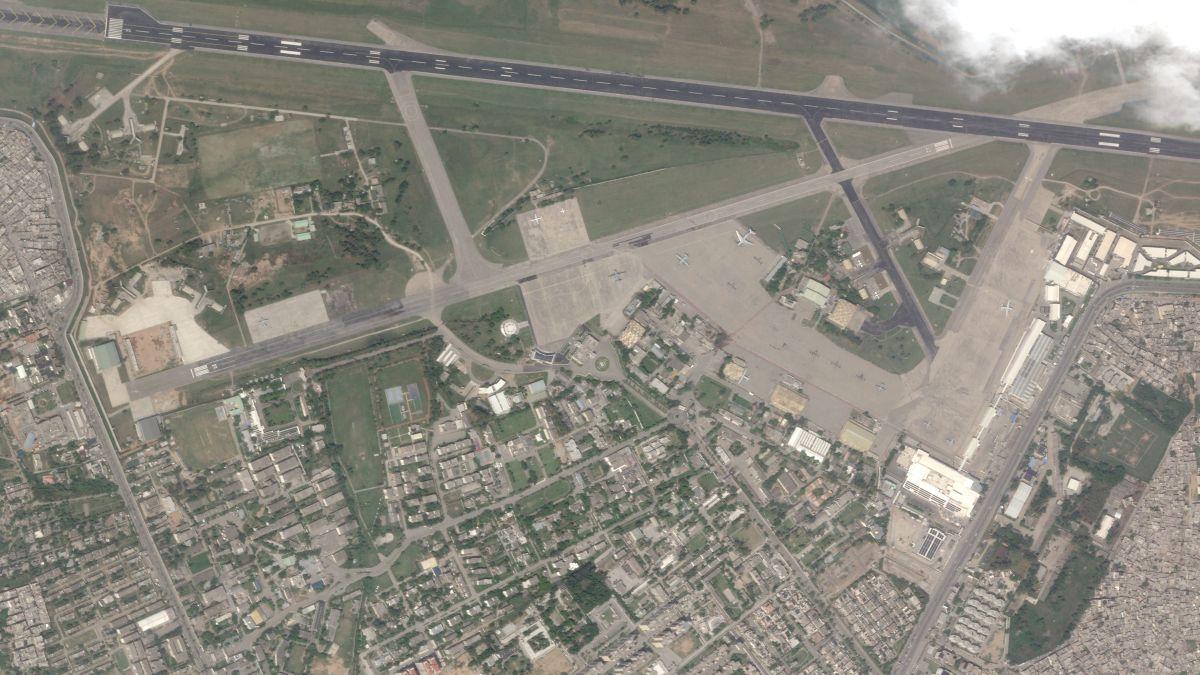
We not just destroyed several radar and aircraft but possibly rendered nuclear weapons in Pakistan unusable.
The bogey of Pakistani nukes has been a corner stone of the US strategy in the Indian subcontinent as well as the strategic Middle East.
While it is true that Pakistan does have enriched uranium, it certainly has no industrial/technical ability to produce the triggers or mate nukes with its missiles.
Pakistan's nuke capability was fathered by the US in 1987-1988 at the height of the Cold War as a counter to Soviet supported India. China was a junior partner in the crime!
At America's behest, a German company shipped an entire centrifuge plant to Pakistan under Uncle Sam's benign gaze.
Much later, after A Q Khan's proliferation activity came into the open, the government of The Netherlands had arrested him.
According to the then Dutch PM, Khan had to be released on the intervention of a friendly 'foreign agency'. Readers can easily fact check both these assertions.
We seem to have never understood that Pakistan is 'a Western Imperial outpost in Asia' in the prophetic words of the late V K Krishna Menon (quoted from Michael Breecher's Krishna Menon's View Of The World published in the 1960s).
The creation of Pakistan goes back to the Tehran Conference of World War II.
Even during the 1965 War, while the US apparently stopped military aid to Pakistan, it made sure that spares and aircraft were sent to it by US proxies like Turkey, Iran and Jordan.
In 1971, the gloves came off. Britain and the United States, aligned with Pakistan, planned a coordinated naval intervention to intimidate India and prevent the collapse of Pakistan.
A British naval group, including the aircraft carrier HMS Eagle and other warships, was dispatched to the Arabian Sea to operate on India's western coast. The US sent the USS Enterprise to the Bay of Bengal.
Such is the dominance of the Anglophile elite in India that the British action is seldom mentioned and is not widely known.
The final nail in the coffin of the myth of Pakistan's nukes is the raid carried out on May 2, 2011 by the Americans to kill Osama bin Laden in his house near the Pakistan military academy in Abbotabad.
If Pakistan indeed had nukes and these were under its control, would the US have launched such a risky venture? Can the US think of similar action against say North Korea, a known nuclear power? The resounding answer is NO!
Despite the US enemy no. 1 being housed in Pakistan, the US was back to supplying military hardware and economic aid to Pakistan in no time.
For much lesser provocation, the US went about devastating countries like Afghanistan, Iraq and Libya. The fact that Pakistan escaped unscathed ought to have made the Indians aware of the depth of the Western-Pakistan nexus.
With Operation Sindoor, we have for the first time called the bluff, not Pakistan's but the Western world's.
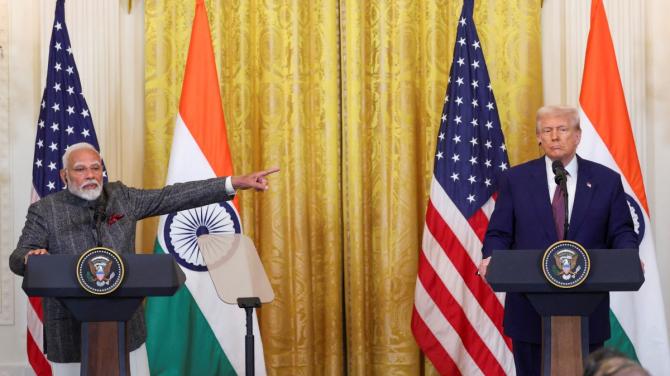
On top of this 'defiance' came the Indian refusal to share the flight recorder data from the Ahmedabad Boeing 787 crash of June 12. We insisted on conducting our own enquiry.
The stakes are extremely high for the US economy as Boeing is virtually a monopoly aircraft manufacturer in the US.
If the enquiry finds technical flaws in the Boeing 787, it can spell ruin for not just the company but the US itself.
The third and even more long term worry for the US is the de-dollarisation move that seems to have begun with the 17th BRICS summit in Rio De Janerio on July 6, 2025. I have dealt with this issue in an earlier column.
De-dollarisation of world trade is the future. With it will end the American economic clout and ability to impose economic sanctions. A desperate US is trying to delay the inevitable.
The reason it has declared an economic war with India is not because India is the biggest culprit, but an easy target to bully due to its weakness.
All this while the US wines and dines a closet military ruler like Asif Munir of Pakistan and gets into bed with a jihadi in a suit in Syria (the former Islamic Daesh commander turned Syria's president).
The real danger is not so much the US and West dusting off its playbook of 'dividing India in manageable parts' (in the words of Jeanne Kirkpatrik at the UN in 1981) but Indian unawareness of it.
It seems the US 'deep state' seems confident enough that it can bring about regime change in India.
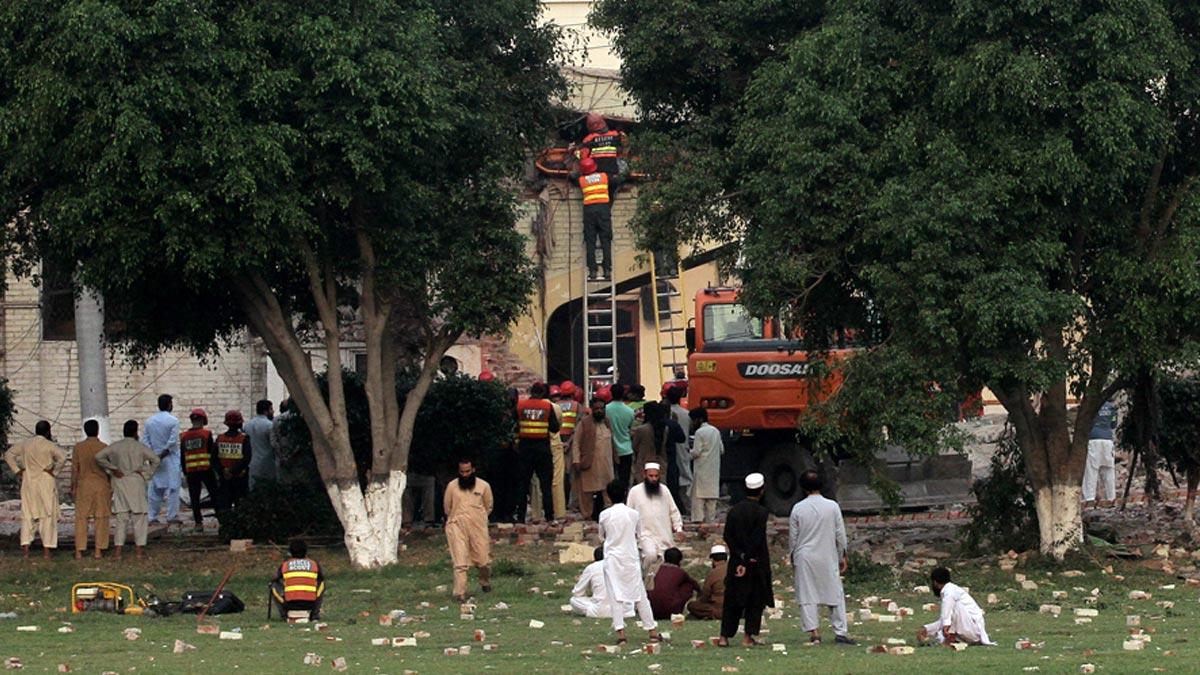
The collective West has always opposed strong leaders and economic development in India. An older generation vividly remembers how Jawaharlal Nehru's plan to build steel plants was opposed by the West.
India's first prime minster was criticised for 'wasting' resources on industrialisation instead of concentrating 'solely' on agriculture to feed the starving millions!
One can only imagine where the country would be today without the industrial sinew -- a perpetual colony of the West exporting iron ore!
The vitriol spewed against Indira Gandhi, another strong leader, is still fresh in mind.
Narendra Modi is in that august company and faces similar criticism and threats.
Indians lack a sense of history and there is a palpable lack of institutional memory.
No Indian university has a department of military history to study war and peace.
The real danger is in this lack of continuity and forgetting the lessons of history.
After all, it is a historical fact that political unity in India has been an exception during our 5,000 year existence.
It is this that enabled less than 100,000 Englishmen to rule 400 million Indians.
Colonel Anil A Athale (retd) is a military historian and author of Let the Jhelum Smile Again (1997) and Nuclear Menace The Satyagraha Approach (1998).
His earlier columns can be read here.
Feature Presentation: Aslam Hunani/Rediff







 © 2025