
'Mountaineering is never 'easy'. Nothing is in your hands, you have to be prepared. That's the same for life as well.'
Text: Mayur Sanap/Rediff
Videos: Afsar Dayatar/Rediff
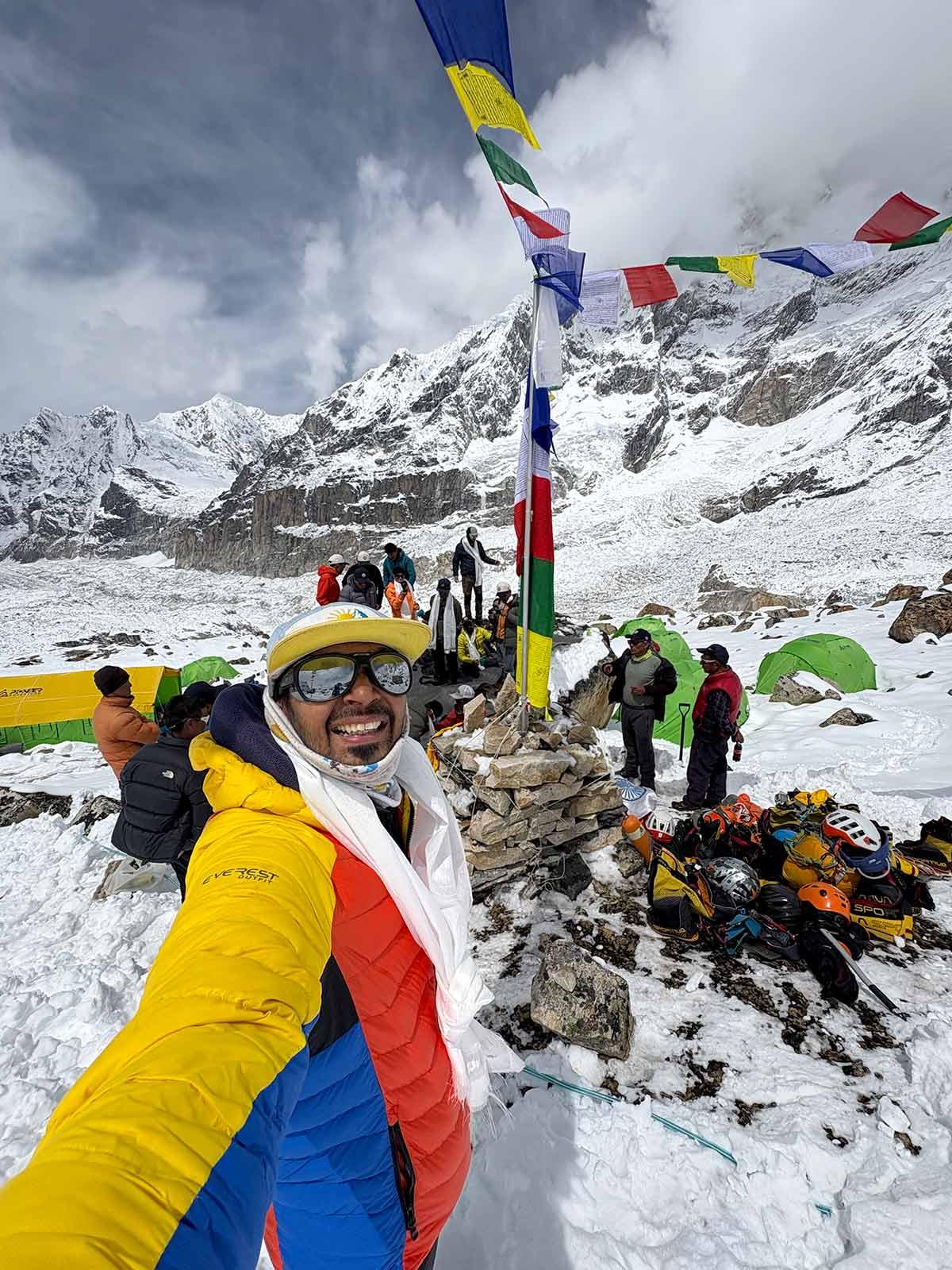
Ever wondered what it would be like be standing on the top of mighty Everest?
Keval Kakka, an accomplished mountaineer from Mumbai, describes his experience:
"When I looked around, I saw Mount Makalu (the fifth highest mountain in the world). On the other side, I saw Tibet. Looking further, I could literally feel the curvature of the earth. I understood what the saints who stayed in the Himalayas must have felt."
Keval's love affair with mountains began when, as a child, he accompanied his grandfather to a Shiva temple located on the top of a hill; he was enamoured by the experience of watching the world from that height.
He dreamt of climbing mountains and, supported by his parents who accepted his decision to not complete his engineering degree, he pursued his passion.
Over the years, the 34 year old has scaled eight of the world's 14 highest peaks, including Mount Everest twice.
If you've watched Netflix's 14 Peaks: Nothing Is Impossible, which documents Nirmal Purja's ambitious goal to climb all 14 of the world's 8,000-metre peaks, you'd know how difficult this goal is. In May 2019, Keval scaled two mountains above 8,000 metres, Mount Everest and Mount Lhotse, in just six days. This incredible feat earned him the Tenzing Norgay National Adventure Award.
'Climbing Everest was a long-standing dream'
My dad used to send me for treks in the Indian Himalayas.
Very early in life, I discovered that this was my happy place and my place of learning. I made the mountains and nature my school; they shaped me into the person that I am today.
They taught me the value of patience, hard work and discipline.
Everything that I have today, including my strong willpower, is because of the mountains.
Climbing Everest was a long-standing dream.
I first climbed 6,000 metre peaks, followed by those that were 7,000 and 8,000 metres tall. Even when I did the latter, never did I think I would climb Everest someday.
When I did, it changed my perspective forever. I had tears in my eyes and that feeling that I was really on top of the world.
'People asked my parents: "How did you allow your son to be a nomad?"'
I was studying automobile engineering at the M H Saboo Siddik College of Engineering, Byculla (south central Mumbai).
I was in my final year when I told my parents that I didn't want to be an engineer; I wanted to be a mountaineer.
Though they were initially shocked, they trusted and supported my decision.
While that made it easier for me, they were the ones who had to face society. People would criticise them and wonder how they allowed their son to follow such a dangerous dream.
Relatives would say who will marry a nomad who stays in the mountains? How would I earn money? What kind of future would I have?
But my parents stood by me; they said he will do what he wants to do.
We are Baniyas; business is in our blood. But my father didn't force me into the family profession; he was happy that I was following my dream.
My mother is a teacher. My sister is an engineer.
I did a few treks with Rajiv Sharmaji, who was then the principal of the Atal Bihari Vajpayee Institute of Mountaineering and Allied Sports in Manali.
He asked me what my plans were. I told him I wanted to stay close to the mountains and learn from them.
He suggested I become a professional mountaineer. Gradually, I met like-minded people; people who dreamt about the mountains.
'Mansalu changed my life'
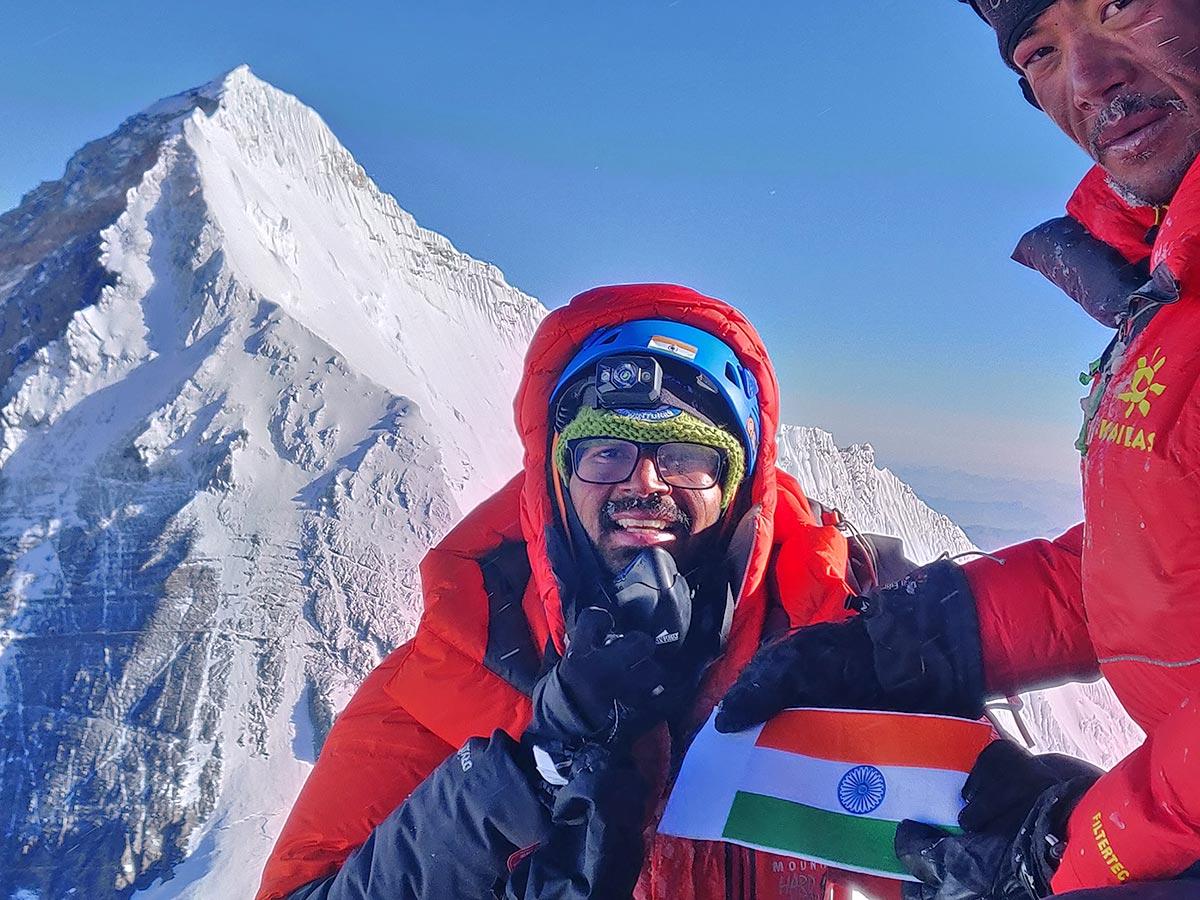
Manaslu (located in the Mansiri Himal range of the Nepalese Himalayas) is a very beautiful mountain. It is known as the Mountain of the Spirit and it is really that.
This was my first ever climb on an 8,000-metre mountain. Reaching that peak convinced me that I could really follow my dream.
Mountaineering, I always warn people, is not a fun sport; it is a painful one where you have to plan well, train hard and struggle for sponsors.
There are a thousand reasons to turn back but one compelling reason to continue.
'I was rejected for sponsorship by 182 brands'
'The view from Mount Everest is...'
...Absolutely mesmerising.
For 15 minutes before you reach the summit ridge, there are lots of humps.
You climb one and you feel you've reached the top... but there is one more ahead.
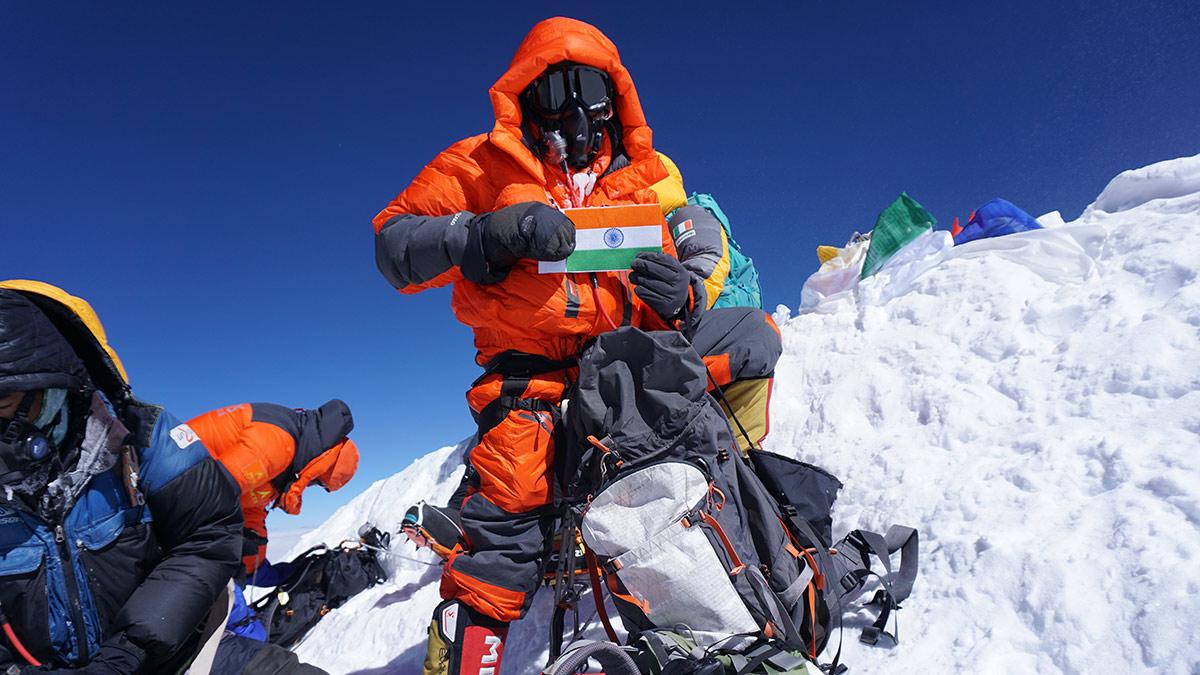
Finally, we saw some prayer flags and my Sherpa said, 'Ok, this is the top.'
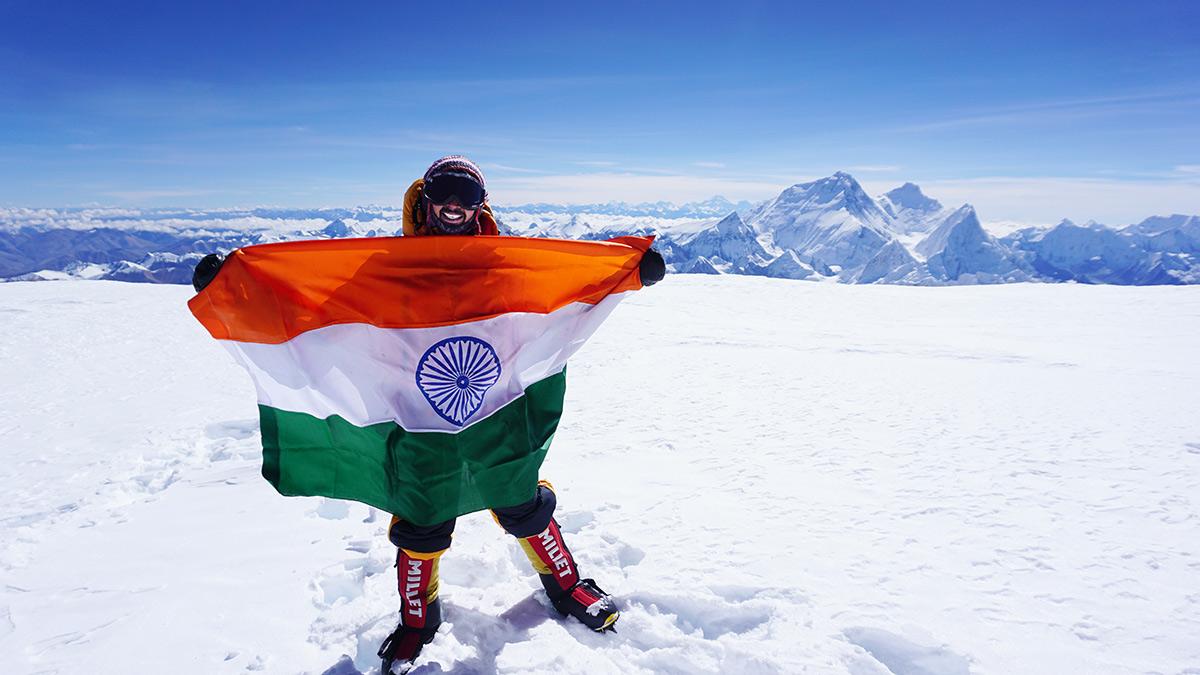
The view was fantastic!
I had tears in my eyes, grateful that after such a painful journey, I had made it to the top of the world. Not many people get that privilege.
I was very thankful to the mountain Gods for blessing my attempt. When I looked around, I saw Mount Makalu (the fifth highest mountain in the world); half its summit was visible through a thin layer of clouds.
On the other side, I saw Tibet, where Everest is climbed from the North side.
Tall mountain peaks surrounded me.
Looking further, I could literally feel the curvature of the earth; this is not something everyone gets to see. I understood what the saints who stayed in the Himalayas must have felt.
I am a Jain and believe in Keval Gyan; it means to attain spiritual enlightenment. Mahavir Swami and all other saints whom we worship, they have lived in the mountains to pursue this.
You have that sense of purity, you have that sense that life is this and there is nothing beyond this. That spiritual connect automatically builds up when you are on a mountain. It's a very emotional moment. It feels so divine; I was blessed by the mountains.
'If you make one mistake, you can lose your life'
Mountaineering is an extreme sport where you compete with yourself.
It is in a league of its own. For example, if you make a mistake or lose points or lose medals in any other sport -- be it football, cricket or badminton -- you get another chance.
On a mountain, if you make one mistake, you can lose your life.
Your game has to be on point. It is a combination of your luck, hard work and so many other factors. You must be able to judge everything.
I remember in 2019, the moment I stepped out of my tent for the summit push and wore my oxygen, I saw one guy being carried down by two Sherpas.
He was in a near-death situation.
He was completely exhausted and his oxygen had stopped working.
'Global warming is affecting professional climbing'
A lot is changing in mountains.
I first climbed Everest in 2019.
Five years later, in 2023, I climbed it again with my nephew.
I saw that the Kumbhu Icefall (glacier on the Nepal side of Mount Everest, a little above Base Camp) has melted so much. Now, there are what look like big walls you have to ice climb.
On Dhulagiri too, everything has changed.
The route to Camp 1 is rocky instead of having ice and snow.
The glaciers are melting that is impacting the climb.
The crevasses have increased and rock falls and avalanches have become very common.
There are reports that, in the Alps too, the increasing heat has caused huge rockfalls and boulders slide down the mountains. Mountain climbing has become riskier.
The national award
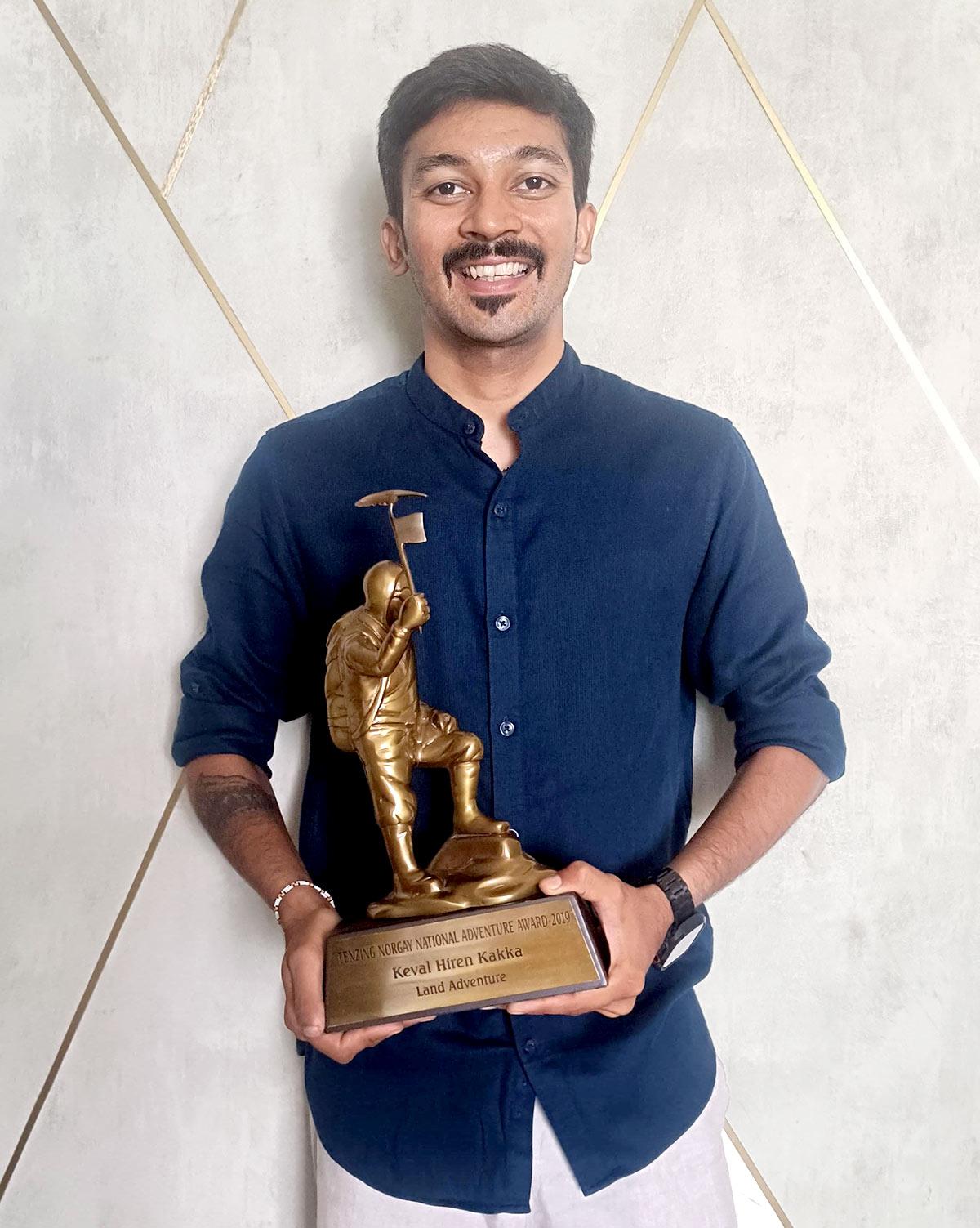
If you've watched Netflix's 14 Peaks: Nothing Is Impossible, which documents Nirmal Purja's ambitious goal to climb all 14 of the world's 8,000-metre peaks, you'd know how difficult this goal is. In May 2019, Keval scaled two mountains above 8,000 metres, Mount Everest and Mount Lhotse, in just six days. This incredible feat earned him the Tenzing Norgay National Adventure Award.
The vibe is completely different when you are at Rashtrapati Bhavan and your name is announced for the national award. You receive it from the President of India, which is like a very big, big achievement.
For me, the feeling was 50 per cent as the award ceremony was conducted virtually because of Covid.
A small ceremony was conducted and (then) Union Sports Minister Anurag Thakur sir gave us the trophies.
I wanted my parents to be a part of the ceremony. I hope I get to visit Rashtrapati Bhavan, meet the President in person and introduce my parents.
'My family has become 50 per cent mountaineers now'
My family used to be really worried before as there is no network up in the mountains. You cannot carry satellite devices from here (to Nepal). You have to use satellite phones provided by the agencies in Nepal. They are so expensive that you cannot call often.
At times, they joke this is the last one, right?
But they know that I am on a mission to complete all 14 of the 8,000 metres.
They support me a lot. They are my strength.
In fact, they have become 50 per cent mountaineers now. They know so much about my equipment and gear.
Watch! The Keval-Krupa love story
'Within the mountaineering community, we help and uplift each other'
The people I've met have always been positive.
Whenever I have been in trouble or sick (during an expedition), people have been there for me.
We help and uplift each other.
The mountaineering community has expanded exponentially over the years. We are connected on social media.
If I want to climb in other parts of the world, I can directly ask a person who has done so instead of placing my faith on unreliable information.
There is a lot of competition as well (smiles); it's part of our nature. As time passes, this sport will become more competitive.
Keval on the injuries he has endured on the mountains
'There are some people who fake summits'
In India, if you climb a mountain like Everest or any other mountain over 8,000 metres, you are definitely treated like a hero.
For example, if you climb an 8,000 metre peak from the north (Nepal side), you get a reward of Rs 5 lakhs from the Haryana government.
At the same time, there are countries where there are so many climbers who have done so much but there is no reward or award.
But there are people who take advantage of this and fake summits. I know people, even this year, who have not climbed Everest but still claim to have done so with fake videos, fake proof. They were rewarded by the state.
We are fighting this.
'Everest ho gaya, ab aur kya karna hain?'
There are so many mountains and I cannot climb them all.
People say, 'Everest ho gaya, ab aur kya karna hain?'
My motto is to keep on climbing till I can.
It creates a healthy lifestyle for me. On a daily basis, it helps me to set up new goals, new targets and keep me striving hard.
If there was no target, I would just be sitting at home doing nothing.
I am 34 years old now; I don't know how much my body will be able to handle the hardships of the mountains. I want to climb for as long as I can.
When I can no longer climb 8,000 metres, I'll climb 7,000 metres, then 6,000, then 5,000.
I will never stop.
Keval wants this actor to play him in a biopic
'When I am not on a mountain...'
...I am a marathon runner.
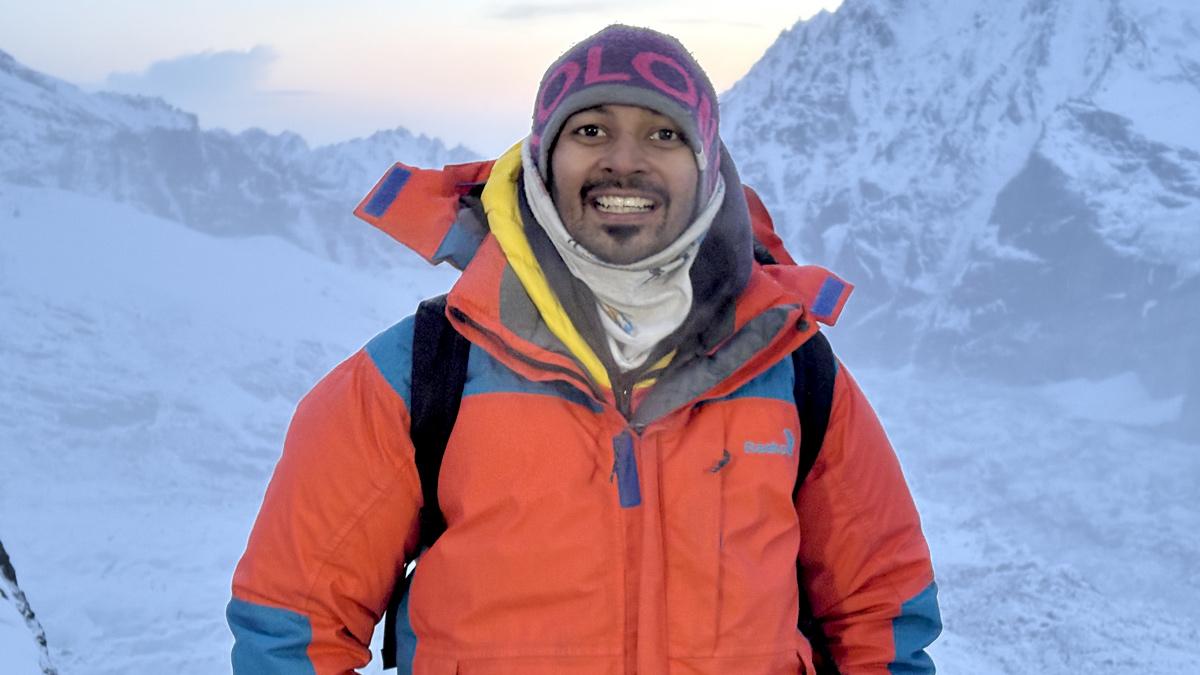
I wake up at 4 in the morning, do yoga then workout for two hours in the gym.
I do weight training and strength training.
I do not limit myself just to the gym. That is very important.
In the evening, I go for a 5 km run. Some days, I cycle. I do rock climbing as well.
Mountaineering has become a way of life now. It has changed my perspective towards training.
Whenever I get time, I hike in Himachal Pradesh or in Uttarakhand for 10 to 15 days. I try to climb 6,000 meters and train there.
I also love music. I love to sing. I love to play instruments like the tabla and the basuri.
And I love to dance. I learnt Bharata Natyam for three years.
'My life lessons from the mountains are...'
Whatever I am today I am because of the mountains.
Mountains don't discriminate based on your gender; they are the same for everyone.
Whenever I am back from the mountains, whether it is a climb or a hike or anything, my perspective towards life changes.
It's a reality check that makes me more humble, more grounded.
No matter what you have done before, once you are back, you have to start again.
Every mountain that I climb, I have to start from zero. I cannot say that just because I have climbed Everest so Annapurna will be easy. Or now I have climbed Annapurna so Kangchenjunga will be easy.
Every mountain has its own difficulty. Every mountain comes with its own challenges.
Mountaineering is never 'easy'. Nothing is in your hands, you have to be prepared. That's the same for life as well.






 © 2025