
The funding marks the first investment in the Indian food delivery category by SoftBank Vision Fund 2, with participation from the company's long-term investor, Prosus, and other existing investors Accel Partners and Wellington Management, Swiggy said in a statement. In addition, new investors Qatar Investment Authority, Falcon Edge Capital, Amansa Capital, Goldman Sachs, Think Investments and Carmignac participated in the round, it stated. This latest fundraise was heavily oversubscribed following strong interest from investors, and comes on the back of Swiggy's rapid recovery from the impacts of COVID-19 and subsequent growth in 2020-21, Swiggy said.

'The consolidation of the world's fifth-largest economy in the hands of 15-20 corporate giants is a once-in-generation event, which we are focusing on.'

Amid oxygen shortage and a faltering health system in the country, India is seeing over 300,000 cases daily.

Private equity investments hit a record high of $40.1 billion in 2021, an increase of over 15 per cent from the previous year, led by a $3.6 billion flow into Flipkart and $1.93 billion into Bundl Technologies, as per a report. According to the data collated by Refinitiv, an LSEG business, while the value of inflows rose 15.2 per cent from $34.8 billion in 2020 to $40.1 billion in 2021, the deal volume soared to 990 in the reporting year from 588 in 2020. Analysts at the agency expect the inflow momentum to continue in 2022 as technology companies, especially startups, continue to attract capital from both private and public markets.

A total of 49 companies raised Rs 81,615 crore in Samvat 2077, more than the preceding four years and almost double the amount raised in the previous year. Samvat 2078 appears even more promising with mega issues of Paytm and Life Insurance Corporation (LIC) of India. However, Paytm's record could be short-lived as state-owned LIC is planning to launch a Rs 1-trillion IPO by March 2022.

Hospitality firm OYO is planning to raise up to $1.2 billion (around Rs 8,000 crore) through an initial public offering and is expected to file the draft red herring prospectus with Sebi next week, sources told PTI on Thursday. OYO has appointed investment banks like JPMorgan, Citi and Kotak Mahindra Capital to manage its public issue, they added. Comments from OYO could not be obtained at the time of filing the story. The proposed initial public offer (IPO) plan of the hospitality firm follows the spectacular success of Zomato's IPO that ended with a bumper oversubscription on July 16, and was biggest since March 2020.

Start-ups Zomato, PB Fintech, One97 Communications, and FSN E-Commerce Ventures have entered the large-cap category after the latest reclassification exercise by the Association of Mutual funds in India (Amfi). This comes despite stocks such as PB Fintech (Policybazaar) and One 97 Communication (Paytm) trading below their issue price. Others such as Mindtree, SRF, IRCTC, Tata Power, JSW Energy have been moved from mid-cap to large-cap category.
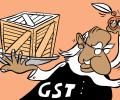
The GST Council in its meeting next week is likely to consider a proposal for making changes in the monthly tax payment form -- GSTR-3B, which would include auto-population of outward supplies from sales return and non-editable tax payment table, officials said. The move would help curb the menace of fake billing, whereby sellers would show higher sales in GSTR-1 to enable purchasers to claim input tax credit (ITC), but report suppressed sales in GSTR-3B to lower GST liability. Currently, GSTR-3B of a taxpayer includes auto drafted input tax credit (ITC) statements based on inward and outward B2B supplies and also red flags any mismatch between GSTR-1 and 3B.

Swiggy is shoring up capital to defend its position as India's largest food-ordering app as rivals Zomato and FoodPanda focus on growth after receiving funds

Byju Classes' founder Byju Raveendran, Zomato co-founder Gaurav Gupta, CEO of Antara Senior Living, Tara Singh Vachani, Vinati Organics' MD & CEO Vinati Mutreja and Swapan Mehra, CEO of Iora Ecological Solutions are among 115 young leaders.

Amazon India has decided to shut down 'Amazon Distribution', according to sources. This follows its recent decision to shut its food delivery and edtech offerings. The moves are part of the annual operating planning review process amid global macroeconomic uncertainty. The e-commerce giant is looking to focus on its core businesses, sources said.

E-commerce platform Snapdeal is looking at filing its Draft Red Herring Prospectus (DRHP) in the next few weeks to launch an initial public offering in first half of next year, according to sources. Sources close to the development said the company is looking at a $250 million (around Rs 1,870 crore) IPO that could value Snapdeal at about $1.5-1.7 billion. Snapdeal is looking at filing the DRHP in December-January time frame, and launch the IPO in the first half of 2022 after the necessary approvals, they added. One of the sources said the founders will not be selling shares as part of the IPO, and major shareholders are also expected to hold onto their shares.

Since home-delivered meals from five-stars are cheaper by 15 to 20 per cent as compared to eating at the destination outside, food delivery has emerged as an important part of every restaurant's service portfolio.

The question on all minds after the devastating Kamala Mills fire.

Tata Consultancy Services (TCS) is India's most-valuable brand in 2022 replacing HDFC Bank, which held the number one spot since 2014, according to Kantar BrandZ report on India's most-valuable brands. TCS was able to grab the top slot due to rising global demand for automation and digital transformation, following the pandemic. Indian brands have bounced back from the pandemic to increase their brand value by 35 per cent compound annual growth rate (CAGR) since 2020.
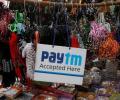
Paytm's Rs 18,300 crore IPO was oversubscribed 1.89 times on the last day of India's biggest share sale on Wednesday, making it one of the country's most valued companies. The initial public offering of Paytm's parent company One97 Communications Ltd received bids for 9.14 crore equity shares against the offer size of 4.83 crore shares, according to information available from stock exchanges. While the portion set aside for retail investors was oversubscribed early, institutional buyers including FIIs flooded the share sale with offers on Wednesday, seeking 2.79 times the number of shares reserved for them.

Tech Mahindra was the top gainer in the Sensex pack, rising over 2 per cent, followed by HCL Tech, Infosys, L&T, Tata Steel and ITC. NSE Nifty advanced 41.60 points to 15,853.95.

From a location perspective, the last quarter saw Kolkata and Gurgaon as top regions for employment in these sectors and among roles, sales and office services stood out.

The cloud kitchen market in India will hit $1.05 billion by 2023. Just 13% of the total market has been utilised so far.

Ajit Mishra, vice president, research, Religare Broking, answers your queries.
Growth-oriented technology companies have raised Rs 15,000 crore through initial share sales in the last 18 months and IPOs worth around Rs 30,000 crore by such firms are in the pipeline, Sebi chairman Ajay Tyagi said on Thursday. "Growing number of unicorns in the startup ecosystem is a testimony of the new age tech companies coming of age in our economy. These companies often follow a unique business model focusing more on rapid growth than immediate profitability," Tyagi said at an event organised by industry body CII. During the last 18 months, growth-oriented technology companies have raised a sum of around Rs 15,000 crore through IPOs (Initial Public Offerings).

'We are most bullish on all aspects of the financial sector -- private sector banks, even one state-owned bank, insurance, mortgage finance, broking, wealth management, gold finance, etc.'
E-commerce platform Snapdeal has filed preliminary documents with markets regulator Sebi to raise funds through an initial public offer (IPO), joining the league of internet-led businesses looking to list on domestic stock exchanges. The public issue comprises fresh issuance of equity shares worth Rs 1,250 crore and an offer for sale (OFS) of 3.07 crore equity shares, according to the draft red herring prospectus (DRHP). According to market sources, potential listing could value Snapdeal at about $1.5-1.7 billion.

Gig workers are usually spoken of in the context of the sharing economy, like Uber, Ola drivers, delivery persons for Zomato and Swiggy and so on. This is the first time such workers will be covered under India's social security law.

Indian startups have raised $42 billion in 2021, up from $11.5 billion in the previous year, a report by Orios Venture Partners said. The report titled 'The Indian Tech Unicorn Report 2021' said India saw 46 unicorns (companies with $1 billion valuations) in 2021 alone, more than doubling the total number of unicorns to 90. These include ShareChat, Cred, Meesho, Nazara, Moglix, MPL, Grofers (now Blinkit), upGrad, Mamaearth, GlobalBees, Acko, Spinny and others. India - with 90 unicorns - is the third-largest unicorn hub behind the US (487) and China (301), and ahead of the UK (39).

Stock market minnows put up a stellar show in 2021 giving returns of up to 60 per cent amid Dalal Street dream run and are likely to continue sailing northwards in the New Year too. Trumping pandemic-induced uncertainties, the Indian equity market posted stunning gains this year achieving several feats and smaller stocks benefited the most from the strong momentum. From reaching the momentous 50,000-mark in January to scaling 61,000-level in October, the BSE Sensex had an epic journey this year.
Initial share sales are set to dazzle the Dalal Street in 2022 too as companies are expected to garner up to Rs 1.5 lakh crore in the New Year, continuing with the bullish momentum after 2021 turned out to be the best IPO year in two decades for the Indian market. Excessive liquidity and increased retail investor participation ensured a persistent euphoria in the Initial Public Offer (IPO) space wherein companies mopped up more than Rs 1.2 lakh crore this year even as pandemic gloom shadowed the broader economy. In 2022, the higher amount of funds through the primary market will be largely driven by the mega IPO of state-owned Life Insurance Corp (LIC).

The primary market is set for a bumper Rs 80,000-crore bonanza with 30 companies already filing IPO papers to raise Rs 55,000 crore, while around 10 more are lined up for this month itself, seeking to mop up another Rs 25,000 crore, say investment bankers. The market has been on a non-stop rally, hitting new records almost every week, on the back of an influx of investors -- a vast majority of them first-timers -- coupled with a flood of liquidity. Foreign funds alone had pumped in a record $35 billion into the market in FY21, while the trend has continued this fiscal as well. Domestic institutions led by LIC have also infused trillions of rupees, helping woo retail investors in troves -- the year saw over 20 million new investors coming to the market.

Hectic fundraising through initial public offerings (IPOs) is expected in October-November, with at least 30 companies are looking to collectively raise over Rs 45,000 crore through initial share-sales, merchant banking sources said. Of the total fundraising, a large chunk would be garnered by technology-driven companies. The successful IPO of food delivery company Zomato, which was overwhelmingly subscribed by over 38 times, encouraged new-age tech companies to come out with their primary share-sales.
Fundraising activity in the upcoming financial year 2022-23 may even surpass FY22 when 52 Indian companies raised a record Rs 1.11 trillion via initial public offerings (IPOs). According to a note by PRIME Database, 54 companies (including LIC) plan to raise Rs 1.4 trillion and currently hold the Securities and Exchange Board of India's (Sebi's) approval. Another 43 companies, the note said, are looking to raise about Rs 81,000 crore but waiting for Sebi nod.

Fintech firm MobiKwik on Monday filed a draft red herring prospectus (DRHP) with the markets regulator, Securities and Exchange Board of India (Sebi), for its initial public offering (IPO). According to its DRHP, the company plans to raise Rs 1,900 crore, which includes a fresh issue of Rs 1,500 crore and an offer for sale of Rs 400 crore. The selling shareholders include American Express Travel, Bajaj Finance, Cisco Systems and Sequoia Capital India, besides founder Bipin Preet Singh. MobiKwik is the latest among tech majors wanting to list on stock exchanges. Food delivery start-up Zomato will launch its IPO on Wednesday.

Close to $18 billion that Reliance Jio and Reliance Retail mopped up from a slew of private equity transactions in 2020 has pushed up the money inflows through this route by 108 per cent to $33.8 billion, according to an industry report. As per the data collated by Refinitiv, private equity investments increased 108 per cent in 2020 over the previous year, with the number of deals jumping from 665 in 2019 to 791 in 2020 at $33.8 billion, despite the pandemic. In 2019, total PE deals stood at $16.2 billion. Most of the fund inflows were in the third quarter, fetching $24 billion, which, however, tapered off in Q4 to just about $4.57 billion, as per the data from the agency that tracks financial transactions at a global level.
Paytm's Rs 18,300-crore IPO -- India's largest public issue to date -- was subscribed only 18 per cent on the first day of bidding on Monday.

Investments by private equity and venture capital funds doubled to a record high of $9.5 billion in July mainly driven by higher investor interest in the e-commerce sector, a report said on Monday. Private equity (PE) and venture capital (VC) investments stood at $4.1 billion in the year-ago period. The activity was higher by 77 per cent when compared to June's $5.4 billion, the report on monthly PE/VC investment activity by industry lobby IVCA and consultancy firm EY said.
A December 28 board meeting of the Securities and Exchange Board of India (Sebi) may tighten norms for initial public offerings (IPOs). The board may look to prescribe a minimum 5 per cent gap in IPO price bands, extend the lock-in period for anchor investors to 90 days and cap the amount a majority investor can sell through offer for sale. The regulator is looking at whether there can be a preferred allocation for anchor investors who opt for a longer lock-in period, said a person familiar with the matter.
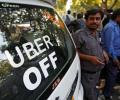
Uber on Tuesday said it is laying off about 600 employees in India -- about a quarter of its staff in the country -- as business has taken a major hit amid the COVID-19 pandemic. The development comes days after rival Ola had announced laying off 1,400 people from its rides, financial services and food business.

There was a worry that such a policy would hamper businesses, create resentment among the male staff and perhaps also discourage companies from employing women. However, this has proved to be misplaced.

'All these incidents go to show that the day of the anodyne, apolitical corporation is running out fast,' says Kanika Datta.

Fund inflows jumped over 77 per cent in the second quarter of 2021 to $7.55 billion compared to $4.26 billion in the first quarter, according to the data collated by Refinitiv, the London Stock Exchange Group's financial markets data and insights arm. However, volume growth was a tepid 8.8 per cent in Q2 at 296 transactions up from 272 in Q1, totalling the counts in the first half to 568, against 365 transaction in the year-ago period. Total inflows in the first half of 2020 were $5.43 billion across 365 deals, while in the first quarter these were $3.92 billion across 183 deals and the second quarter at $1.51 billion across 182 deals, according to Refinitiv.
'There is no doubt at all that Jio's disruption of the mobile broadband market was a turning point for India's digital economy.'
