
Some of the leading, most cutting-edge, designs in India take inspiration from Indian culture and history.
China and India remain the cultural heartlands of gold, generating 55 per cent of global jewellery demand and 49 per cent of global demand, says the World Gold Council.
India (NRIs included) goes crazy about gold jewellery.
Slump after 5 quarters amid high prices, rupee depreciation.

IIM-A announced a tie-up with three corporate houses -- CRISIL, ATS Infra and SAP -- for research in financial markets, infrastructure and entrepreneurship.
India owns over 18,000 tonnes of above ground gold stocks worth approximately $800 billion and representing at least 11 per cent of global stock, according to estimates of World Gold Council.
After yellow and white, pink gold is set to hit Indian jewellery retail stores by the end of this year.
Up 37% in December quarter, nearly 70 per cent over the year, a fourth of entire global intake.
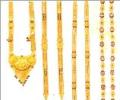
India is crazy about gold jewellery. With the World Gold Council aggressively marketing social and religious functions as gold buying events, the demand has shot up in the recent years to record levels.

In Q1 2010, India was the strongest performing market as total consumer demand surged by 698 per cent to 193.5 tonnes.

Sky-high gold jwellery prices will haunt buyers in 2010 also though India is better placed than its global peers, where people are slowly turning back to purchases, according to World Gold Council.
Investors, speculators, hedgers and consumers who sold their gold stocks to partly set off losses in the financial markets will start replenishing within six to eight months, says Ajay Mitra, managing director - Indian sub-continent, World Gold Council.

For the second straight year, the gems and jewellery industry is set for almost a washout of business on Akshaya Tritiya as only about 10 per cent of pre-Covid sales of 2019 are expected on Friday amid the raging pandemic sapping footfalls and purchasing power of people.

China was the only gold jewellery market to grow 6 per cent in 2009, according to the figures compiled by the organisation formed and funded by worlds leading gold mining companies.

Gold only beats inflation. It fares poorly when compared to real estate or shares when compared on the basis of real inflation adjusted returns. Any serious investor, however, is advised to have a certain percentage of investment in gold to hedge inflation.
Price up on weak dollar and strong demand

According to the Q2 09 Gold Demand Trends report released on Wednesday by WGC, 'investment demand for gold remained very strong in the second quarter of 2009, rising 46 per cent on year-earlier levels as investors continued a flight to quality'.

The most compelling reason for putting money in gold is its role as a long-term or strategic asset.

Gold prices in the national capital touched a peak of Rs 16,250 per 10 grams before Diwali, on October 14, from Rs 15,370 in the beginning of September. The prices are ruling at Rs 16,175 per 10 grams on Friday.
Gold is back in favour with consumers shifting their focus on the precious metal on the back of moderation in prices.

The gems and jewellery industry is staring at a sales washout on Akshaya Tritiya for the second consecutive year as most of the states are under lockdowns due to the raging second wave of the COVID-19 pandemic which has led to negative consumer sentiment, say industry leaders. Akshaya Tritiya, considered as an auspicious day for buying gold and jewellery, falls on May 14 this year. India is the worst-hit among all nations with the second wave of the pandemic, which has been killing more than 3,500 daily and infecting close to 4 lakhs daily for weeks. The massive caseload has nearly paralysed the medical infrastructure.
Investors globally have found solace in gold in the last one year when major world economies slipped into recession. Sample this: According to World Gold Council data, investment by exchange traded funds in gold was 150 tonnes in the third quarter
Custom authorities have been keeping strict vigil on the cargo movements from Bhutan, Taiwan, China, Afghanistan, South Korea Japan, and Dubai since January.
The RBI is still a small player in international gold buying among central banks. But in terms of total gold bought in 2019, it is the sixth largest buyer with 25.2 tonnes purchases in the first 10 months of 2019.

Indian central bank may soon edge out its counterpart in the Netherlands from the top-10 list, as latter's holding has largely remained unchanged.
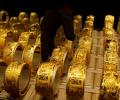
Consumers have to watch out for four marks on hallmarked gold jewellery: BIS mark, purity in carat, assay centre's name and jewellers' identification mark.
Stung by the steep fall in demand for the yellow metal in the world's largest consumer nation, the World Gold Council is now falling back on the familiar marketing mantra: If customers aren't coming, go to their doorsteps. The reason for the marketing overdrive by the Indian arm of the WGC is simple: India, which used to import around 60 tonnes of gold a month till last year, has seen zero imports in the past two months because of the prevailing high prices.
According to news article posted on the World Gold Council web site, gold nanoparticles ten thousand times smaller than a human hair could be used to break down chemicals in drinking water and reduce pollution. It said the particles, which mix gold and palladium, are the creation of engineer Michael Wong from Rice University in Houston, Texas.

In three of the past four years, 10-year returns have been 10 per cent or lower, making equity unattractive, compared to other asset classes.

Gold loan companies offer loans to financially-excluded customers and MSMEs by enabling them to monetise their gold without the need for documentary proof of income

Junior Civil Aviation Minister G M Siddeshwara told Parliament that disciplinary action has been taken against the employees.
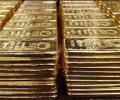
India's total demand for gold rose by 94 per cent to 365-tonnes in H1 2010 as compared to 188.4-tonnes in H1 2009, the World Gold Council said in a statement here.
The only element of demand for gold likely to be affected by a recession is investment demand, "but that in turn will depend on the 'type' of recession,". Recessions can be bad for commodity prices, as consumer and business confidence falls, demand for goods and services is cut, weighing on demand for raw materials and depressing prices.

Gold import this financial year is estimated at 945 tonnes.
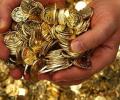
Spot gold was substantially higher at USD 1,117.40 an ounce in early European trade.
World Gold Council to double investment in India, views organised retail as a boon to industry

The second day of pre-Diwali Dhanteras witnessed a tepid response from shoppers on Friday as gold and silver sales have likely to be fallen by up to 35 per cent year-on-year due to high prices and COVID-19 induced financial distress, although consumers moved to online buying to make most of the festival, jewellers said. The buying was heavily restricted to light weight jewellery, coins and precious stones due to lower purchasing power and high gold rates, they said. Due to the fear of coronavirus infection, many customers who had booked in advance were taking delivery of wedding orders on Friday, while some were seen buying safely through online brands like Tanishq and Melorra.

Pre-Diwali Dhanteras sales of gold and silver witnessed a tepid response from consumers on Thursday on account of high prices of the precious metals and sluggish demand due to COVID-19 induced economic hardship, according to jewellers and industry experts. However, jewellers are expecting maximum footfalls on Friday as Dhanteras -- considered the most auspicious day in Hindu calendar for buying items, ranging from precious metals like gold and silver to utensils -- is being celebrated for two days this year.
According to data compiled by London-based Gold Field Minerals Services (GFMS) for the World Gold Council (WGC), the combination of a robust economy and buoyant stock market helped fuel purchases of the metal during the first eight to nine months of the year, despite gold breaching the psychologically significant level of Rs 9,000 per 10 grams in September.

Gold hallmarking is a purity certification of the precious metal and is voluntary in nature at present.
 © 2026 Rediff.com - Advertise with us - Disclaimer - Privacy Policy - Sitemap - Feedback - About us - Terms of use - Grievances