
The Taliban government in Afghanistan is not going anywhere. That being the case, why is the hesitation to establish formal diplomatic relations with the Taliban? asks Lieutenant General Prakash Katoch (Retd).

'India has to ensure its borders are properly sealed and there is no infiltration from PoK.

'We can't be outliers. We can't be bystanders. We have to be players.' 'The Taliban also need India to balance the winners in this game.'

In a significant policy statement on the Taliban which is making big gains in its offensive in Afghanistan, China has asked it to make a "clean break" from all terrorist forces, especially the Al Qaida-backed Uyghur Muslim militant group ETIM fighting for the volatile Xinjiang province's independence.

The future can only get better if we continue to break silos and work as integrated teams focussed on promoting national interests, recommends Sanjeev Nayyar.

India needs to shed its policy of lethargy and inhibitions to engage the Taliban with an intent to maintain its influence in Afghanistan. This would not just put a spanner in Pakistani designs, but also incentivise the Taliban not to be the puppets of GHQ, Rawalpindi, asserts Colonel Nikhil Apte (retd), who served on the Af-Pak desk at the Military Operations Directorate.

'The Modi government's grandstanding has hardened the reflexes in Beijing, Islamabad and Kathmandu and complicated India's relations with these three countries, which were even otherwise highly problematic.' 'Whatever prospects existed for a fair and balanced resolution of the territorial disputes may also have receded,' observes Ambassador M K Bhadrakumar.
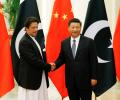
Gilgit Baltistan's large frontage with Kashmir and Ladakh across Kargil and the Siachen Glacier gives Pakistan and China the perceived scope for conduct of collusive operations against India and wrest control of the major course of the Indus and Shyok, observes Lieutenant General Syed Ata Hasnain (retd).

During last week's Nuclear Security Summit, President Obama asked the media to leave and then screened videos depicting plausible scenarios pertaining to nuclear terrorism.

Indians want change and progress. They should be willing to accept tough decisions, says Sanjeev Nayyar.

'It was a mission undertaken in darkness in every sense -- literally, because Afghanistan had no electricity at that time; and, metaphorically because Delhi historically dealt only with the Pashtuns of Afghanistan and the foreign ministry's vast archives had nothing to offer on the culture and politics of the northern tribes in the Hindu Kush.'
 © 2026 Rediff.com - Advertise with us - Disclaimer - Privacy Policy - Sitemap - Feedback - About us - Terms of use - Grievances