
Even though the number of cases is rising and the JN.1 sub-variant has been detected in the country, there is no cause of immediate concern as 92 per cent of those infected are opting for home-based treatment, indicating mild illness, they said.

According to the people aware of the matter, there are currently 10 different variants of COVID-19 in the country, with the latest being BF.7.

The youth hailed from Chavakkad Kuranjiyur in Thrissur district and tested positive in a foreign country.
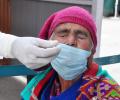
On June 14, the World Health Organization designated the Lambda variant, previously known by its formal scientific name C.37, as the seventh and newest "variant of interest".

"We cannot lower our guard. A new risk is being seen at markets and tourist spots where a gathering of crowds being seen, social distancing and mask protocol is not being followed. This is a serious cause of concern," said Dr VK Paul, Member-Health, Niti Aayog during a press conference.

After confirmation of the first monkeypox death in the country by the National Institute of Virology, health experts advised strengthening the surveillance to avoid silent transmission of monkeypox.

He urged people not to panic and clarified that there was no change in the guidelines for international air travel so far.

NITI Aayog member (health) Dr VK Paul said all decisions on precaution doses are taken first and foremost based on the need.

Addressing a press briefing, Niti Aayog member (health) VK Paul said that though there has been an overall decline in case burden but the positivity rate is still over 10 per cent in 382 districts.

The increase in death registration in 2020 compared to 2019 is not entirely due to Covid fatalities, Niti Aayog member VK Paul has said, asserting that "exorbitant" multiples of coronavirus deaths being published by some agencies with respect to India must stop.
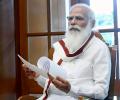
Sources said the pandemic and the response of the government is likely to be discussed in the virtual meet.

Amid the reports of coronavirus vaccine shortage from various states, the central government and Hyderabad-based Bharat Biotech are willing to invite other companies which want to produce COVAXIN in a bid to scale up the vaccine production, said NITI Aayog member Dr VK Paul, on Thursday.

The coronavirus pandemic has taught that viruses cannot be taken lightly, and the unpredictability in emerging scenarios of health have to be respected and addressed, Paul noted.

As many as 300 districts in India are reporting weekly COVID case positivity of more than five per cent, the Union government said on Wednesday as it warned against treating the infection due to the Omicron variant as common cold and urged people to get vaccinated.
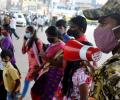
The government on Friday warned about the declining compliance to mask usage in the country amid concerns over the Omicron variant of the coronavirus and urged people to follow COVID-appropriate behaviour and get vaccinated to prevent surge in cases.

"Keeping a close pace with the potential availability of vaccine, a plan of action on which sections are to be given priority has been discussed. Importantly, it would be monitored through a scientific approach," Dr Harsh Vardhan told ANI about the strategy being discussed on vaccine distribution.

Prime Minister Narendra Modi was on Saturday briefed about the new 'Omicron' variant of the coronavirus, and he asked officials to review the plans to ease international travel restrictions in light of the 'emerging new evidence.'
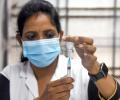
While Covishield supplies would meet the target of 500 mn doses between August and December, it looks like Covaxin would miss the target of 400 mn unless the partner sites of Bharat Biotech ramp up very rapidly, reports Sohini Das.
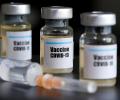
The procurement and distribution will be centralised though the government is yet to take a call on the initial number of doses that will be procured.

More than 6.5 crore vaccine doses have been administered across the country so far to frontline workers, healthcare workers, those above 60 and for people aged above 45 with specified co-co-morbid conditions.

According to a study done by Singapore University of Technology and Design Data, coronavirus will 100 per cent end across the world on December 8.

'SARS-CoV-2 is going to change to avoid/overcome any thing thrown at it.'
 © 2026 Rediff.com - Investor Information - Advertise with us - Disclaimer - Privacy Policy - Sitemap - Feedback - About us - Terms of use - Grievances