
The rise in consumer price index (CPI) inflation could see the Reserve Bank of India (RBI) in an extended pause mode as regards interest rates, and in turn, keep the market rally in check, believe analysts. Signs of inflation cooling off in the US, however, is likely to provide some cushion as the expectations of a change in stance by the US Fed as regards interest rates is likely to aid sentiment. Back home, CPI inflation surged for the first time in five months to 4.81 per cent in June 2023, and was higher than the street's expectations of 4.58 per cent.

Equity benchmarks ended over 1 per cent higher on Monday amid positive trends in global markets and buying in Reliance Industries and IT counters. The 30-share BSE Sensex zoomed 846.94 points or 1.41 per cent to settle at 60,747.31. During the day, it jumped 989.04 points or 1.65 per cent to 60,889.41.

'For someone who wants to invest for the future or his family, diversification is necessary.' 'Diversify across asset classes -- equities, gold, real estate, fixed income, commodities, and even cryptocurrency.'

Commodity investments can help you diversify your portfolio in asset classes other than equity and debt, says Dwaipayan Bose.

Stock market investors became poorer by Rs 8.30 lakh crore as equities continued their slide for the sixth consecutive day on Friday. The BSE Sensex has tumbled 1,855.58 points or 3 per cent since February 16. During this period, the combined market capitalisation of BSE-listed firms has tanked Rs 8,30,322.61 crore to reach Rs 2,60,00,662.99 crore. "The domestic market is broadly demonstrating a lack of confidence, registering its sixth consecutive day of losses despite global markets turning green.

Premium valuations era started in 2006 and went hand in hand with decline in the US interest rates

The Fed has prepared the world very well for a rate hike. In fact the market may have priced in a 25 basis points increase. So if the increase is 50 basis points, the reaction could be stunning, but a 25 basis points rise is not likely to have any great impact, says P V Subramanyam.

If a 5% to 10% fall in the equity market gives you sleepless nights, you are not cut out for a 75% to 80% allocation to equities and must reduce it.

'New record for the Nifty50 is only a question of when.'

Equity and oil markets can breathe easy for now, as the developments in Russia are unlikely to trigger a runaway rally in crude oil prices, said analysts. India, which imports nearly 80 per cent of its crude oil requirement, has been dependent on cheap Russian oil over the past few months to keep inflation - a sore point for the equity markets - in check. For the Indian markets that are expected to remain volatile amid these developments, analysts believe, the progress of monsoon, fund flows - both foreign institutional investor (FII) and domestic - and the upcoming corporate earnings season back home remain key.

IT major Accenture's second straight cut in its revenue growth forecast for FY23 suggests there is more pain ahead for the Indian IT sector, say analysts. Accenture has lowered the top end of its FY23 growth guidance in constant currency (CC) to 9 per cent from 10 per cent earlier. The firm, which follows a September-August fiscal cycle, expects a 2-6 per cent CC growth in Q4 of FY23 (June-August 2023) versus the 6-10 per cent prior guidance.

Equity indices ended lower on Wednesday amid mixed global market trends ahead of the keenly awaited US Fed interest rate decision. The 30-share BSE Sensex fell 262.96 points or 0.44 per cent to settle at 59,456.78. During the day, it tanked 444.34 points or 0.74 per cent to 59,275.40. The NSE Nifty went lower by 97.90 points or 0.55 per cent to end at 17,718.35.

The move, which could come as a surprise to many investors, was a nod to better prospects for economy and labor market
Equity indices chalked up losses for the second straight session on Monday, in tandem with a bearish trend overseas as ratcheting up of hostilities in Ukraine and prospects of further rate hikes by the US Fed soured global risk sentiment. The rupee slipping to another all-time low against the US dollar amid foreign fund outflows added to the gloom, traders said. After tumbling over 800 points in intra-day trade, the 30-share BSE Sensex clawed back some lost ground to end 200.18 points or 0.34 per cent lower at 57,991.11.

The Lok Sabha elections in 2024 are not a consideration when it comes to monetary policymaking, said Reserve Bank of India governor Shaktikanta Das to underscore the central bank's commitment to controlling inflation. "It's not possible for me to comment what we do in the next MPC (Monetary Policy Committee), but one thing I can tell and I would like to make it very clear-that the fact of elections coming up in 2024 is not a factor at all so far as monetary policymaking is concerned. "Monetary policymaking is for checking (and) controlling inflation," Das said at the Business Standard, BFSI Insight Summit.

Equity benchmarks Sensex and Nifty faced heavy drubbing on Thursday, falling over 1 per cent each, in tandem with weak global markets following the US Federal Reserve's interest rate hike and its hawkish stance. The 30-share BSE Sensex tanked 878.88 points or 1.40 per cent to settle at 61,799.03. During the day, it tumbled 962.3 points or 1.53 per cent to 61,715.61.

The rupee rose by 12 paise to close at 79.78 against the US dollar on Monday due to a weak dollar in overseas markets and an improved appetite for riskier assets. Stronger regional currencies also supported the rupee sentiment ahead of the US Fed policy decision on Wednesday. Weak domestic equities and FII outflows, however, capped sharp gains. At the inter-bank forex market, the local unit opened at 79.86 against the greenback and moved in a range of 79.70 to 79.87 in the day trade.

An escalation in the already simmering tensions between North and South Korea, China and Taiwan, and Russia and Ukraine could prove to be a bigger worry for the markets over the next few months rather than central bank policy action, said analysts. The markets, they said, are still not fully factoring in this possibility. "The conflict between Iran and Saudi Arabia is another geopolitical worry.

Indian frontline benchmarks - the S&P BSE Sensex and the Nifty50 - have rallied around 12 per cent each since June-end and outperformed their global peers by a wide margin. On Thursday, the US Fed hiked interest rates by another 75 basis points (bps) - the third such hike this year - and surprised the markets by projecting further sizable hikes in the coming months. With the latest hike, the Fed fund rate (FFR) now stands in the range of 3 - 3.25 per cent and is highest since January 2008.
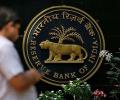
The Reserve Bank is likely to maintain status-quo on the key interest rates for the third time in a row in its upcoming bi-monthly policy review despite the US Federal Reserve and the European Central Bank hiking benchmark rates, as domestic inflation is within the RBI's comfort zone, say experts. The borrowing cost which started rising in May last year has stabilised with RBI keeping the repo rate unchanged at 6.5 per cent since February when it was raised from 6.25 per cent. In the previous two bi-monthly policy reviews in April and June the benchmark rate was retained.

Bajaj Finance was the top gainer in the Sensex pack, rising around 3 per cent, followed by Infosys, Titan, Reliance Industries and HCL Tech. NSE Nifty rose 27 points to 17,248.40.


'The Indian economy and the Indian financial sector today remain resilient and much better placed.'

A decision on the interest rate for close to 60 million active subscribers of the Employee Provident Fund Organisation (EPFO) is likely to be taken in the next Central Board of Trustee (CBT) meeting, starting on March 25. A letter from the social security organisation regarding the convening of the 233rd CBT meeting was sent to all the board members last week, soliciting their presence in the meeting. Although the venue and the agenda haven't been drawn out yet, sources familiar with the matter say that the interest rate is unlikely to go below 8 per cent level amid a rising interest rate scenario across the globe.

Such a directive to 'temporarily cease operations' comes after the US Federal Aviation Authority conducted an investigation of an in-flight Boeing 787 battery incident in Japan on Wednesday, which posed a question on a potential battery fire risk in the 787.

Benchmark equity indices Sensex and Nifty closed higher on Friday after two days of fall, helped by buying in metal, telecom and auto stocks amid a firm trend in global markets. Automakers led by Maruti Suzuki India, Hyundai, Mahindra & Mahindra reporting robust wholesales of passenger vehicles and GST collections crossing Rs 1.50 lakh crore for the third straight month in May also added to the optimism. The 30-share BSE Sensex climbed 118.57 points or 0.19 per cent to settle at 62,547.11.

The rupee fell by 49 paise to close at 81.89 (provisional) against the US dollar on Monday as heavy selling pressure in the domestic equities and a spike in crude oil prices weighed on the local unit.

Foreign portfolio investors (FPIs) infused Rs 11,630 crore in the Indian equity markets in April on the reasonable valuation of stocks and appreciation in the rupee. This came after FPIs infused a net sum of Rs 7,936 crore in equities in March, mainly driven by bulk investment in the Adani Group companies by the US-based GQG Partners. However, if one adjusts for the investments of GQG in Adani Group, the net flow was negative.
Equity investors became poorer by over Rs 9.75 lakh crore in two days of heavy decline in the equity market, with the Sensex plunging 1,457 points on Monday. The 30-share BSE benchmark tanked 1,456.74 points or 2.68 per cent to settle at 52,846.70 on Monday. It had ended 1,016.84 points or 1.84 per cent lower at 54,303.44 on Friday.

Benchmark indices finished on a weak note on Thursday, extending their previous day's decline amid a negative trend in global equity markets after the US Fed hiked interest rates by 75 basis points. The 30-share BSE Sensex declined 69.68 points or 0.11 per cent to settle at 60,836.41. During the day, it tanked 420.95 points or 0.69 per cent to 60,485.14.
The Reserve Bank's rate-setting panel will start its 3-day deliberations on Wednesday amid expectations of yet another rate hike of 50 basis points to check high inflation, in line with similar actions taken by other major central banks, including the US Fed. Based on the recommendations of the Monetary Policy Committee (MPC), the RBI had effected 50 basis points increase in repo rate each in June and August after raising the short-term lending rate by 40 basis points in an off-cycle decision in May. The MPC, headed by RBI Governor Shaktikanta Das, is scheduled to meet during September 28-30.

Without naming India, S&P said it expects that in regions where inflation already exceeds targets, or which are vulnerable to capital flight, central banks will be forced to raise interest rates.

Global rating agency S&P on Tuesday said even though the US and the Euro zone are headed to recession, India is unlikely to face the impact given the "not so coupled" nature of its economy with the global economy. "Indian economy is a lot decoupled from the global economy than we normally think of, given its large domestic demand, even though you (India) are a net importer of energy. "But you have enough forex reserves on one hand and your companies have managed to maintain healthy balance sheets," Paul F Gruenwald, S&P global chief economist and managing director, told reporters in Mumbai.

Sun Pharma was the top loser in the Sensex pack, falling over 3 per cent, followed by IndusInd Bank, Bharti Airtel, Kotak Bank, ICICI Bank and HDFC Bank. Nifty fell 59.75 points to 17,829.20.
Tech Mahindra, the top loser in the Sensex pack, shed over 2.5 per cent. It was followed by UltraTech Cement, Reliance Industries, HCL Tech, HDFC, Kotak Bank, HDFC Bank and TCS. NSE Nifty plunged 179.35 points to 17,745.90.

From the Sensex pack, Tata Motors, Sun Pharma, Wipro, Tata Consultancy Services, UltraTech Cement, Tech Mahindra, Bajaj Finserv, HCL Technologies, Infosys and IndusInd Bank were the major laggards. NTPC, Power Grid, Reliance Industries, Tata Steel, HDFC and HDFC Bank were the major winners.
RBI will not follow US Federal Reserve's cue of cutting rates, as Indian conditions differ greatly from US.

It has been a choppy calendar year 2022 (CY22) for global financial markets amid the spectre of rising inflation that led most central banks, especially the US Federal Reserve (US Fed), to tighten their monetary policy. Most equity indices across the globe have seen a sharp fall from their respective peak levels in this backdrop. FTSE India, for instance, has corrected 16 per cent from its October peak.

Indian equity markets registered their highest single-day percentage gains since early October.
The US Federal Reserve has announced to maintain its bond purchase tapering programme.
 © 2026 Rediff.com - Advertise with us - Disclaimer - Privacy Policy - Sitemap - Feedback - About us - Terms of use - Grievances