
TVS Motor Company on Monday said it aims 3 to 4 per cent growth in two-wheeler sales during this fiscal, while motorcycle sales were expected to be flat at 700,000 units.
TVS announced its plans of introducing new products this year. It is hoping to revive its nose-diving motocycle sales with these products in the coming fiscal.

Stung by the government's punitive action on electric two-wheelers, registrations in April fell by nearly a fourth to 62,581 from 82,292 in March, according to data from VAHAN. Electric two-wheeler companies, including Okinawa, Hero Electric, Ather Energy, and TVS, have all clocked their lowest registrations in the four months of this calendar year. Ola Electric has been the only exception to this bloodbath, and has crossed its March numbers, hitting 21,560 registrations in April, which is its highest in this calendar year. As a result, there have been some interesting changes in the electric two-wheeler pecking order.
The net sales drop was due to a decline in motorcycle sales following the credit squeeze by banks and the consequent reduced availability of finance.

Tamil Nadu is leaving no stone unturned in marketing its upcoming global investors meeting on January 7 and 8. While business veterans are promoting the positives of the state's industrial climate through the 'Titans of Tamil Nadu" campaign, the state is narrating the human stories behind its robust industrial growth via the 'One Trillion Dreams' campaign. Among the industry bigwigs, who are showcasing Tamil Nadu to the world through this mega marketing initiative include Venu Srinivasan of TVS Motor Company, K M Mammen of MRF Ltd, Pratap Reddy of Apollo Hospitals, P R Venketrama Raja of Ramco Group, Mallika Srinivasan of TAFE; and Vellayan Subbiah of Murugappa Group.

A single application and a plethora of services for passenger cars - that is what myTVS, a brand that operates under Ki Mobility Solutions and is part of the TVS family, is set to bring to customers, in a bid to disrupt the concept of "super apps" in India. Starting July 15, myTVS will launch its connected car platform or super app called myTVS Life360 for aftermarket passenger cars. Through it, customers will be able to avail themselves of a range of services like maintenance, diagnostics, roadside assistance, accessories, payments, insurance, and so on.
Ola Electric's initial public offering (IPO), of Rs 5,500 crore, is essentially aimed at ensuring the company maintain its top position in the electric two-wheeler segment, with incumbent players TVS and Bajaj Auto giving a fight to the number one player in market share. Most experts and competitors say the amount being raised is in line with the investment required to expand the electric-vehicle (EV) business. There are two discernible trends in the competitive electric two-wheeler market.

Karnataka government officials would hold preliminary discussions with two-wheeler major TVS on Saturday on possible setting up of an engine manufacturing unit in the State, the Major and Medium Industries Minister Murugesh R Nirani said.
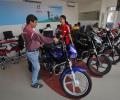
India's largest two-wheeler maker by volume - Hero MotoCorp (Hero) - posted a better-than-expected operating performance in the January-March (fourth quarter, or Q4) quarter of 2022-23 (FY23). Riding on higher average selling prices which were up 5 per cent year-on-year (YoY) and volume growth of 7 per cent, the company registered a 12 per cent growth in revenue to Rs 8,306 crore. The company sold 127,000 units in the quarter, largely driven by domestic sales which were up 11.6 per cent, while exports saw a sharp fall of 57 per cent over the year-ago quarter.
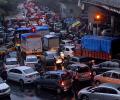
Passenger vehicle sales in India kicked off on a flat note in new fiscal 2024-25 with 3.38 lakh units sold in April, impacted by high base effect and muted demand due to the ongoing general elections. Dispatches of passenger vehicles from manufacturers to dealers were at 338,341 units in April 2024 as compared to 332,468 units in the same month last year, a growth of 1.77 per cent with major players Maruti Suzuki India, Hyundai and Tata Motors reporting marginal growth in their domestic wholesales.
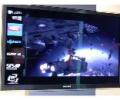
Cashing in on the interest generated in the three-dimensional world by films like Avatar, consumer electronics companies like Samsung, LG, Sony and Panasonic are gearing up to cajole Indian consumers to buy a 3D TV set

The Confederation of Indian Industry (CII) on Sunday urged Indian startups to keep their valuation "realistic" and distinguish between the goals of the organisation and its founder. "Startups may strive for long-term value creation rather than short-term valuations. "The valuations of businesses should be kept as realistic as possible," CII said in its Corporate Governance Charter for Startups.
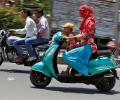
After lagging behind other segments in the automotive (auto) space over the past few years, two-wheelers are expected to reverse their volume underperformance. After witnessing a 36.3 per cent volume decline over the 2018-19 (FY19) through 2021-22 (FY22) periods, the sector staged a recovery in 2022-23 (FY23), with volumes rising 17 per cent. While volumes are still a quarter lower than the FY19 peak of 21 million units, a double-digit growth trajectory is expected to prolong.
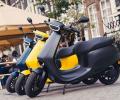
Even though electric two wheeler (e2W) companies saw a slight recovery in July of 12 per cent with 49,518 registrations - after a wash out in June because the government slashed the FAME 2 subsidy by a third - registrations are still lower for the second month in a row compared to April FY24. The slow pace has raised doubts about whether the registrations will reach anywhere near either Niti Aayog's ambitious target of 2.4 million vehicles in FY24 or whether they will be closer to the trimmed down industry expectation of around one million. In June, e2W registrations plunged to a mere 44,253, the worst month in more than a year, as companies hiked scooter prices.
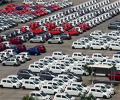
Passenger vehicle sales are expected to experience muted growth in the current financial year.

The Ministry of Heavy Industries has approved 11 electric vehicle (EV) manufacturers, including Ather Energy, Bajaj Auto, Hero MotoCorp, Ola Electric, and Mahindra, to receive incentives under the recently introduced Electric Mobility Promotion Scheme (EMPS) 2024. "A total of 11 firms have been granted approval under the EMPS, with several more under consideration," informed a senior official of the ministry to Business Standard. The scheme aims to sustain the growth in EV sales, replacing the Faster Adoption and Manufacturing of Electric Vehicles - II (FAME-II) scheme.
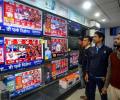
Consumers may have to shell out more to buy television panels as manufacturers say they may raise prices again in April. The industry has been facing this issue of price rise post the pandemic and open cell prices have gone up by around 30 per cent in the last one year. And, television panel manufacturers expect this trend to continue.

The once-powerful Japanese major is left with little to show in the face of sustained competition from rivals.

Companies, which missed out on listing earlier, are giving it another shot but with significantly-reduced issue sizes. In the recent past, companies such as TVS Supply Chain Solutions, Suraj Estate Developers, and ESAF Small Finance Bank have re-filed their draft red herring prospectuses (DRHPs) with the Securities and Exchange Board of India (Sebi). This came after they slashed their issue sizes by 20-60 per cent.
TVS Motor Company plans to launch about eight two-wheeler models, including six motorcycles in the next 15 months in an aggressive bid to increase its share in the world's second largest two-wheeler market.

The Softbank-backed company has set a price band of Rs 72 to Rs 76 per share for the maiden share sale and is expected to test the appetite for new-age loss-making companies.
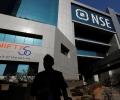
Five firms, including ACC Ltd, HDFC Asset Management Company and FSN E-Commerce Ventures that runs Nykaa, will be dropped from Nifty Next 50 index from September 29. NSE Indices Ltd, an arm of the National Stock Exchange, on Thursday said that Indus Towers and Page Industries will also be dropped from the index. Punjab National Bank, Trent, Sriram Finance, TVS Motor Company, and Zydus Lifesciences will be included in the Nifty Next 50 index, NSE Indices said in a statement.

Notwithstanding the ongoing decline in equity markets week after week, August has proven to be the most successful since December for initial public offerings (IPOs). In August of this year, six companies have collectively raised approximately Rs 4,269 crore through IPOs.

Banerjee said her microphone was stopped after five minutes, while other chief ministers were allowed to speak for longer durations.
TVS Electronics Ltd has posted a net profit of Rs 4.50 million for the quarter ended December 31, 2002 as compared to Rs 12.30 million in the quarter ended December 31, 2001.
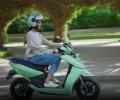
'Our expectations are that we will be able to double our market share from 14-15 per cent currently to around 30 per cent by the end of the financial year.'

Can Bhavish Aggarwal upend the electric two-wheeler market, which is now overwhelmingly in favour of scooters?

Tata Motors is likely to exit the S&P BSE Sensex and the Nifty50 indices once the demerger process of its commercial vehicle (CV) and passenger vehicle (PV) businesses is complete, analysts at Nuvama Institutional Equities said. They have compared the development with Reliance Industries (RIL) and Jio Financial Services, which got listed separately and eventually (in the next few days) got excluded from the domestic indices.
TVS Motor Company Ltd has posted a net profit of Rs 324.80 million for the quarter ended December 31, 2002 as compared to Rs 106.80 million in the quarter ended December 31, 2001.
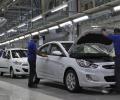
Leading automakers Maruti Suzuki, Hyundai and Tata Motors on Friday reported robust sales for February as demand for sports utility vehicles continued to remain strong. Mahindra & Mahindra, Toyota Kirloskar Motor and Honda Cars also witnessed higher vehicle dispatches to dealers last month. February turned out to be the third-best month for sales for the industry ever.
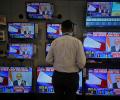
The cost of open cells has seen an average increase of between 3 and 20%, and is higher for larger screen TVs in July, according to manufacturers of televisions

Kinetic on Wednesday relaunched the iconic two-wheeler Luna in an electric avatar, addressing the demand for affordable electric vehicles (EVs), more than two decades after its initial introduction. e-Luna will be available at an introductory ex-showroom price of Rs 69,990, as announced by Sulajja Firodia Motwani, founder and chief executive officer of Kinetic Green, after Union Road Minister Nitin Gadkari launched the vehicle. Motwani pointed out that the current top 10 electric two-wheelers in the country are priced between Rs 1.05 lakh and Rs 1.49 lakh, making them a "luxury" that is not "practical and accessible" for most people in India.
'The whole narrative will change from TV is dying to TV-plus-digital is the future.'

The S&P BSE Midcap and the S&P BSE Smallcap indices have managed to stay afloat in a volatile January that saw the frontline indices hit their respective 52-week high levels and then slip. While the S&P BSE Sensex has lost over 2 per cent thus far in January, the S&P BSE Midcap and the S&P BSE Smallcap indices have gained nearly 2.5 per cent and 4 per cent, respectively during this period.
The US Federal Reserve's interest rate decision, global cues, macroeconomic data announcements and the ongoing quarterly earnings are the major triggers that will dictate trends in stock markets this week, analysts said. Besides, the trading activity of foreign investors and the movement of global oil benchmark Brent crude will also be tracked. "All eyes are on the outcome of the US Federal Reserve meeting scheduled for November 1, particularly due to the multi-year high levels of the US bond yields.
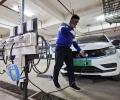
New Delhi's timing couldn't have been worse, both for India's fledgling electric vehicle (EV) sector and prospective electric bike buyers. It was hard to miss the perfect storm brewing for India's EV industry since early 2022. On one hand, you had several accidents involving battery fires that unnerved consumers; on the other, uncertainty had crept in over subsidies.
