
At present, the FDI limit for FM radio companies is 20 per cent. A senior Trai official has indicated that it could recommend an increase between 26 and 74 per cent.
TRAI said it will submit recommendations on the TDSAT's directive to work out a level playing field between the cellular and basic operators offering wireless in local loop services, to the government in 2-3 months.
After the quality of service regulations for cable operators in CAS-notified areas, Telecom Regulatory Authority of India has recommended a slew of service obligations for Direct-To-Home operators.
Congestion level is rising with surging mobile subscriber base resulting in loss of calls and poor quality of service, but the Telecom Regulatory Authority of India says it cannot issue show cause over this lapse as the matter is subjudice.
Trai has announced that it may fix prices of pay channels on the direct-to-home (DTH) platform in line with the Rs 5 per channel cap on conditional access system (CAS) services in Delhi, Mumbai and Kolkata. This move will lower the fees but hit the income of broadcasters from DTH companies. However, new DTH entrants will benefit from the move as their cost of content will decrease. For the 2 existing DTH companies, Dish TV & Tata Sky, the current rates are likely to continue.
Private GSM operators on Thursday got a reprieve from Supreme Court, which has stayed Telecom Regulatory Authority of India's notices asking them to refund excess charges levied from customers on calls made to the networks of PSU telecom firms.
Trai suggested steps to ease regulatory norms for mergers and said that there should be no cap on the number of mobile operators in India.
The refusal to auction 2G spectrum ensures that the debate over Trai's recommendations will centre on whether one group was favoured over the other in the past and whether one wrong justifies another.

VAS operators constantly complain that as they provide features, content and a wide range of services like ringer tunes to mobile operators for their customers in the absence of a proper regulatory structure, they don't get adequate financial returns from telcos.

Bharti Airtel Chairman and Managing Director Sunil Bharti Mittal, Vodafone Plc CEO Vittorio Colao, Telenor CEO Jon Fredrik Baksaas and Idea Cellular Chairman Kumar Mangalam Birla on Wednesday met ministers and senior government officials to present the industry's concerns over telecom regulator Trai's proposals on the auction of spectrum.
Finally, Trai has also said that spectrum can be shared between only two operators, not three.

With over 135 news channels, about a third owned by politicians and real estate guys, the news TV market is a nightmare, says Vanita Kohli-Khandekar.
Telecom regulator TRAI has said private GSM operators were acting as a "cartel" against MTNL and BSNL and charging higher tariffs from customers for calls terminating in the networks of the two state-run companies.

Demanding a level playing field for the old operators, Bharti group chief Sunil Mittal told PTI: 'our view is that the spectrum given to us and other operators from time to time is under a policy and there is no question of any additional payment for this.'
Leading mobile phone operators came down hard on the telecom regulator on a day when most saw their stocks on a crash course.

Telecom minister A Raja had said that mobile tariffs should come down to 10 paise for local calls and for 25 paise STD calls per minute.
A day after reprimanding Zee-Turner for switching off TV channel signals to a subscriber without proper notice
Telecom regulator Trai on Wednesday released draft recommendations on rural telephony for overcoming various constraints coming in the way of increasing telecom penetration in rural India.

The final minimum price of Rs 14,000 crore (Rs 140 billion) for 1800 Mhz band and Rs 18,200 crore for 800 Mhz was decided by government based on initial recommendation made by Telecom Regulatory Authority of India.
Once BARC starts functioning, the inadequacies of the present system will have to be effectively addressed in close and coordinated manner with the ministry of information and broadcasting, Trai said, while suggesting initiation of activities by BARC by January 2009. BARC can have two nominees from the ministry of information and broadcasting on its board, Trai suggested.
Telecom Regulatory Authority of India on Monday failed to get any interim relief from the Supreme Court as it refused to stay telecom appellate tribunal TDSAT's order restricting regulator's jurisidiction to effect changes in the agreement signed bet
The Telecom Regulatory Authority of India on Friday recommended lowering spectrum charges paid by service providers to the government to 4% from 6% -- a move which may further bring down telecom tariffs.
In its recommendations to the government, Trai said the provision of calling cards would allow consumer to exercise choice of long distance operator for the national and international calls. The authority has, therefore, recommended amendment of NLD/ILD operators licence conditions to allow them to access customers directly for national and international long distance calls, respectively.

In May, Trai had gave its recommendations on a 'Spectrum Management and Licencing Framework', in which it had said that consequent to the merger of licences in a service area, the total spectrum held by the resultant entity post-merger shall not exceed 12.4 MHz for GSM technology, or 10 MHz in case of CDMA technology.

The Telecom Regulatory Authority of India (Trai) on Monday proposed a high reserve price for telecom spectrum to be auctioned, at nearly Rs 3,622 crore (Rs 36.22 billion) per MHz in the 1,800-MHz band (for GSM services).

Uninor added 8.53 lakh subscribers to take its base to 4.01 crore during the reported period.
Telecom Regulatory Authority of India on Friday indicated that prices of international bandwidth could come down by as much as 70 per cent, which would give major boost to the spread of broadband services in the country.

The recommendations on the subject will be sent in due course to the government, according to an internal communication of DoT
TRAI's recommendation to the Department of Telecommunication is aimed at encouraging faster provision of high-speed Internet services (broadband) by standalone ISPs.\n\n\n\n
Retaining the same number while changing the service provider may become a reality for Indian subscribers, as the Telecom Regulatory Authority of India would issue a consultation paper on 'number portability' in a month's time.

Rahul Khullar, Trai chairman beleives politicians and corporates who own media houses should give freedom to editors.
Value-added services (VAS) and mobile-content providers may soon come under a licensing regime. Security concerns regarding VAS have come to the forefront in the ongoing debate over security issues surrounding Blackberry services in India.
Continuing its pressure on wireless in local loop operators whose tariffs do not meet the criteria specified by it, telecom regulator TRAI has sought clarifications from Tata Teleservices though the company maintained that its WLL tariffs.
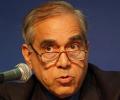
Mishra, a 1967 batch Indian Administrative Service officer from the Uttar Pradesh cadre, has served in various administrative field positions.
The government on Wednesday accepted spectrum review committee's recommendation of allocating additional frequency to existing GSM operators based on TRAI's subscriber linked formula and in multiples of 1 MHz.
Telecom regulator Trai on Wednesday said it would announce the revised tariffs for basic telecom services in the next two-three days.
