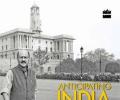
Shekhar Gupta's anthology is a valuable addition to our understanding of the seeming muddle that is India... The experience of reading his columns is more like a chat with a friend in the afterglow of an enjoyable drink, but never frivolous, says Shreekant Sambrani.
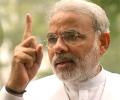
'The speeches of Modi in Assam, Bengal, Kerala, Baghpat and the border areas of Bihar, overplaying the themes of terrorism, izzat of mothers and sisters, are to be read carefully to understand that he is trying to keep the fear of Muslims alive in the Hindu masses,' says Apoorvanand.

An average team even with a great idea can spell the death of a start-up.

Pranab Mukherjee's book The Dramatic Decade: The Indira Gandhi Years takes the readers through the economic and social unrest of the period leading up to the emergency, rise and fall of leaders, many splits within the Congress, while promising to offer more in the next two volumes of the trilogy, says Nivedita Mookerji.
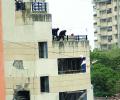
How can a State be so criminally neglectful towards the safety of its citizens, asks Tarun Vijay.
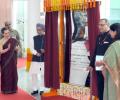
Here is the complete text of the Prime Minister Dr Manmohan Singh's address at the inauguration of the national media centre in New Delhi on Saturday.

It is the duty of a tax payer to record all his/her transactions, to explain sources of payments made by him/her and to declare the true income in the returns of income filed every year.

Nilanjana S Roy compiles a list of the most eagerly awaited books next year.

From Arvind Kejriwal to Priyanka, this has been a media-determined election. Two forces stand poised, the people inventing new politics and the media inventing its own version of that politics, says Shiv Visvanathan.

Here's everything you need to know about To Kill a Mockingbird.
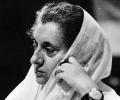
Veteran journalist Coomi Kapoor, whose book came out recently, speaks to Sheela Bhatt/Rediff.com about Independent India's darkest phase.

A group of young women and men have had enough of moral policing in Kerala. On Sunday, November 2 they plan to meet at Kochi's Marine Drive and stage a somewhat unique protest that involves... kissing.

November 12 marks 25 years of the beginning of the World Wide Web. Shivanand Kanavi gives us the story of how it all began.

Why has a nation created on strong secular principles slowly chipped away those essential values? Why are so many Indians willing to compromise their freedoms and those of their compatriots for the cause of economic progress and to see a shining India,' asks Aseem Chhabra.

'Narendra Modi could be too old to change his personality. On the other hand, his attachment to the RSS could be mostly sentimental. So one must hope that if he becomes prime minister, he is able to detach himself from the RSS view of the world as completely as Narasimha Rao detached himself from the Congress's First Family.' 'India cannot be governed by the autocratic methods by which he has governed Gujarat. If he becomes prime minister he will have to learn to speak in a more civil language about his political opponents,' historian Ramachandra Guha tells Arthur J Pais/Rediff.com

How do you translate a first love into a profession? How do you become a writer once you set your heart on it? Susmita Bhattacharya, who once worked as a graphic designer in Mumbai, now teaches the basics of English to newcomers to Britain and is also a creative writing tutor. Her first novel The Normal State of Mind was published earlier this year after a grim battle with cancer.

'Manto is the only writer to grasp what the project of Pakistan would eventually mean,' says Aakar Patel, who has translated a collection of Saadat Hasan Manto's essays in a just-released book Why I Write.

'I like the thought that I am competing successfully with writers much younger than me,' says Ruskin Bond.

'If the State does want to come after you, in India, it can do pretty much anything. And often it isn't as though the orders are coming from the President or prime minister, no, the systems have been built in a way -- or we have allowed them to be built in a way -- that almost encourages crushing of liberties.'

Prem Panicker, a keen follower of the game and one of cricket's finest writers, interacted with readers on the Rediff World Cup Chat.

'Prime Minister Manmohan Singh refused to allow us to project his real personality to let the people of India know exactly what he really was. He was always shying away from greater public exposure. Since the last two years we have seen enormous criticism, ridiculing the prime minister. He has been made into an object of jokes. It certainly hurts. I think this man deserves lots of good reviews... His contribution to social policy, his contribution to the economy, his contribution to coalition management, his contribution to foreign policy.' Dr Sanjaya Baru, Dr Singh's former media advisor who is in the eye of a storm over his book on the prime minister UPA speaks to Rediff.com's Sheela Bhatt.
 © 2026 Rediff.com - Investor Information - Advertise with us - Disclaimer - Privacy Policy - Sitemap - Feedback - About us - Terms of use - Grievances