
'The state governments of Gujarat, Maharashtra and Tamil Nadu will be encouraged to consider measures of their own as the employment and economy in such export-oriented states will be affected.'

The textiles ministry is in favour of a reduction in textiles tariffs under ongoing World Trade Organisation negotiations on market access, but said overall reduction in the case of developing countries should be lower than developed countries.

According to an industry expert, companies such as Trident, Welspun India, Arvind, KPR Mill, Vardhman Textiles, Page Industries, Raymond, and Alok Industries stand to gain, as revenue from the US market accounts for 20-60 per cent of their earnings.

The new area expansion would help in increasing the production of silk from the present 23,000 tonnes per annum to 32,000 tonnes, a growth of 39 per cent.

To burnish production-linked incentive (PLI) schemes, the government is considering an overhaul of some of them relating to sectors such as textiles and pharma, and making incentive payments quarterly, officials in the know said. In a bid to cut the delay in processing incentive claims, the government is looking at switching to a quarterly disbursement of incentives. Currently, in most schemes, incentives are annual.
The textile sector will get a major boost in terms of infrastructure in next 100 days with the government opening two integrated textile parks, pumping in additional resources of Rs 1,660 crore (Rs 16.60 billion) for cotton MSP and launching training programmes for 50,000 weavers.
Ahead of the Budget 2009-10, Textiles Minister Dayanidhi Maran on Friday said efforts will be made to provide fiscal relief, including service tax exemption, to textile exporters reeling under waning global demand.
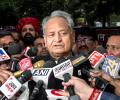
"I sometimes think of leaving it, but the chief minister's post doesn't leave me," Ashok Gehlot famously said earlier this year, in part as a signal to the Congress top brass not to pick someone else for the job if the party wins the assembly polls.
Making out a case for further rationalisation of duties, Textiles Minister Kashiram Rana Tuesday said his ministry would seek implementation of the N K Singh committee recommendations for the sector in the ensuing Budget.

The textile ministry had organised a show at Elephanta Caves in Mumbai to promote the artisans and revive arts and culture.

Being made a member of the Cabinet Committee on Political Affairs makes her an important player in BJP politics, observes Rashme Sehgal.

You may no longer have to rely on international size charts.

In addition, 22,533 'Make in India' ventilators have been delivered to various states, Union territories and central institutions, the ministry said, adding that the Centre is also ensuring the installation and commissioning of the machines.

Union Budget has given mixed bag of response for the recommendations of Textile Industry. Some of the provisions in the budget that could have a direct and indirect bearing on the Textile and Clothing Industry are as follows.
Extending the job guarantee programme much beyond digging ponds and building roads, work allotted under NREGA may cover garmenting giving employment to lakhs of people, Textile Secretary Rita Menon has said.
The Textile Ministry on Tuesday said it was awaiting clearance from the Maharashtra government for the International Convention Centre to come up at Mumbai with an approximate investment of Rs 700 crore (Rs 7 billion).

Irani said: "Everyone should work within the ambit of law. If somebody flouts laws unconstitutionally they will not get support from the BJP."

In two other changes, young MP Milind Deora, MoS in telecommunication and information technology ministry, got additional the portfolio of Shipping in the same rank and Panabaka Laxmi, who was made MoS in textile ministry on Sunday, was reallocated petroleum and gas department.

Talking to media persons after taking charge of the new portfolio, she side-stepped questions about Bharatiya Janata Party president Amit Shah being behind her shift saying it is not individuals but the party who takes such decisions.
The commerce ministry recently announced that it intends to switch over to a small negative list for trade with India by the end of February and to phase out this regime by the end of the year.

The government on Wednesday said it is confident that textiles exports target of USD 33 billion for 2011-12 will be achieved as there is a good demand from markets like Japan and Latin America.

Government on Monday came out with fresh guidelines to disburse Rs 1,972 crore (Rs 19.72 billion) during the period April 28, 2011 and March 31, 2012, to the textile industry under Technology Upgradation Fund Scheme (TUFS).

Hit hard by volatility in yarn prices, 50% of the looms said to be operating only 3-4 days a week.

Last week, Indiabulls Infratech, part of the Indiabulls group, bagged NTC's Bharath Mill land, spread over 8.3 acres, in Mumbai for Rs 1,505 crore (Rs 15.05 billion).

The cash-starved Indian textile industry is of the view that the Technology Upgradation Fund Scheme, or Tufs, flagship scheme of the textiles ministry, has lost its shine, as economic slowdown has put modernisation and expansion plans of companies on hold. The industry says there are more basic problems that the government needs to address.

The product was banned for export earlier, but has now been moved to the restricted category, under which an exporter would have to seek a licence from the government for shipments.
The textile ministry, in its Budget wish list, has recommended additional tax benefits and increased interest subsidy for exporters.
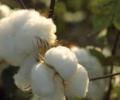
The country has generated an additional income of Rs 10,000 crore (Rs 100 billion) to Rs 12,000 crore (Rs 120 billion) annually because of its higher yield, J N Singh, joint secretary in the Union textiles ministry, told Business Standard.

The textile industry is the second-largest employer in the country, employing about 32 million, and the government is banking on it to absorb millions of youth.
The government's estimate that 300,000 to 500,000 people will lose their jobs -- is well below the projections of industry lobby groups, which put the number at around 1 million. The textiles and garments industry is the second-largest employer in India after agriculture. It directly employs 35 million people and indirectly provides livelihood to about 88 million people.
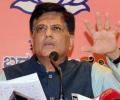
Irani's deputy in the I&B ministry Rajyavardhan Singh Rathore has been given the charge of the key portfolio.

According to sources close to the development, the ministry feels that the National Textile Corporation (NTC), which has put the land on sale, will get better prices than the bid put in by Lodha Developers. The company, which had initially placed a bid of Rs 657.90 crore (Rs 6.57 billion), later hiked it to Rs 710 crore (Rs 7.1 billion), following a request from NTC.

Powerlooms and a lack of policy have pushed heritage art towards extinction, say Shreya Jai and Subhayan Chakraborty.
Prime Minister Manmohan Singh has convened a meeting on Wednesday on bailing out the textile industry following the surge in input costs due to a sharp hike in the minimum support price of cotton in September.
Under the scheme for integrated textile parks, the government provides up to 40 per cent of the cost of setting up a textile park with a ceiling of Rs 40 crore (Rs 400 million). Till now the ministry has contributed Rs 450 crore (Rs 4.5 billion). The industry has pitched in with nearly double this amount.
How do you provide health care to handloom weavers, who occupy among the poorest segments in the unorganised sector? There are 6.5 million of them scattered across the country and are not always fixed in their occupation.
India is all set to train a large number of cotton traders from African countries from Tuesday.
 © 2026 Rediff.com - Advertise with us - Disclaimer - Privacy Policy - Sitemap - Feedback - About us - Terms of use - Grievances