
State Bank of India (SBI), in a report on Friday, claimed a significant decline in the headline poverty ratio in rural areas on account of enhanced physical infrastructure, higher consumption growth in the bottom fractile and direct benefit transfers (DBTs).
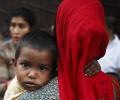
The 14-member task-force will develop a working definition of poverty.

It is also a reservoir for human labour in the state, producing hundreds and thousands of bodies who build the state's highways, run its small and medium enterprises (SMEs) and work its farms.

The committee, to be constituted in a couple of months, would take a comprehensive view on the entire method of estimating poverty, including the Socio-Economic Caste Census 2011.

The Planning Commission in May 2012 had constituted the expert group under the then Prime Minister's Economic Advisory Council Chairman C Rangarajan to review the Tendulkar Committee methodology for estimating poverty, following an uproar over the number of poor in the country.

The Planning Commission's de-linking entitlement benefits for the poor from the Suresh Tendulkar committee's recommendation on determination of poverty has left a big question mark on the number of beneficiaries to be covered under the proposed Food Security Act.

Poverty in the country fell 7.4 percentage points in the past five years.
National estimates of the percentage of the population falling below the poverty line are based on surveys of sub-groups, with the results weighted by the number of people in each group.

The overall poverty figure is 37 per cent and not 27 per cent as was estimated in 2004.
.jpg)
The number of poor in the country declined to 27 crore (270 million) in 2011-12, from 40.74 crore in 2004-05, Minister of State for Planning and Parliamentary Affairs Rajeev Shukla said on Wednesday.

The Survey estimated that a UBI that reduces poverty to 0.5 per cent would cost 4-5 per cent of GDP, assuming that those in the top 25 per cent income bracket are not part of the loop.
Between FY05 and FY12, rural poverty declined at 2.3 per cent per annum and urban at 1.69 per cent.

The recent release of the updated index for comparing the value of currencies across countries - generally known as purchasing power parity, or PPP - will have far-reaching implications.

'The Indian economy has been subsidised by the poor.'

The Planning Commission's latest poverty estimates, based on the 2011-12 consumption expenditure survey, shows that across India, the number of people living below the poverty line declined by more than 15 percentage points -- from 2004-05 to 2011-12 and from 37 per cent to 21.9 per cent.
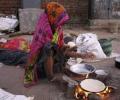
India could gain four times over by winding up dysfunctional subsidies.
 © 2026 Rediff.com - Advertise with us - Disclaimer - Privacy Policy - Sitemap - Feedback - About us - Terms of use - Grievances