
The Indian government has strongly refuted Elon Musk's allegations that Starlink's satellite communication services are being blocked in the country, asserting that a fair and non-discriminatory regulatory framework is in place for all telecom providers. The government emphasised that compliance with security norms is mandatory for all licensees, including Starlink, Jio Satcom, and Eutelsat OneWeb, all of whom are currently undergoing security assessments.

Elon Musk questioned if Mukesh Ambani is India's "real boss" amidst Starlink's licensing issues, drawing a cryptic response from Rahul Gandhi. The Indian government clarified that security assessments are pending for all satcom licensees, not just Starlink, and the delay is due to the Ministry of Home Affairs.

The Finance Ministry has clarified that the decision to impose a 0.4% Merchant Discount Rate (MDR) on UPI transactions above Rs 2,000 was made independently, refuting claims of foreign influence. The ministry stated the policy aims to build a self-sustaining digital payments ecosystem, with MDR funding infrastructure and supporting small merchants.

The Finance Ministry has clarified that the 0.4 per cent Merchant Discount Rate (MDR) on UPI transactions above Rs 2,000, effective October 15, is not expected to increase cash transactions or cause inflation. The ministry also dismissed allegations of US pressure influencing the decision, asserting that the policy aims to promote RuPay credit cards within the UPI ecosystem, and a monitoring mechanism will ensure the MDR burden is not passed on to consumers.
The Finance Ministry has refuted allegations that US pressure influenced the decision to levy a 0.4% Merchant Discount Rate (MDR) on select UPI payments. It clarified that NPCI guidelines prioritise RuPay credit cards on UPI to foster a domestic payment ecosystem and that the MDR introduction aims to create a sustainable revenue model for smaller domestic companies, thereby protecting India's sovereignty in digital payments.

The Finance Ministry has refuted allegations that US pressure influenced the decision to levy a 0.4 per cent Merchant Discount Rate (MDR) on select UPI payments. The ministry clarified that the NPCI guidelines prioritise RuPay credit cards on UPI to promote domestic alternatives and ensure a self-sustaining revenue model for smaller domestic companies, countering claims of favouring foreign payment providers.

Elon Musk, CEO of SpaceX, stated that Starlink's services in India must be affordable for widespread adoption and that competition would benefit consumers, despite potentially reducing Reliance Jio's profits. He criticised Reliance Jio as a 'de facto monopoly' in India, alleging that certain business conglomerates were blocking Starlink's entry.

Many who track the ministry and the technology sector closely believe that the space won't see much impact on the policymaking side, but the gestation time for regulations might get long, as now there could be a wider consensus-building exercise on policy matters under a coalition government.

The Centre has announced a major bureaucratic reshuffle, appointing Prakash Rajpurohit as Deputy Election Commissioner and approving appointments for 27 civil servants at joint secretary and equivalent levels across various ministries and departments.

Bharti Airtel Chairman Sunil Bharti Mittal stated that his satcom venture, Eutelsat OneWeb, is 'significantly ahead' of Elon Musk's Starlink in the Indian satcom queue, having applied for a licence five years ago, and expressed a desire to receive regulatory approval before Starlink.

The National Payments Corporation of India (NPCI) has informed the Supreme Court that merchants are prohibited from passing on Merchant Discount Rate (MDR) charges to customers under the new UPI pricing framework. This clarification comes in response to a petition challenging the imposition of MDR on UPI person-to-merchant transactions exceeding Rs 2,000, with NPCI defending the revised framework as crucial for the sustainability of the UPI ecosystem.

The employees, who will avail the VRS, would get an ex-gratia amount of 60 days salary (basic + dearness allowance) for each completed year of service, or salary for the number of months left in the service, whichever is less.

"The fact of the matter is we need policies in place. There are no policies in place to ensure that spectrum is adequately and effectively used. There are no policies in place for audit for companies that actually buy spectrum. We must put in place (policies) to ensure that there is spectrum sharing, spectrum trading," Telecom minister Kapil Sibal said at the FICCI Annual General Meeting.

If the status is approved for ITI, it will get preference in the supply of technology products required by the defence services.
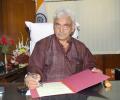
Manoj Sinha, earlier minister of state for railways, will be tasked to conduct the auction and deal with issues like net neutrality.

Former NITI Aayog vice-chairman Rajiv Kumar has urged the government to maintain zero-fee UPI transactions for several more years, arguing that the benefits of UPI as a public good outweigh the costs. This comes amidst the government's recent decision to introduce a 0.4% fee on person-to-merchant UPI transactions above Rs 2,000 from October 15, a move that has drawn criticism.

The telecom ministry will set up an intelligence unit and a consumer protection system as part of continuing efforts to tackle the menace of pesky calls as well as to take strict action against financial frauds perpetrated using telecom resources.

The Indian government has introduced a 0.4% transaction fee on Unified Payments Interface (UPI) payments exceeding Rs 2,000 for merchants, effective October 15, marking the end of nearly six years of free service. Person-to-person transfers and small-value transactions below Rs 2,000 remain free. The new Merchant Discount Rate (MDR) is capped at Rs 300 for transactions above Rs 75,000, with differentiated rates for essential sectors and investments, and safeguards to prevent costs from being passed to consumers.
The Indian government has introduced a 0.4% Merchant Discount Rate (MDR) on UPI person-to-merchant (P2M) transactions exceeding Rs 2,000, effective October 15. This move ends nearly six years of fully free UPI payments, though person-to-person (P2P) transfers and small P2M payments remain free. The charges aim to bolster investment in UPI infrastructure, with specific exemptions and caps for essential sectors.

Flash floods in Tibet's Gyirong County, near the China-Nepal border, have resulted in five deaths and 558 missing individuals, including 260 foreign nationals. The disaster also caused significant casualties in Nepal and disrupted infrastructure. Rescue operations are underway, and concerns are rising over a newly formed barrier lake that poses a risk of further flooding.

The National Payments Corporation of India (NPCI) stated that the Merchant Discount Rate (MDR) "is distributed only amongst the UPI ecosystem, to further invest into infrastructure resilience, innovation, cybersecurity (protecting the UPI infrastructure with banks and non-banks) and customer service."

The government is introducing a 0.4% Merchant Discount Rate (MDR) on UPI person-to-merchant payments above Rs 2,000, effective October 15. This move ends the zero-MDR regime, aiming to fund UPI infrastructure and sustainability, as the previous government subsidy was insufficient to cover operational costs. Payments between individuals and most everyday merchant transactions will remain free.

Devastating flash floods near the Tibet-Nepal border have led to the evacuation of over 1,000 people, including tourists, from Gyirong County. The floods caused casualties in both Tibet and Nepal, disrupted infrastructure, and prompted a Level-IV alert due to a rapidly forming barrier lake with a high risk of breaching and causing further downstream flooding.

'Wages have not risen. Rural wages have stagnated. The growth was 0.7 per cent last year. For casual and irregular labour, the wage growth is negative.'

The Comptroller and Auditor General of India on Monday reported multiple irregularities in the accounts of units under the IT and telecom ministries, including purchases of hardware and software worth Rs 890 crore by NICSI in contravention of rules. In its audit report for financial years 2017-18 and 2018-19, the Comptroller and Auditor General (CAG) has flagged anomalies in the decision taken by state-run telecom firm BSNL, C-DoT, the Department of Posts, ITI Limited and CDAC that had adverse financial implications. "NICSI procured hardware and software costing Rs 890.34 crore through the 'Strategic Alliance' route in contravention of General Financial Rules, 2005 and departmental instructions and thus failed to ensure transparency and competitiveness in the procurement process," according to the CAG report tabled in Lok Sabha on Monday.

This has to be one of the most blatant tricks Raja is pulling off.

Airtel, which upgraded all postpaid customers to priority plans, argued that the service did not throttle or degrade the experience for its prepaid customers, forming the majority of its 368 million customers in the country.

Instant messaging platform Telegram has been restored in India after a week-long government ban, imposed due to its alleged role in circulating leaked NEET examination papers, expired. The Delhi High Court had upheld the ban as lawful and necessary.

The government will lift restrictions on the sale of petrol and diesel to commercial and industrial consumers from July 1, easing emergency measures imposed to manage fuel supplies.

India's exports of printed circuit boards (PCBs) to China dramatically increased over 40-fold to $1.5 billion in FY26, indicating a significant shift where China is increasingly importing simpler electronic assemblies from India as it focuses on higher-value manufacturing domestically.

The Indian government has restricted industrial, commercial, and institutional users from purchasing petrol and diesel from retail petrol pumps, directing them to bulk sale points instead. This move, which can last up to 90 days, aims to address abnormal demand growth and prevent localised shortages caused by a significant price difference between retail and bulk fuel prices.

The Jerusalem District Court has postponed Israeli Prime Minister Benjamin Netanyahu's scheduled testimony in his ongoing corruption trial due to security and diplomatic considerations, as requested by the defence.

The Karnataka government is reviewing its data centre policy to prioritise sustainability due to concerns about the significant water and energy consumption of data centres. The government is exploring coastal locations like Mangaluru for future data centre development and focusing on smaller-scale data centres.
Only 2.5 per cent of the equity in Jio Platforms will be offloaded through the OFS route -- meant for secondary share sale.

The Budget allocation includes the construction of new lines and the purchase of locomotives, wagons, and coaches, among other works.

The Supreme Court has directed the CBI to conduct a pan-India investigation into digital arrest scams and questioned the RBI about its lack of AI usage in detecting and freezing accounts used by cybercriminals.

The US wants India to recognise internationally accredited labs, harmonise labelling requirements and the validity period of test reports and certification with global practices, and eliminate retesting requirements.

Apple does not plan to comply with the mandate to preload mobile handsets with the 'Sanchar Saathi' app and will convey its concerns before the Indian government, Reuters reported on Tuesday, citing three unnamed sources.

App-based communication services providers and Indian telcos are at loggerheads over the SIM-binding directions issued by the department of telecom, which are to be complied with by the end of February 2026.

Of the total proposed allocation, over Rs 1 lakh crore is meant for BSNL and MTNL-related expenses, including Rs 82,916 crore infusion in BSNL for technology upgradation and restructuring at BSNL.
