
Stocks in the automotive, financial, cement, metal, and hotel sectors are likely to benefit if the Narendra Modi-led Bharatiya Janata Party (BJP) comes back to power for a third time. The key investment themes have been identified after analysing the Sankalp Patra - the party's manifesto for the next five years - released on Sunday.
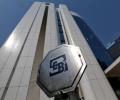
Capital markets regulator Sebi has kept in 'abeyance' the proposed initial share sale of securities depository NSDL. However, the Securities and Exchange Board of India (Sebi) did not clarify further. The National Securities Depository Ltd (NSDL) filed its preliminary papers with the capital markets regulator on July 7.

Tata Sons Private Limited, the holding company of the Tata group, witnessed a precipitous drop in its net debt to Rs 5,656 crore in the 10 months ended January this year, as its cash reserves burgeoned to Rs 9,516 crore during this period. Eight years ago, in 2015-16, Tata Sons reported a net debt of Rs 5,132 crore; from March 2017 until March 2023, this figure was above the Rs 14,700 mark, peaking at Rs 27,437 crore at the end of March 2019, according to data sourced from Capitaline. The company's gross debt nearly halved to Rs 15,173 crore until January 2024 on a standalone basis, down from a peak of Rs 31,363 crore reported in the financial year ended March 2019.

'We emphasise the importance of not basing investment decisions solely on electoral outcomes.' 'Instead, focusing on investing in high-quality businesses capable of prospering regardless of the political landscape is paramount.'

Capital markets regulator Sebi on Tuesday decided to gradually phase out buyback of shares by companies through the stock exchange route to address the drawbacks associated with the existing mechanism. Sebi chairperson Madhabi Puri Buch said the regulator has chosen the tender offer route for share buyback as the present mode is vulnerable to favouritism. "This is a glide path and will lead to the phasing out of the present buyback mode (through stock exchange route)," she told reporters after its board meeting in Mumbai.

This is the case even though the benchmark index is only 5 per cent below its all-time high. The list of stocks trading at a discount primarily consists companies in the automotive, banking, oil and gas, insurance, healthcare, and metal sectors.

Seven out of the 10 listed firms of Adani group have received show cause notices from the Securities and Exchange Board of India (Sebi) for alleged violation of related party transactions and non-compliance with listing regulations, the companies said in their regulatory filings to the stock exchanges. While group's flagship Adani Enterprises Ltd, renewable energy firm Adani Green Energy Ltd (AGEL) and city gas distributor Adani Total Gas Ltd said Sebi sent notices of their parent or holding company controlled by conglomerate's chairman Gautam Adani, ports company Adani Ports & Special Economic Zone, Adani Power, electricity transmission firm Adani Energy Solutions, and commodities firm Adani Wilmar said they have received Sebi notices.

The Securities and Exchange Board of India (Sebi) has asked fund houses operating smallcap funds with a large corpus to share data on their holdings in the total free float of smallcap stocks, according to sources. This is part of the stress tests that the regulator wants fund houses to undertake amid a surge in inflows into smallcap schemes and growing concerns about valuations. Free float refers to the quantum of freely available shares for trading on the stock market.

Dwaipayan Bose highlights the similarities and contrasts between ETFs and Index Funds.

BSE's fresh shot at cracking the derivatives market is off to a promising start. However, Asia's oldest bourse is facing resistance from brokerages with nearly 10 large brokers yet to offer the relaunched Sensex and Bankex derivatives on their platforms. Many brokers maintain that they are working on the back end to enable BSE derivatives on their apps and websites. Some said while volumes are picking up, they are still miniscule compared to bigger rival NSE, which is the most-preferred venue for derivatives trading. Only a few brokers responded to formal queries sent by Business Standard on the issue of allowing BSE derivatives on their platform.

Benchmark indices--Sensex and Nifty--were 0.7-0.8 per cent higher from the Saturday closing. Among the widely-tracked Nifty 50 stocks, 39 advanced and the rest 11 declined at the opening bell. Among the individual stocks, Cipla, ICICI Bank, Sun Pharma, Power Grid Corp, and Bharti Airtel were the top five gainers, while Asian Paints, Hindustan Unilever, Britania, HDFC Bank, and BPCL the losers, NSE data showed. On Monday, Indian stock exchanges were closed for trading on the occasion of Pran Pratistha of Ram Temple in Ayodhya.

Equity fundraising through qualified institutional placements (QIPs) has gained traction, thanks to supportive equity markets and the need for fresh fundraising to meet capital expenditure (capex) requirements.

In a bid to enhance its equity exposure and earn higher returns for its nearly 65 million subscribers, the Employees' Provident Fund Organisation (EPFO) is considering reinvesting 50 per cent of its exchange-traded funds (ETFs) redemption proceeds back into equity. Sources close to the development said a proposal regarding this was discussed in the investment committee (IC) meeting in October last year, and the recommendation has been sent to the Central Board of Trustees (CBT), the apex decision-making body of the EPFO for its approval. The next CBT meeting is scheduled to be held on Saturday.

The froth in the small and midcap (SMID) space is limited to a few pockets, but regulatory scrutiny could lead to sustained volatility, observe India's top-drawer wealth managers. They add that they have been advising clients to reduce their exposure to smallcaps. Anand Rathi Wealth, which manages investor wealth through mutual funds (MFs), reports that its exposure to smallcap stocks, both through MFs and directly, has decreased by nearly 7 percentage points in the past few months, now standing at 23 per cent.
Among the Sensex firms, NTPC, Tech Mahindra, UltraTech Cement, Bajaj Finance, ITC, Bajaj Finserv, Axis Bank and Power Grid were the major gainers. On the other hand, Mahindra & Mahindra, HCL Technologies, Titan and IndusInd Bank were among the laggards.

The government on Wednesday said there won't be any capital gain tax if physical gold is converted to an electronic gold receipt and vice versa.

Notwithstanding the ongoing decline in equity markets week after week, August has proven to be the most successful since December for initial public offerings (IPOs). In August of this year, six companies have collectively raised approximately Rs 4,269 crore through IPOs.

The stock of the country's largest passenger vehicle maker, Maruti Suzuki India (MSIL), has been hitting successive all-time highs over the past three trading sessions. The rally in the scrip has helped it notch over a 21 per cent gain since the start of February, outperforming the National Stock Exchange Nifty Auto Index. The gains for the leader of small passenger cars have been more recent, as the company still trails the Nifty Auto over one- and two-year periods.

Five firms, including ACC Ltd, HDFC Asset Management Company and FSN E-Commerce Ventures that runs Nykaa, will be dropped from Nifty Next 50 index from September 29. NSE Indices Ltd, an arm of the National Stock Exchange, on Thursday said that Indus Towers and Page Industries will also be dropped from the index. Punjab National Bank, Trent, Sriram Finance, TVS Motor Company, and Zydus Lifesciences will be included in the Nifty Next 50 index, NSE Indices said in a statement.
The Adani group plans to bid for setting up duty-free shops at the Macau international airport, as India's largest airport operator spreads its wings overseas. In a stock exchange filing, Adani Enterprises, the flagship firm of the conglomerate run by billionaire Gautam Adani, said it has completed the incorporation of a wholly-owned subsidiary, MTRPL Macau Ltd, in Macau on November 20. The subsidiary has been incorporated for the purpose of getting into the duty-free industry.

Micro-cap stocks are in the line of fire as market regulator Securities and Exchange Board of India (Sebi) is tightening its noose around investment in small-cap stocks. Given this, analysts suggest investors exit the segment, at least, for the time being. Independent market analyst, Ambareesh Baliga, for instance, said that regulators have gotten worried on the valuation front, though belated, which could prove to be the last straw on the camel's back.

Investors are reluctant to take long-term positions this year after the spectacular gains in 2023. The delivery-based trades on the National Stock Exchange (NSE) have declined to below 36 per cent this year from an average of 38.1 per cent in 2023. Investors tend to seek delivery for stocks where they see a long-term investment opportunity or tactical positional trade.

After a sharp rally in the equities market this year, investors could be better off rotating some funds towards the debt market. Experts believe several tailwinds could spur bond market returns over the next 12-18 months. These include India's robust macroeconomics, declining inflation, and the imminent passive flows of close to Rs 2.5 trillion on account of domestic sovereign bonds getting included in the JP Morgan global indices.

The domestic equity markets are expected to extend gains following the strong showing of the Narendra Modi-led Bharatiya Janata Party (BJP) in the state elections - a crucial precursor to the general elections in May. The BJP decisively secured victories in three of the four key states - Madhya Pradesh, Rajasthan, and Chhattisgarh. While the battles in these three states were closely contested, the scale of the BJP's triumph has surprised many, heightening expectations for regime continuity in 2024 - a positive catalyst for the markets.

JM Financial on Wednesday said it had a "careful and detailed review" of the Reserve Bank's order imposing restrictions on the company's financing business and asserted that there was "no material deficiencies" in its loan sanctioning process. The Reserve Bank on Tuesday imposed restrictions on JM Financial Products Ltd after it found the company indulged in various manipulations, including repeatedly helping a group of its customers to bid for various IPOs (initial public offerings) by using loaned funds. "After careful and detailed review of the order issued by the RBI on the action against JM Financial Products Ltd, we strongly believe that there have been no material deficiencies in our loan sanctioning process.

The National Stock Exchange (NSE) on Monday cautioned investors against some fraudsters running illegal dabba trading with guaranteed returns to investors. Dabba trading is an illegal form of trading in shares, where operators of such trading rings allow people to trade in equities outside the stock exchange platform. The cautionary statements came after NSE found that the entities -- Shri Parasnath Commodity Private Limited, Shri Parasnath Bullion Private Limited, Faary Tale Trading Private Limited and Bharat Kumar (associated with Trade with Trust) --were providing dabba or illegal trading platform with assured returns.
New-age tech tools and 'mystery shoppers' are helping the country's top bourse stay ahead of the curve against dabba trading platforms and entities dolling out unsolicited investment tips. In the past one month, the National Stock Exchange (NSE) has issued close to two dozen warnings and advisories against such activities. "We saw a rise of dabba trading or illegal trading platforms after the pandemic.
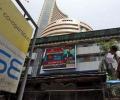
Rising outgo towards clearing and settlement fees has led to an altercation between the BSE and the National Stock Exchange of India (NSE), with the latter striking down the former's request to lower the charges. NSE said it has no plans to restructure the same and that it will continue with the pricing defined under the interoperability framework. The interoperability framework, introduced in 2019, allows trades executed on any of the exchanges to be settled or cleared at either of the two clearing corporations -- NSE Clearing (NCL) or Indian Clearing Corporation (ICCL), fully-owned by the NSE and the BSE, respectively.

'While Indian markets are indeed not inexpensive, the valuations of largecap stocks are still a considerable distance from being overstretched.'
The index is currently trading at 149 per cent of its historical P/B valuation, surpassing its previous peak of 125 per cent made in 2020-21.

rediffGURU Samkit Maniar answers readers' personal income tax queries

Sundararaman Ramamurthy has assumed charge as managing director and chief executive officer of leading stock exchange BSE. In a regulatory filing last year, BSE said that markets regulator Sebi has approved the appointment of Ramamurthy as its MD and CEO. "Sundararaman Ramamurthy has assumed charge as MD and CEO of BSE," the exchange said in a release on Wednesday.
The cash pile within smallcap mutual fund (MF) schemes has grown over the past few months amid a relentless rally in stocks in this space. While fund managers usually don't make cash calls, incessant inflows and valuation discomfort have forced their hand. At the end of January, the top 10 schemes had over Rs 12,160 crore in cash, compared to Rs 8,700 crore in August 2023.

Notwithstanding the recent sharp decline in the stocks of public sector companies, analysts at Jefferies remain bullish on this segment. State Bank of India, Coal India, and NTPC are their top picks in this space, they said in a recent note. The public sector undertaking (PSU) or state-owned enterprise (SOE) index, with a 70-percentage-point outperformance versus the National Stock Exchange Nifty50 over the past 12 months, comes after a decade of underperformance before 2020.

Markets watchdog Sebi on Friday directed stock exchanges to impose "financial disincentives" on stock brokers for technical glitches at their end, amid instances of snags at the brokers' end impacting the overall trading system. Besides, the stock brokers would have to inform the bourses within one hour of any glitch happening in their trading sysstems as well as submit a preliminary incident report in one day. As part of tightening the regulations, Sebi also said that the bourses should disseminate on their websites the instances of technical glitches occurring in the trading systems of stock brokers along with the Root Cause Analysis (RCA) of such issues.

A new regulation concerning the disclosure of family arrangements by listed companies is exacerbating rifts between feuding shareholders. The latest example is Bengaluru-based TD Power Systems (TDPS), currently enmeshed in a legal dispute before the Karnataka high court over ownership of its 16 per cent equity. Vijay Kirloskar, who is asserting a claim over the 16 per cent stake held by Mohib Khericha (chairperson of TDPS) and Nikhil Kumar (managing director of TDPS and nephew of Kirloskar), has sent a letter to the market regulator, Securities and Exchange Board of India (Sebi), and stock exchanges. He accuses TDPS of insufficient disclosure concerning shareholder agreements.

Equity markets would take cues from domestic inflation data announcement, global trends and trading activity of foreign investors in a holiday-shortened week ahead, analysts said. Markets would remain closed on Tuesday for 'Diwali Balipratipada'. "As we enter a truncated week with Muhurat trading on Sunday, global cues will play a pivotal role in shaping the market direction.
Leading stock exchange BSE on Tuesday said it has added 1 crore registered investor accounts to its platform in a span of 148 days, taking the total count to 12 crore. The exchange added one crore investors' accounts between July 18 and December 13, BSE said in a statement. In comparison, the exchange took 124, 91, 85 and 107 days for the previous milestones of 11 crore, 10 crore, 9 crore and 8 crore, respectively.

Tata Motors on Monday said the voluntary delisting of its American Depositary Shares, representing ordinary shares, from the New York Stock Exchange will become effective close of trading on January 23, 2023. After Monday, there will be no over-the-counter market trading of the American Depositary Shares (ADSs) in the US due to regulatory restrictions under the Indian law, Tata Motors said in a regulatory filing.

The market share of discount brokers - such as Zerodha, Groww, Upstox, and Angel One - has grown fivefold in five financial years, with more than half of the National Stock Exchange's (NSE's) active client trading coming through them, reveals a report by CLSA. For the first 11 months of 2022-23, discount brokers held sway over 57 per cent of active clients, up from 11 per cent in 2017-18. Moreover, the number of active clients on the NSE with discount brokers has grown from just 1 million to 19 million during this period. Active traders are those who have traded at least once in 12 months.
 © 2026 Rediff.com - Advertise with us - Disclaimer - Privacy Policy - Sitemap - Feedback - About us - Terms of use - Grievances